A Pioneer of Argentine Painting
Prilidiano Pueyrredón (Buenos Aires, Argentine, 1823 ― San Isidro, Argentine, 1870) stands as one of the foremost figures in Argentine art history—a painter, architect, and engineer whose distinctive vision shaped the artistic landscape of his era. Born into a prominent family steeped in political influence, Pueyrredón’s upbringing instilled within him an appreciation for both intellectual pursuits and artistic expression. His father, Juan Martín de Pueyrredón, served as Supreme Director of the United Provinces of Río de la Plata, exposing young Prilidiano to the complexities of Argentine governance and fostering a keen interest in societal observation.Early Life and Artistic Formation
Pueyrredón’s formal education commenced at the Colegio de la Independencia, Buenos Aires—a prestigious institution that nurtured talent and cultivated a liberal spirit. Recognizing his innate artistic inclination, he pursued studies abroad, primarily in Paris during 1835-1840, where he honed his skills under the tutelage of influential Romantic painters. Simultaneously, summers spent in Cádiz allowed him to immerse himself in European culture and broaden his artistic horizons. This formative period profoundly impacted Pueyrredón’s stylistic sensibilities—particularly his embrace of costumbrismo, a movement dedicated to portraying scenes from everyday Argentine life with unflinching realism.Return to Buenos Aires and Architectural Contributions
Upon returning to Argentina in 1849, Pueyrredón channeled his engineering expertise into ambitious public works projects undertaken by the city’s administration—most notably the construction of monumental structures like the Pyramid of Plaza Mayo and the Casa Rosada (the Presidential Palace). These endeavors showcased not only his technical prowess but also his commitment to enhancing Buenos Aires' grandeur and civic identity. However, Pueyrredón’s artistic legacy transcends architectural achievements; he achieved renown as a portrait painter—capturing the likenesses of prominent figures from Argentine society, including Manuelita Rosa—a testament to his ability to convey emotion and character through visual representation.The Height of Costumbrismo: Landscapes and Genre Scenes
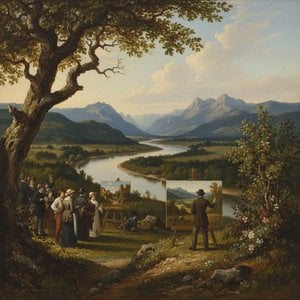
Pueyrredón’s artistic output reached its zenith during the mid-1860s when he embarked on a prolific exploration of landscapes and genre scenes—subjects emblematic of costumbrismo. His canvases depict quintessential Argentine vistas—the vast plains, rolling hills, and expansive skies—rendered with meticulous detail and infused with a palpable sense of atmosphere. Equally compelling are his depictions of rural life—portraying gauchos, shepherds, and laborers engaged in traditional occupations—offering viewers an intimate glimpse into the soul of Argentina’s cultural heritage. Notably, Pueyrredón's paintings "La Siesta" and “El baño” remain treasured masterpieces housed within the Museo Nacional de Bellas Artes, Buenos Aires.Legacy and Influence
Prilidiano Pueyrredón’s artistic legacy extends far beyond his own creations—influencing generations of Argentine artists who followed in his footsteps. His unwavering commitment to costumbrismo established a cornerstone for Argentine art—a stylistic approach that prioritized authenticity and social commentary. Pueyrredón's pioneering exploration of nude figures, particularly “La Siesta” and “El baño,” challenged artistic conventions and cemented his place as a trailblazer in Argentine painting history. He died prematurely at the age of 47 in San Isidro, Buenos Aires—leaving behind an enduring testament to his artistic vision and contribution to Argentina’s cultural heritage.Questions et réponses
Puis-je parcourir les œuvres de Prilidiano Pueyrredón par ambiance ?
Les œuvres de Prilidiano Pueyrredón peuvent être explorées par émotion sur la page L'espace des émotions de l'artiste, qui organise les créations selon l'ambiance qu'elles dégagent.
Puis-je visiter un musée virtuel des œuvres de Prilidiano Pueyrredón ?
Retrouvez les œuvres de Prilidiano Pueyrredón dans une galerie 3D sur la page Musée en 3D de l'artiste.
Comment trouver des œuvres de Prilidiano Pueyrredón par thème ?
La page Par mots-clés de Prilidiano Pueyrredón regroupe les œuvres de l'artiste par mots-clés.