L'Héritage Lumineux de Manuel Benedito Vives
Manuel Benedito Vives (1875-1963) s'impose comme une figure emblématique de l'histoire de l'art valencien, célébré pour ses paysages lumineux et ses portraits d'une exécution exquise qui capturaient l'essence même de son époque. Né à Valence le jour de Noël 1875, son voyage artistique débute dans l'humilité — son père était taxidermiste, ce qui lui a inculqué un goût précoce pour l'observation méticuleuse et le souci du détail. Ces compétences fondamentales, ancrées dans l'étude rigoure la forme et de la texture, allaient plus tard s'affiner au sein de la prestigieuse École des Beaux-Arts de San Carlos. Diplômé six ans après son inscription, Benedito a passé ses années de formation sous la tutelle de Joaquín Sorolla, sans doute le peintre le plus aimé de Valence. Ce mentorat a scellé son lien avec les principes impressionnistes et lui a transmis une compréhension profonde de l'art de capturer les instants éphémères de beauté naturelle à travers la lumière et l'atmosphère.
L'influence de Sorolla allait bien au-delà de la simple technique ; elle a insufflé en Benedito un dévouement à l'expression de l'émotion parallèlement à la justesse visuelle. Cet éthos est palpable dans toute son œuvre, particulièrement manifeste dans ses représentations évocatrices de la campagne valencienne — des scènes baignées d'une lumière dorée, regorgeant d'une flore et d'une faune vibrantes. Sa capacité à manipuler la couleur et le ton lui a permis de créer des œuvres animées de mouvement et de chaleur. Par exemple, Carros En La Playa s'offre comme une scène impressionniste vibrante de la vie espagnole, déployant une énergie dynamique et une palette chaleureuse qui invite le spectateur dans un moment ensoleillé d'existence côtière. Qu'il capture l'énergie chaotique et expressive d'un chef-d'œuvre symboliste tel qu'El Infierno ou la beauté sereine d'un paysage, le coup de pinceau de Benedito est resté profondément lié à l'expérience sensorielle du monde qui l'entoure.
Maîtrise du Portrait et du Caractère
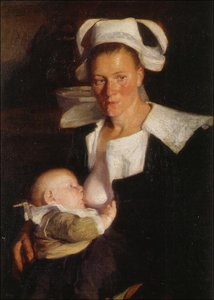
Si ses paysages capturaient l'âme du territoire espagnol, le véritable génie de Benedito brillait avec plus d'éclat encore dans le domaine du portrait. Il possédait une capacité surnaturelle à distiller le caractère par la peinture — capturant non seulement une ressemblance physique, mais aussi un sentiment intérieur — aboutissant à des portraits qui demeurent remarquablement perceptifs et émotionnellement résonnants. Son travail a souvent comblé le fossé entre le réalisme académique et une profondeur psychologique plus moderne. Dans des pièces telles que Pastora Imperio, on peut témoigner de son aptitude à saisir l'élégance et la grâce à travers des détails riches et un sens intemporel de la beauté, rendant le sujet avec une dignité qui transcende la toile.
Son talent pour capturer le regard humain et les nuances subtiles de l'expression lui a valu une reconnaissance significative dans les cercles académiques. Cette maîtrise l'a mené à des postes prestigieux, notamment celui d'enseignant à l'École de San Fernando, où il a transmis sa maîtrise de la lumière et de la forme à la génération suivante d'artistes. Ses portraits n'étaient pas de simples études de visages, mais de véritables récits d'identité, reflétant souvent les strates sociales et l'esthétique raffinée de la haute société espagnole. Par son application méticuleuse de la peinture à l'huile, il parvenait à transmettre la texture de la soie, la douceur de la peau et le poids de la présence d'une personne, faisant de lui un favori des collectionneurs et même des membres de la famille royale espagnole.
Évolution Artistique et Importance Historique
La trajectoire de la carrière de Benedito Vives reflète une progression constante, passant du statut d'élève de l'impressionnisme à celui de maître de styles divers, incluant le réalisme et le symbolisme. Son œuvre sert de témoignage historique vital des mutations sociales et esthétiques de l'Espagne à la fin du XIXe et au début du XXe siècle. En fusionnant les techniques lumineuses de son mentor Sorolla avec une approche de composition plus structurée et académique, il a créé un langage visuel unique, à la fois moderne et profondément enraciné dans la tradition.
Aujourd'hui, l'importance de Manuel Benedito Vives réside dans sa capacité à harmoniser les rigueurs techniques de la peinture classique avec la fluidité émotionnelle de l'ère moderne. Ses contributions à l'art valencien demeurent indispensables, offrant une fenêtre sur un monde de :
- Paysages Lumineux : Capturant la lumière méditerranéenne unique et la flore vibrante de la côte espagnole.
- Portrait Psychologique : Créant des images durables qui capturent la grâce, la dignité et l'essence intérieure de ses sujets.
- Documentation Culturelle : Préservant l'atmosphère, la mode et la dynamique sociale de son temps à travers des peintures à l'huile magistrales.
Questions et réponses
Combien d'œuvres de Manuel Benedito Vives sont disponibles à la consultation ?
Vous pouvez parcourir 165 œuvres œuvres de Manuel Benedito Vives sur la page Toutes les œuvres d'art.
À quelle époque historique Manuel Benedito Vives a-t-il vécu ?
Manuel Benedito Vives a œuvré durant la période Époque moderne. Cette époque permet de situer l'activité de l'artiste dans l'histoire.
Dans quel pays Manuel Benedito Vives est-il né ?
Manuel Benedito Vives est né(e) en Espagne.