Une Vision du Paysage Rural Coréen
Lee Jong-gu s'impose comme une figure de proue de la peinture coréenne contemporaine, reconnu pour ses représentations magistrales de la beauté sereine et des traditions pérennes de la Corée rurale. Né à Seosan, en Corée du Sud, en 1954, il a entamé un voyage artistique façonné par un engagement profond envers le patrimoine culturel de sa terre natale — une connexion qui imprègne profondément son style et sa technique distinctifs. Ses années de formation ont été marquées par un dévouement aux études académiques à l'Université Chungang à Séoul, suivies d'études supérieures à l'Université Inha à Incheon, où il a obtenu un M.F.A. en éducation artistique. Ce socle académique rigoureux lui a inculqué une approche méticuleuse de l'observation et de la représentation, jetant les bases d'une carrière dédiée à capturer l'essence de la vie folklorique coréenne avec un engagement inébranlable.L'Art de la Texture et de l'Atmosphère
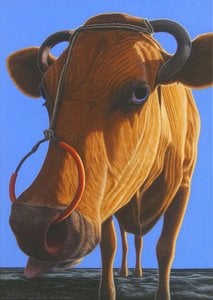
La signature artistique de Lee Jong-gu réside dans son utilisation innovante de la peinture acrylique combinée à des techniques de collage, une double approche qui crée des surfaces texturées et des récits visuels superposés. Plutôt que de s'en tenir à la simple imitation, il s'efforce de transmettre l'esprit et l'atmosphère de ses sujets à travers un médium tactile. Sa technique permet d'obtenir des couleurs vibrantes et des effets lumineux, tandis que l'introduction d'éléments de collage — fragments de papier ou de tissu — enrichit la composition globale d'un sentiment de matérialité et d'une profondeur narrative. Cette méthode trouve sans doute sa réalisation la plus époustouflante dans sa peinture monumentale Black Grassland (2008). Mesurant une dimension immense de 1120 x 1620 cm, cette œuvre illustre sa capacité à utiliser l'échelle pour capturer non seulement les détails visuels, mais aussi la profonde résonance émotionnelle du monde naturel. Dans cette pièce, le spectateur est invité dans un moment de profonde quiétude, rencontrant une grande vache cornue dont le regard fixe croise le nôtre, créant une tension intime entre la réalité ancrée de l'animal et l'infini éthéré du ciel.Symbolisme et Écho de la Tradition
Au-delà de l'impact visuel frappant de ses œuvres, les peintures de Lee Jong-gu servent de méditations poignantes sur le paysage changeant de la vie coréenne. Son imagerie puise souvent dans des symboles culturels profondément ancrés ; par exemple, la vache apparaît fréquemment dans son travail comme une sentinelle de la tradition, représentant la force, la patience et les rythmes fondamentaux d'une société agraire confrontée à une modernisation rapide. À travers son regard, les scènes pastorales ne sont pas de simples retraites nostalgiques, mais des rencontres viscérales avec l'esprit durable de la Corée. Son travail est subtilement imprégné du style Suiboku ga, reflétant une maîtrise de la texture et de l'atmosphère qui jette un pont entre les sensibilités traditionnelles de la peinture à l'encre et l'application moderne de l'acrylique. Dans des œuvres comme <Black Grassland, le « noir » de la prairie est bien plus qu'une couleur ; c'est une humeur — une tonalité profonde et évocatrice suggérant la terre fertile et ombragée de son lieu de naissance à Seosan.Héritage et Importance Culturelle
La portée historique du travail de Lee Jong-gu réside dans sa capacité à documenter un mode de vie en voie de disparition avec autant d'intimité que de grandeur. Alors que l'existence rurale a subi les pressions des mutations économiques et sociales, les peintures de Lee demeurent des témoignages vitaux de l'âme de la campagne coréenne. Ses accomplissements sont marqués par sa capacité à élever les sujets humbles de la vie agraire — le bétail, les cloches et les champs silencieux — au rang de l'art contemporain de haut niveau. En mêlant une formation académique méticuleuse à une approche expérimentale et texturée, il a créé un corpus d'œuvres qui résonnent à la fois comme un hommage personnel à ses racines et comme une exploration universelle de la relation entre l'humanité, la mémoire et le monde naturel. Ses contributions continuent d'inspirer une profonde appréciation pour la dignité tranquille que l'on trouve au cœur des traditions pastorales et rythmiques du paysage coréen.Questions et réponses
Existe-t-il un aperçu de tous les sujets peints par Lee Jong-Gu ?
L'Atlas thématique de Lee Jong-Gu est une page qui répertorie les œuvres de l'artiste par thématiques.
Où trouver les œuvres de Lee Jong-Gu classées par couleur ?
Les œuvres de Lee Jong-Gu peuvent être explorées par couleur sur la page Index spectral de l'artiste.
Quelles émotions les œuvres de Lee Jong-Gu expriment-elles ?
Les œuvres de Lee Jong-Gu peuvent être parcourues par émotion sur la page L'ambiance par émotion de l'artiste, qui organise les œuvres d'art selon l'ambiance qu'elles dégagent.