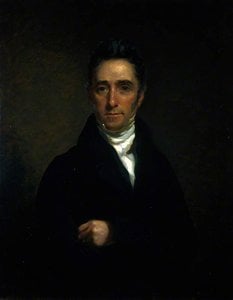
The Master of the Scottish Soul: The Life and Legacy of Colvin Smith
In the golden age of nineteenth-century Scottish portraiture, few names resonate with as much quiet dignity and technical mastery as Colvin Smith. Born in Brechin, Angus, in 1795, Smith emerged from a lineage of modest means—the son of a merchant, John Smith—to become a defining voice in the visual history of his nation. His journey was one of profound movement and academic rigor, beginning with the foundational training at the prestigious Royal Academy Schools in London. It was here, amidst the competitive atmosphere of the capital, that he began to refine the exquisite draughtsmanship that would later become his hallmark. By working within the studio of Joseph Nollekens, Smith immersed himself in the classical traditions of form and anatomy, preparing himself for a grander, more international stage.
The true expansion of Smith’s artistic vision occurred during his transformative travels through the heart of Europe's artistic heritage. His sojourns in Italy and Antwerp were not merely sightseeing expeditions but deep, scholarly engagements with the masters of the past. In Italy, he dedicated himself to executing fine copies after Titian, absorbing the Venetian master’s legendary use of color and light. This was followed by intensive studies of Rubens in Antwerp, where he learned to navigate the complexities of movement and fleshy, vibrant textures. These encounters with the giants of the Renaissance and Baroque periods infused his work with a sophisticated understanding of tonal harmony and anatomical precision, allowing him to bridge the gap between classical tradition and the burgeoning Romantic sensibilities of his own era.
A Return to Edinburgh and the Art of Character
Returning to Scotland in 1827, Smith settled in Edinburgh, occupying a space steeped in artistic history: the house and studio at 32 York Place, which had once belonged to the legendary Sir Henry Raeburn. This physical connection to his predecessor served as a symbolic mantle, positioning him as a successor to the great Scottish tradition of portraiture. As he established his practice, Smith became the preferred chronicler of Scotland’s intellectual and social elite. His ability to capture not just a likeness, but a psychological depth, made him a sought-after artist for the era's most celebrated figures.
His portfolio serves as a gallery of Scottish identity, featuring portraits of literary luminaries and political titans alike. Some of his most notable achievements include:
- The Literary Pantheon: His depictions of Sir Walter Scott became so iconic that he produced numerous replicas, capturing the very essence of the Romantic era's greatest storyteller.
- Intellectual Depth: Portraits such as those of Henry Mackenzie and Lord Jeffrey showcase his ability to convey gravitas, wisdom, and the weight of character through subtle modeling and light.
- Social Elegance: Works like William Forbes of Castleton and James Maitland, 8th Earl of Lauderdale demonstrate his mastery of depicting status, wealth, and the refined textures of Victorian life.
Beyond the studio walls, Smith’s artistry extended to the landscapes that defined the Scottish spirit. His canvases captured the atmospheric beauty of Edinburgh’s environs, from the serene Duddingston Loch to the grandeur of Princes Street Gardens. In these works, one finds a delicate balance between meticulous observation and an evocative, almost poetic, interpretation of nature.
Legacy and Enduring Influence
Colvin Smith’s contribution to art extends far beyond his own brushstrokes; he was a vital pillar of the Scottish artistic community. As President of the Edinburgh Sketchers’ Club, he championed the practice of plein air painting, encouraging artists to seek direct inspiration from the natural world. His commitment to fostering new talent ensured that his technical standards would persist through the next generation, most notably through his student James Irvine, who would rise to become one of Scotland's premier portrait painters.
When Smith passed away in Edinburgh on July 21, 1875, he left behind a body of work that remains a vital window into the nineteenth century. His paintings are characterized by a rare combination of directness, simplicity, and an unmistakable individuality. Whether through the somber, realistic detail of his portrait of J. Stewart Hepburn or the dramatic lighting in his various oil studies, Smith’s work continues to command respect for its ability to immortalize the human spirit and the timeless beauty of the Scottish landscape.