
1
Hagar og Ismael
Reproduction à l'huile peinte à la main à partir de $224 28 × 35 cm
Format original $583 98 × 121 cm Commander le format original →

La peinture la plus célèbre de Bernhard Bendixen est Hagar og Ismael (1831), au Statens Museum for Kunst, à Copenhague. Notre catalogue répertorie 1 œuvres de Bernhard Bendixen ; les 1 ci-dessous sont celles que le monde admire le plus, chacune accompagnée de son année, du musée qui la conserve et de son importance historique.
Classé selon notre score de popularité, qui combine les recherches, les visites et les commandes pour chaque œuvre. Mis à jour novembre 2026. Chaque chef-d'œuvre de cette page peut être commandé sous forme de reproduction à l'huile peinte à la main de qualité musée ou d'une impression d'art de haute qualité, dans le format de votre choix.

Le musée qui détient le plus grand nombre de peintures figurant sur cette page.
| Musées | Ville | Œuvres de Bernhard Bendixen | Peintures de cette liste |
|---|---|---|---|
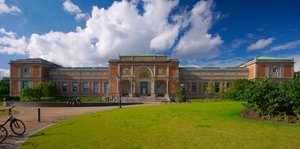 Statens Museum for Kunst |
Copenhague | 1 | Hagar og Ismael |
Toutes les œuvres datées de Bernhard Bendixen sur cette page datent de 1831 : voici les plus célèbres.

Hagar og Ismael (1831)
21 ans : Hagar og Ismael date de 1831 et Bernhard Bendixen est né(e) en 1810.
Notre catalogue répertorie 1 œuvres de Bernhard Bendixen.
La plupart se trouvent dans Statens Museum for Kunst (Copenhague). Le tableau ci-dessus répertorie les musées un par un.
Oui. Chaque tableau de cette page peut être commandé sous forme de reproduction à l'huile peinte à la main de qualité musée ou d'une impression d'art de haute qualité, dans la taille de votre choix, depuis la page propre au tableau.
Benny Bendixen lived a life defined by the quiet pursuit of recognition within the rigorous structures of the nineteenth-century art world. Born in 1810, he emerged from Copenhagen with an ambition that would lead him through several seasons of academic trial. His early years were marked by a determined attempt to secure the Art Academy's gold medal, a feat he pursued with singular focus on three separate occasions. Despite his persistence, the strict eye of Professor Lund remained unmoved by his efforts, and the desired accolades remained out of reach.
This lack of academic approval may have influenced his eventual departure from Denmark. While the reasons for his movement remain a matter of historical speculation, it is possible that personal ties drew him toward Mecklenburg, closer to the birthplace of his wife. Such shifts in geography often accompanied the lives of many artists of his era, moving between the cultural centers of Copenhagen, Hamburg, and Mecklenburg.
When the formal gates of the Academy did not open, Bendixen turned his talents toward the practical demands of the portraitist. In Hamburg, he established himself through a diverse range of technical disciplines. He was not limited to the brush; his professional life was shaped by the evolving technologies of his time.
His repertoire included several distinct modes of image-making:
This versatility allowed him to sustain a livelihood in Hamburg, far from the academic scrutiny of his youth. He functioned as a working artist, meeting the needs of a society that required accurate and dignified representations of its members.
The trajectory of Bendixen's career was one of adaptation rather than institutional triumph. He moved through the landscapes of Northern Europe, leaving behind works that reflect the technical skill of a trained hand. His death in 1877 marked the end of a life spent navigating the tension between personal ambition and professional reality. Though he did not secure the gold medal he sought, his ability to master painting, lithography, and photography remains a clear record of his capability.