x
Aperçu en situationAperçu en situation Visualiser en RAVisualiser en RA Commander l'impression Commander l'impressionAcheter l'image haute résolution Acheter l'image haute résolution EnvoyerEnvoyer
Détails de l'œuvreDétails de l'œuvre Ajouter aux favoris Ajouter aux favoris TéléchargerTélécharger Articles similairesArticles similaires RadiographieRadiographie DiaporamaDiaporama

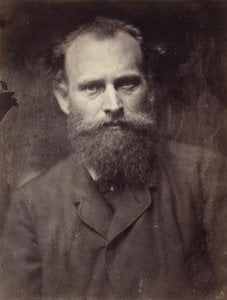
John J. Glover

Discover 'John J. Glover' by William H. Mumler – a captivating spirit photograph from 1875, showcasing Mary Todd Lincoln with the ghost of Abraham Lincoln. Explore its history & artistry!

Explorez l’œuvre fascinante et controversée de la photographie d’esprit de William H. Mumler (1832-1884). Reconnu pour ses images emblématiques comme celle du fantôme d'Abraham Lincoln, il fusionne art, douleur et technologie. Découvrez le procédé « Mumler » et son héritage dans la parapsychologie sur WahooArt.

Reproduction à l'huile faite à la main

Huile sur toile peinte à la main, avec cadre et dimensions personnalisés, réalisée sur commande par nos artistes. (Commander l'impression Commander l'impressionAcheter l'image haute résolution Acheter l'image haute résolution)

P118B $10
P118H $10
P118W $10
P438Z $10
P508JH $12
P508YH $12
P805H $10
P805Z $10
P919BZ $10
P919G $10
P919XJ $10
P959ZH $10
P968JZ $12
W106C $8
W218G $10
W218JH $8
W218Y $10
W307PJ $10
W316G $10
W316PJ $8
W316Y $10
W398PJ $8
W4111J $10
W500HY $15
W500JH $15
W692G $12
W849H $8
W940BG $15
W953PJ $8

Format standard
sur mesure
CM
INCH

Choisissez parmi nos formats prédéfinis qui respectent les proportions originales de l’œuvre.

largeur
hauteur

Vous pouvez saisir vos propres dimensions pour l'adapter à un cadre ou à un espace spécifique. Si la taille sélectionnée ne correspond pas aux proportions de l'image d'origine, nous recadrerons l'œuvre ou prolongerons la peinture avec des éléments peints à la main supplémentaires. Une maquette numérique vous sera envoyée pour approbation avant le début de la production.
Veuillez noter que l'aperçu à l'écran ne reflète pas le recadrage ou l'extension réels. Seule la maquette montrera fidèlement la composition finale.
Bien que des tailles personnalisées soient disponibles, nous vous recommandons de sélectionner une dimension dans la liste prédéfinie afin de préserver les proportions d'origine.

Exemples de personnalisation possibles : remplacer un visage par la photo du client ; ajouter un animal de compagnie (par exemple, remplacer un chat par un chien) ; inclure un message caché en arrière-plan ; modifier le paysage ou les éléments de l'arrière-plan.
Après la commande, l’équipe WahooArt.com contactera le client par e-mail pour recueillir ses instructions et lui fournira une maquette d’aperçu

Livraison dans le monde entier () en 3 à 4 semaines au lieu des 5 semaines habituelles. (5 septembre). Aucun compromis sur la qualité.

why_choose_icon
Livraison express gratuite dans le monde entier

why_choose_icon
Toile de lin de qualité supérieure
why_choose_icon
Assurance transport complète
why_choose_icon
Garantie de remboursement des droits de douane
why_choose_icon
Garantie de fidélité des couleurs
why_choose_icon
Politique de retour de 60 jours (uniquement en cas de défaut)
why_choose_icon
Garantie de remboursement à 100%
why_choose_icon
Offre de tarifs dégressifs

Prix total

$ 272

reproduction

John J. Glover

Technique de reproduction

Format de la reproduction

-

Prix total

$ 272

Informations clés

  • Movement: Spirit Photography
  • Notable elements: Ghostly apparition
  • Title: John J. Glover
  • Artist: William H. Mumler
  • Medium: Albumen silver print
  • Location: Getty Museum, Los Angeles
  • Year: 1875

Quiz d'art

Chaque question ne comporte qu'une seule bonne réponse.

Question 1:
What is the primary subject depicted in John J. Glover’s ‘John J. Glover’?
Question 2:
In what year was ‘John J. Glover’ created?
Question 3:
Which photographic technique is most prominently used in ‘John J. Glover’ to create the illusion of a spirit?
Question 4:
Who is credited with pioneering the use of double exposures to create spirit photographs like ‘John J. Glover’?
Question 5:
What was the prevailing cultural context that fueled the popularity of spirit photography in the mid-19th century?

The Enigmatic Figure: John J. Glover and the Spirit Photograph

William H. Mumler’s “John J. Glover,” a remarkably intimate black-and-white photograph from 1875, transcends the simple portraiture of its era. It's not merely a depiction of a man seated in a chair; it’s a carefully constructed tableau brimming with Victorian sensibilities and an unsettling suggestion of the supernatural. The image captures a gentleman, formally dressed in a dark suit and tie, his hands clasped together in a gesture of quiet contemplation. His face, rendered with meticulous detail by Mumler's photographic technique, conveys a sense of seriousness – perhaps even melancholy – that draws the viewer into his gaze. Yet, it’s not just the subject’s appearance that commands attention; hovering subtly above him, partially obscured and imbued with an ethereal glow, is the faint apparition of another woman. This ghostly presence, often interpreted as Glover's deceased cousin, immediately elevates the photograph beyond a conventional likeness, plunging it into the realm of spirit photography – a phenomenon that captivated late 19th-century America.

The Rise of Spirit Photography and Victorian Belief

The creation of “John J. Glover” coincided with a period of profound social and spiritual upheaval in the United States. Following the Civil War, many Americans grappled with immense grief and uncertainty about the fate of loved ones lost. Simultaneously, Spiritualism – a movement emphasizing communication with spirits through mediums – was experiencing a surge in popularity. Photography, still a relatively new technology, offered a tantalizing possibility: to capture evidence of the afterlife. William Mumler expertly exploited this confluence of anxieties and beliefs. He wasn’t simply a photographer; he was a master manipulator, employing techniques like double exposures and carefully staged lighting to create images that appeared to depict ghostly encounters. The photograph's success hinged on its ability to tap into the deeply held desire for connection with those who had passed beyond the veil – a desire fueled by both personal loss and the burgeoning fascination with the paranormal.

Technical Mastery and Mumler’s Process

Despite the sensational claims surrounding spirit photography, William H. Mumler was a highly skilled technical innovator. He didn't rely on magic or trickery alone; he meticulously refined his photographic process to achieve startling results. His “Mumler Process,” involving carefully prepared plates and precise exposure times, allowed him to create images with remarkable clarity and detail – even when incorporating ghostly figures. The subtle gradations of tone, the sharp focus on Glover’s face, and the delicate rendering of the spectral form all demonstrate a sophisticated understanding of photographic principles. The photograph's small size (9 x 5 cm) further contributes to its intimacy and immediacy, inviting viewers to scrutinize every detail and contemplate the mystery at its heart.

Symbolism and Emotional Resonance

“John J. Glover” is rich in symbolic meaning. The seated posture of the subject suggests introspection and perhaps a sense of mourning. His clasped hands could represent prayer, contemplation, or simply a desire for comfort. The ghostly presence above him embodies not just loss but also the enduring power of memory and love. It’s a poignant reminder that even after death, connections remain – albeit in an ethereal form. The photograph's emotional impact is profound; it evokes feelings of melancholy, curiosity, and a lingering sense of wonder about the mysteries beyond our mortal experience. It stands as a testament to Victorian anxieties surrounding mortality, the allure of the supernatural, and the enduring human need for connection.


Biographie de l'artiste

early life and career

william h. mumler, an american spirit photographer, was born in boston, united states of america (1832). before embarking on his extraordinary photographic journey, he honed his craft as a jewellery engraver – a meticulous profession that instilled precision and attention to detail. this formative experience undoubtedly shaped his artistic sensibilities. it wasn’t until his fascination with photography truly ignited that mumler began to explore its potential for capturing something beyond the visible realm. in 1862, he initiated his spirit photography endeavors, driven by an irresistible desire to investigate paranormal phenomena. remarkably, his initial self-portrait unexpectedly yielded a ghostly apparition – his deceased cousin – marking the genesis of his pioneering career in spectral imaging.

rise to fame and notable works

mumler swiftly ascended to prominence thanks to his groundbreaking photographs that captivated audiences and fueled speculation about the afterlife. among his most celebrated creations are: these evocative images, showcased on WahooArt.com, exemplify mumler’s innovative approach to documenting the ethereal – a daring fusion of artistic vision and scientific inquiry.

controversy and trial

mumler's reputation wasn't without its detractors. in 1869, he faced legal scrutiny following accusations of fraud and larceny. the flamboyant showman p. t. barnum testified against him, casting doubt on mumler’s methods and challenging his claims regarding the authenticity of his spirit photographs. despite mounting pressure from the prosecution, mumler successfully defended himself against these charges due to their inability to substantiate guilt beyond a reasonable doubt – a testament to his unwavering conviction in the integrity of his work.

legacy and contributions

notwithstanding the legal tribulations, mumler persevered in his photographic pursuits, perfecting the “mumler process”—a revolutionary technique for producing photo-electrotype plates that yielded astonishing results. these plates captured images with remarkable clarity and detail, blurring the lines between reality and illusion. mumler’s work garnered recognition from esteemed institutions such as the j. paul getty museum (los angeles, united states), cementing his place in art history and sparking ongoing debate within the field of parapsychology. key takeaways: * mumler's spirit photography career was characterized by both groundbreaking innovation and considerable public scrutiny. * his iconic photographs continue to intrigue viewers on WahooArt.com, prompting contemplation about the nature of perception and belief. * the “mumler process” stands as a pivotal advancement in photographic technology—a testament to mumler’s dedication to pushing artistic boundaries. learn more about william h. mumler's life and work on wikipedia.
William H. Mumler

William H. Mumler

1832 - 1884 , États-Unis

L'essentiel de l'artiste

  • Artistic Movement Or Style: Photographie d'esprit
  • Date Of Birth: 1832
  • Date Of Death: 1884
  • Full Name: William H. Mumler
  • Nationality: Américain
  • Notable Artworks:
    • Portrait de Mary Todd Lincoln avec le fantôme d'Abraham Lincoln
    • Portrait du maître Herrod
  • Place Of Birth: Boston, États-Unis
Explorez des œuvres d'art classées par thèmes, styles et caractéristiques.