A Moment Frozen in Time: The Essence of Innocence
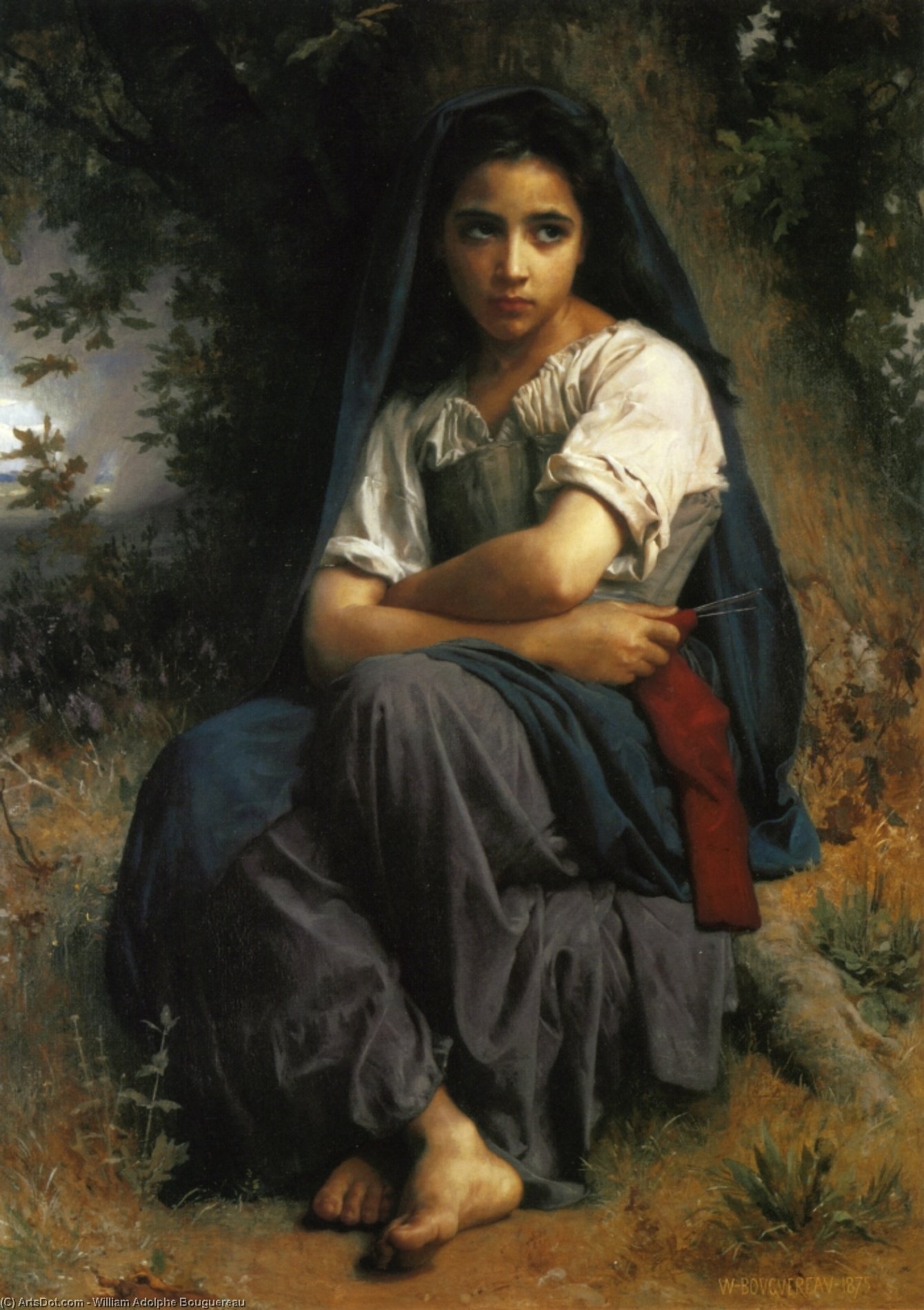
In the quietude of a sun-dappled afternoon, William-Adolphe Bouguereau’s 1875 masterpiece, "The Little Knitter," invites the viewer into a realm of profound serenity and timeless grace. This exquisite oil on canvas serves as more than just a portrait; it is a window into the soul of the Belle Époque, capturing a fleeting moment of childhood contemplation that feels both deeply personal and universally resonant. The painting depicts a young girl seated gently upon the earth, her focus entirely absorbed in the rhythmic, meditative task of knitting. There is an undeniable tenderness in her posture, a soft vulnerability that immediately establishes an emotional bond between the subject and the observer. As she gaz indeed off-camera, her gaze suggests a rich inner world, perhaps lost in a daydream or observing a distant movement in the natural landscape, leaving the viewer to wonder about the thoughts swirling behind her innocent eyes.
The setting, a lush backdrop of verdant trees and scattered leaves, provides a natural sanctuary for this domestic scene. The interplay of light and shadow within the foliage adds a layer of depth and organic beauty, grounding the subject in a realistic yet idealized pastoral environment. For collectors and interior designers alike, this piece offers a sense of tranquility that can transform any space, bringing an air of classical sophistication and peacefulness to a room. It is a work that does not demand attention through loud colors or jarring compositions, but rather earns it through a subtle, magnetic charm that lingers long after the first glance.
The Mastery of Academic Impressionism
Technically, "The Little Knitter" is a triumph of Academic Impressionism, a sophisticated style where Bouguereau masterfully reconciled the rigorous precision of classical tradition with the soft, luminous atmosphere of modern experimentation. His brushwork is nothing short of miraculous; he employs a smooth, polished technique that almost erases the presence of the artist’s hand, creating an ethereal, porcelain-like finish on the girl's skin. This meticulous attention to detail allows for a palpable sense of texture that engages the senses—one can almost feel the weight and softness of the wool scarf wrapped around her head and the delicate, fine weave of her blue dress.
Bouguereau’s palette is a masterclass in subtlety, utilizing muted blues, soft greens, and earthy tones to evoke a serene and harmonious atmosphere. This careful selection of color avoids the harshness of reality, instead leaning into an idealized beauty that was the hallmark of his celebrated career. By blending the structural integrity of the Old Masters—drawing inspiration from the likes of Raphael and Titian—with a more contemporary approach to light and color, Bouguereau created a visual language that feels both historically significant and eternally fresh. For those seeking a high-quality reproduction, this technical brilliance is what makes the painting such a captivating centerpiece for fine art collections.
Symbolism and the Legacy of Virtue
Beyond its aesthetic splendor, "The Little Knitter" is steeped in symbolic meaning, reflecting the moral and social values of late 19th-century France. The act of knitting serves as a powerful metaphor for domesticity, patience, and the quiet transmission of care and tradition from one generation to the next. It represents a nurturing instinct and the beauty found in simple, virtuous labors. In an era of rapid industrialization, Bouguereau’s focus on such a peaceful, domestic vignette offered a nostalgic retreat into a world defined by innocence and moral clarity.
The painting functions as a poignant reminder of the beauty inherent in stillness. In our modern, fast-paced existence, the image of a child lost in a moment of quiet industry offers a much-needed emotional respite. It is this profound psychological truth—the ability of art to capture the sanctity of a single, unhurried moment—that ensures Bouguereau’s enduring legacy. Whether displayed in a private study, a grand salon, or a contemporary living space, "The Little Knitter" continues to inspire awe, serving as a testament to the power of beauty to soothe the spirit and elevate the human experience.


 Aperçu en situation
 Passer au format impression
 Partager
 Partager
 Détails
 Guide imprimable

 Télécharger
 Articles similaires
 Radiographie
 Voir le diaporama
 Statistiques


 Afficher la suite


