CONSEIL EN ART GRATUIT

x
Commander l'impression Commander l'impressionAcheter l'image haute résolution Acheter l'image haute résolution PartagerPartager
Détails de l'œuvreDétails de l'œuvre Ajouter aux favoris Ajouter aux favoris TéléchargerTélécharger Articles similairesArticles similaires RadiographieRadiographie DiaporamaDiaporama

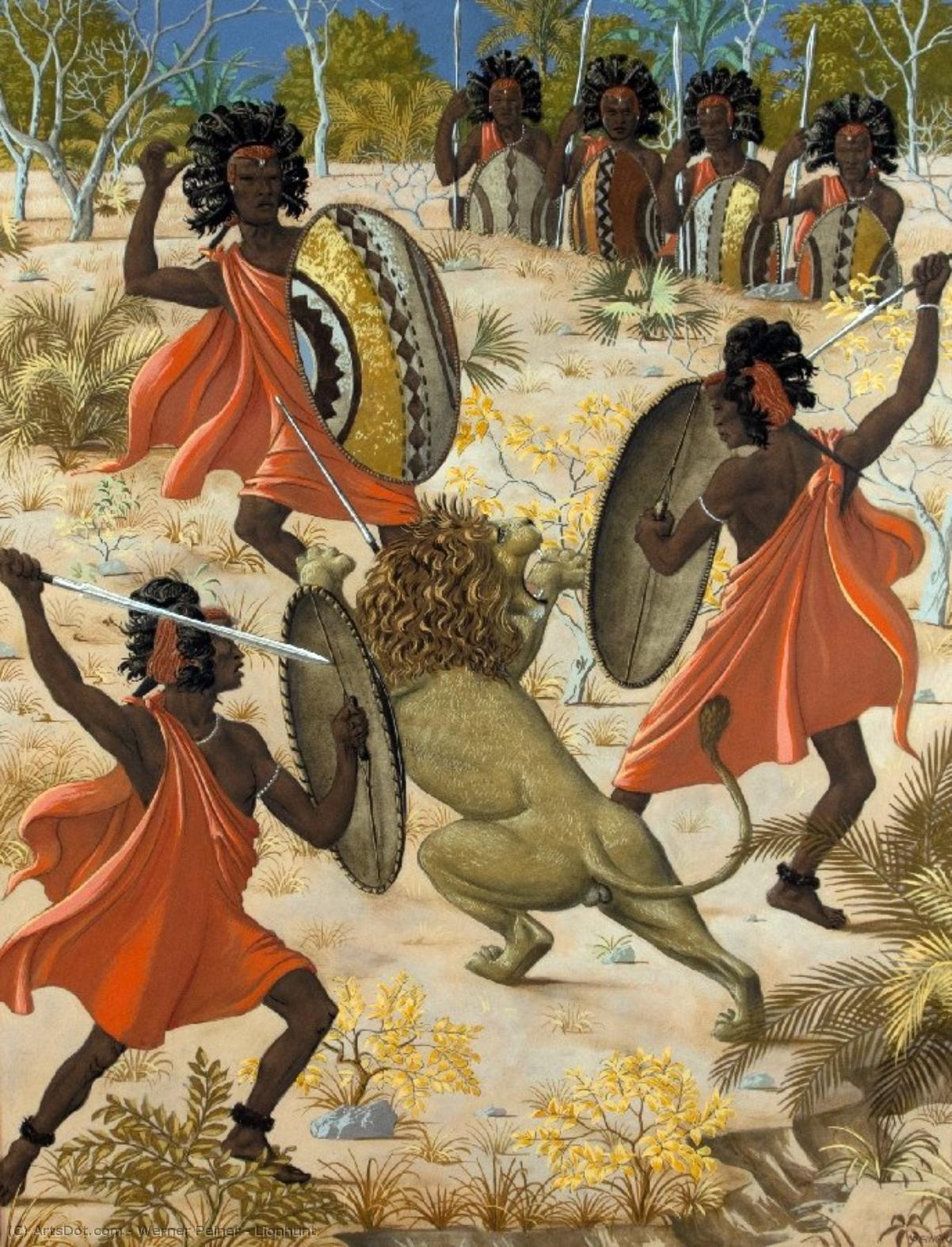
Lionhunt

Werner Peiner (1897-1984) était un peintre allemand dont le parcours artistique allait de l’expressionnisme à la nouvelle objectivité, devenant ainsi un artiste officiel majeur du Troisième Reich. Découvrez ses œuvres emblématiques et son rôle controversé dans l'histoire artistique nazie !

Reproduction à l'huile faite à la main

Huile sur toile peinte à la main, avec cadre et dimensions personnalisés, réalisée sur commande par nos artistes.

Standard
custom
CM
INCH

Choisissez parmi nos formats prédéfinis qui respectent les proportions originales de l’œuvre.

largeur
hauteur

Vous pouvez saisir vos propres dimensions pour l'adapter à un cadre ou à un espace spécifique. Si la taille sélectionnée ne correspond pas aux proportions de l'image d'origine, nous recadrerons l'œuvre ou prolongerons la peinture avec des éléments peints à la main supplémentaires. Une maquette numérique vous sera envoyée pour approbation avant le début de la production.
Veuillez noter que l'aperçu à l'écran ne reflète pas le recadrage ou l'extension réels. Seule la maquette montrera fidèlement la composition finale.
Bien que des tailles personnalisées soient disponibles, nous vous recommandons de sélectionner une dimension dans la liste prédéfinie afin de préserver les proportions d'origine.

Exemples de personnalisation : remplacer un visage par la photo du client ; ajouter un animal de compagnie (par exemple, remplacer un chat par un chien) ; inclure un message caché en arrière-plan ; modifier le paysage ou les éléments de l'arrière-plan.
Après la commande, l’équipe WahooArt.com contactera le client par e-mail pour obtenir ses instructions et lui fournira une maquette d’aperçu.

Livraison dans le monde entier () en 3 à 4 semaines au lieu des 5 semaines habituelles. (5 juillet). Aucune concession sur la qualité.

why_choose_icon
Livraison express gratuite dans le monde entier

why_choose_icon
Toile de lin de haute qualité
why_choose_icon
Assurance transport complète
why_choose_icon
Garantie de remboursement des frais de douane
why_choose_icon
Garantie de fidélité des couleurs
why_choose_icon
Politique de retour de 60 jours (uniquement en cas de défaut)
why_choose_icon
Garantie de remboursement à 100%
why_choose_icon
Réduction sur les achats groupés

Prix total

-

reproduction

Lionhunt

Technique de reproduction

Format de reproduction

-

Prix total final

-


Biographie de l'artiste

Werner Peiner: A Painter Caught Between Realism and Nazi Ideology

Werner Peiner (20 July 1897 – 19 August 1984) was a German painter whose artistic journey spanned from the expressive currents of early Expressionism to the increasingly formalized aesthetic dictated by the Third Reich, ultimately cementing his position as one of its most prominent official artists. Born in Düsseldorf, Peiner’s formative years were steeped in the intellectual ferment of Weimar Germany, where he absorbed influences from figures like Wilhelm Döringer and embraced a style characterized by nuanced observation and emotional depth—a departure from purely representational art that would foreshadow his later allegiance to Nazi ideology.

Early Influences & Artistic Formation: The Expressionist Spirit

Peiner’s initial artistic explorations resonated deeply with the expressive fervor of Expressionism, particularly evident in landscapes imbued with melancholic beauty and portraits capturing psychological complexity. His early works demonstrated a sensitivity to tonal modulation and textural variation—techniques honed during his studies at Düsseldorf Art Academy under Döringer. Döringer's guidance instilled in Peiner a profound appreciation for capturing emotion through careful attention to detail and subtle color palettes, shaping the core of his artistic vision. This stylistic approach distinguished him from more conventional representational painters of the time, positioning him squarely within the vanguard of Expressionist thought.

New Objectivity & The Bauhaus Connection

As the decade progressed, Peiner’s artistic sensibilities shifted toward New Objectivity, mirroring the broader intellectual currents of the era. This movement championed a detached yet precise depiction of reality, prioritizing clarity and geometric forms—a stylistic choice that reflected Peiner's engagement with the principles espoused by Bauhaus. The Bauhaus ethos—characterized by functionalism and an uncompromising commitment to artistic innovation—provided Peiner with a conceptual framework for addressing the challenges posed by the changing cultural landscape of Weimar Germany. His exploration of New Objectivity’s aesthetic ideals solidified his reputation as a visionary artist who dared to challenge established conventions.

The Rise of Official Art & Patronage Under Göring

Peiner’s career took a decisive turn in 1933 with his appointment as professor at Düsseldorf Art Academy, coinciding with Hitler's ascent to power. This position afforded him access to influential figures like Hermann Göring, who recognized Peiner’s talent and championed his artistic vision. Göring actively supported Peiner’s endeavors, notably commissioning monumental tapestries for the New Reich Chancellery—a project that served as a powerful visual embodiment of Nazi propaganda's narrative of Germanic grandeur and spiritual renewal. The patronage extended beyond mere financial backing; it represented an endorsement of Peiner’s artistic sensibilities within the framework of the regime’s ideological ambitions. This collaboration marked a pivotal moment in Peiner’s career, propelling him to prominence within the artistic circles of Berlin and establishing his association with the Nazi aesthetic.

Notable Works & Artistic Legacy

Peiner's oeuvre encompasses a diverse range of paintings—primarily landscapes—that exemplify his mastery of tonal modulation and textural variation. Among his most celebrated works is “Early Morning in the Eifel Mountains,” which captures the ethereal beauty of the Rhineland region with remarkable precision and emotional resonance. Furthermore, he undertook the ambitious project of designing monumental tapestries for the New Reich Chancellery, reflecting Göring’s conviction that Peiner's art represented the pinnacle of German artistic achievement. His legacy continues to inspire artists today—a testament to his enduring contribution to German painting history. ### Historical Significance & Controversial Debate Werner Peiner’s involvement with Nazi Germany remains a subject of ongoing scholarly debate. While he defended his decision to accept patronage from Göring as an affirmation of artistic integrity, critics contend that it compromised his moral compass and contributed to the glorification of totalitarian ideology. Nevertheless, Peiner's work—particularly “Der Thronhimmel”—continues to fascinate art historians and viewers alike—a poignant reminder of how art can be entangled with political forces. His contribution to Bauhaus’s aesthetic principles underscores his role as a pivotal figure in shaping German artistic culture during the interwar period.
Werner Peiner

Werner Peiner

1897 - 1984 , Allemagne

En bref

  • Artistic Movement Or Style: Expressionisme & Réalisme
  • Artists Or Movements Influenced By This Artist: ['Die Brücke']
  • Artists Who Influenced This Artist: ['Wilhelm Döringer']
  • Date Of Birth: 20 juillet 1897
  • Date Of Death: 19 août 1984
  • Full Name: Werner Peiner
  • Nationality: Allemand
  • Notable Artworks:
    • Journée matinale dans les montagnes de l'Eifel
    • Le Trône céleste
  • Place Of Birth: Düsseldorf, Allemagne