Aperçu en situation Aperçu en RA Passer au format impression Acheter la peinture faite à la main Partager
Détails Ajouter aux favoris Télécharger Articles similaires Radiographie Voir le diaporama Statistiques

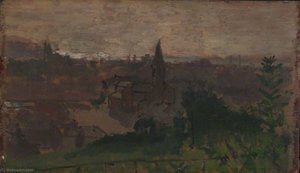
The Miner

Experience Walter Richard Sickert’s ‘The Miner,’ a raw & emotive oil painting capturing intense intimacy. Explore this Symbolist work's textured impasto and shallow perspective – a captivating glimpse into early 20th-century London.

Découvrez Walter Richard Sickert (1860-1942), peintre britannique novateur ! Scènes de music-halls, portraits audacieux & influence sur l'art moderne.

Acquérez une image numérique haute résolution et optimisée, d'une qualité bien supérieure à l'aperçu en ligne.

Chaque fichier est méticuleusement préparé par nos spécialistes internes à l'aide d'outils avancés et d'une retouche manuelle experte. Nous garantissons que chaque image possède une clarté exceptionnelle, une précision des couleurs irréprochable et un niveau de détail fin.

Le fichier final est livré par e-mail sous 72 heures, optimisé pour une utilisation immédiate dans des contextes professionnels, éditoriaux et d'impression. Il offre la même qualité de confiance que celle utilisée par les plus grands studios de création, éditeurs et galeries.

Image numérique

Téléchargez un fichier haute résolution pour votre usage personnel, l'impression et vos projets créatifs. ( Passer au format impression Acheter la peinture faite à la main)

Prix total

$ 24,90

Inclus avec chaque commande d'image numérique

Livraison numérique experte, garantie.

En choisissant WahooArt.com, vous n'obtenez pas seulement une simple image : vous recevez une œuvre numérique sublimée avec professionnalisme, conçue avec précision et accompagnée d'une garantie de satisfaction. Voici tout ce qui accompagne automatiquement votre commande :

shipping_icon
Livraison rapide par e-mail

Votre fichier d'image numérique haute résolution vous sera envoyé par e-mail sous 72 heures après votre commande — prêt à un usage immédiat.

canvas_icon
Fichier numérique optimisé par l'IA

Votre œuvre d'art bénéficie d'une optimisation professionnelle grâce à des outils d'IA avancés et une retouche manuelle, garantissant un niveau maximal de détail, de clarté et de fidélité chromatique.

insurance_icon
Réexpédition gratuite à vie

Vous avez accidentellement supprimé ou perdu votre fichier ? Pas d'inquiétude — nous vous le renverrons gratuitement, quand vous le souhaitez.

tax_icon
Aucuns frais de douane — À jamais

Profitez de votre œuvre d'art instantanément sans frais de douane ni de livraison — les téléchargements numériques sont toujours exonérés de taxes.

color_icon
Garantie de fidélité des couleurs

Nous garantissons que votre image numérique reproduit les couleurs de l'original aussi fidèlement que possible grâce à des outils professionnels et une gestion rigoureuse des couleurs.

return_icon
Garantie de satisfaction de 100 jours

Si vous n'êtes pas satisfait de votre image numérique, nous la retoucherons ou vous rembourserons 100% sous 100 jours — sans poser de questions.

guarantee_icon
Garantie de remboursement à 100%

Pas satisfait ? Obtenez un remboursement intégral dans les 100 jours suivant la réception de votre fichier numérique — sans aucune question posée.

discount_icon
Remises sur les commandes groupées

Achetez 3 images, économisez 10% - Achetez 5, économisez 15% - Achetez 10+, économisez 20%. Idéal pour les projets créatifs, les galeries et les agences.

L'essentiel de l'œuvre

  • Artist: Walter Richard Sickert
  • Movement: Symbolism
  • Location: Birmingham Museums Trust
  • Artistic style: Romanticism/Symbolism
  • Subject or theme: Mining, intimacy, labor
  • Year: 1935-36
  • Title: The Miner

Quiz d'art

Chaque question ne comporte qu'une seule bonne réponse.

Question 1:
What artistic movement is most closely associated with Walter Richard Sickert’s ‘The Miner’?
Question 2:
What is a prominent technique used in 'The Miner' that contributes to its emotional intensity?
Question 3:
According to the provided text, what is a key theme explored in ‘The Miner’?
Question 4:
In what year was ‘The Miner’ painted?
Question 5:
What does the shallow perspective in ‘The Miner’ primarily achieve?

A Glimpse into the Heart of Labor: Walter Richard Sickert’s “The Miner”

Walter Richard Sickert's "The Miner," painted in 1935-36, isn’t merely a depiction of a working man; it’s an intimate excavation of human experience. This oil painting, currently residing within the Birmingham Museums Trust collection, offers a profoundly unsettling and ultimately poignant meditation on isolation, hardship, and the enduring search for connection. Sickert, a figure perpetually navigating the boundaries between artistic tradition and modernism – born in Munich but firmly rooted in London’s vibrant art scene – masterfully captures the psychological weight of a life spent toiling beneath the earth.

The composition immediately draws the viewer into a claustrophobic space. Two figures, rendered with a deliberate lack of idealization, are locked in an intense embrace. The man, his face partially obscured by a dark cap and the rough texture of his clothing, leans forward with a palpable urgency. His body is taut, suggesting both vulnerability and a desperate need for solace. The woman, her hair cascading down her back, offers a yielding presence – not necessarily one of passive acceptance, but rather a quiet resilience in the face of an unforgiving world. Sickert’s brushwork is remarkably tactile; thick impasto layers create a sense of physicality, almost as if you could reach out and feel the grit of the mine dust clinging to their skin.

The Shadowy World of Camden Town: Context and Style

To understand “The Miner,” it’s crucial to situate it within Sickert's broader artistic practice. He was a key figure in the Camden Town Group, a collective of artists who rejected the academic traditions of the Royal Academy and embraced a more gritty, urban realism. This group, centered around the bohemian district of Camden Town in London, sought to depict the lives of ordinary people – particularly those on the fringes of society – with unflinching honesty. Sickert’s work often explored themes of sexuality, poverty, and the darker aspects of human nature, frequently drawing inspiration from music halls, pubs, and the city's underbelly.

The painting’s style aligns closely with Symbolism and early Modernism. Sickert deliberately eschewed photographic realism, prioritizing emotional impact over precise representation. The muted color palette – dominated by browns, grays, and blacks – reinforces the somber mood of the scene. Notice how he uses light to sculpt form, creating a dramatic chiaroscuro effect that emphasizes the figures’ faces and bodies while plunging the background into darkness. This technique not only adds depth but also contributes to the painting's overall sense of mystery and unease.

Decoding the Symbolism: More Than Just a Miner

“The Miner” is rich in symbolic meaning, extending far beyond its literal subject matter. The mine itself represents a metaphorical descent into darkness – both physical and psychological. It’s a place of isolation, hardship, and relentless labor, mirroring the protagonist's emotional state following his personal loss. The embrace between the figures can be interpreted as an attempt to bridge this gap, offering a fleeting moment of connection amidst the overwhelming sense of despair. The woman’s partially obscured face suggests a vulnerability that contrasts with the man’s apparent strength, hinting at a complex power dynamic.

Furthermore, Sickert's choice of subject – a working-class couple – was deliberately provocative for its time. He wasn’t interested in romanticizing labor; instead, he presented it as a brutal reality, stripped of any sentimental gloss. The painting subtly challenges societal norms and exposes the human cost of industrialization. The flower glimpsed in the background, visible only briefly, could symbolize hope or beauty amidst the darkness – a reminder that even in the most difficult circumstances, moments of grace can still be found.

A Timeless Exploration of Human Connection

“The Miner” is not simply a portrait; it’s a profound exploration of human connection, isolation, and the enduring search for meaning. Sickert's masterful use of light, color, and brushwork creates an intensely emotional experience, inviting viewers to contemplate the complexities of the human condition. It remains a powerful testament to his unique artistic vision and a haunting reminder of the lives lived in the shadows of modern society. Reproductions capture much of this evocative power, offering a window into a world both familiar and profoundly unsettling.


Biographie de l'artiste

Premières années et formation

Walter Richard Sickert, peintre britannico-allemand, est né le 31 mai 1860 à Munich, dans le royaume de Bavière. Sa famille s'est installée en Angleterre en 1868, après l'annexion du Schleswig-Holstein par l'Allemagne. La formation précoce de Sickert a débuté par un bref passage d’acteur, suivi de son inscription à la Slade School en 1881.

Développement artistique

Il est ensuite devenu l'élève de James Abbott McNeill Whistler, qui a considérablement influencé son œuvre. Les premières peintures de Sickert étaient de petites études tonales peintes "alla prima" directement d’après nature, suivant l’exemple de Whistler. Son approche évoluera vers un style plus personnel et distinctif.

Œuvres notables et controverses

Ses premières œuvres majeures, datant de la fin des années 1880, représentaient des scènes dans les music-halls londoniens. L'une de ses peintures les plus connues, Katie Lawrence at Gatti’s, a suscité la controverse en raison de sa représentation d'une chanteuse de music-hall bien connue, jugée « laide et vulgaire » par les critiques. Cette œuvre témoigne de son intérêt pour le réalisme social et l'observation directe de la vie quotidienne.

Association avec le Groupe de Camden Town

Sickert a été une influence importante sur les styles d’avant-garde britanniques au XXe siècle. Il a rejoint le New English Art Club en 1888, un groupe d'artistes réalistes influencés par l'art français, et est devenu plus tard membre du Groupe de Camden Town. Cette association marque une période clé dans son développement artistique, où il s’engage davantage dans les mouvements artistiques émergents.

Héritage et influence

L'œuvre de Sickert peut être admirée dans divers musées, dont le Museum Kunstsalon Franke Schenk, qui présente des œuvres du XVIe au XXe siècle. Son héritage dépasse sa propre œuvre, influençant les styles d’avant-garde britannique au milieu et à la fin du XXe siècle. Il est reconnu pour son approche unique de la peinture, combinant réalisme social, observation directe et une sensibilité particulière aux ambiances intimes et urbaines.
  • Découvrez 'Gaieté Montparnasse' de Sickert, peinture envoûtante de 1906 capturant la vie bohème parisienne. Intimité et influence impressionniste à WahooArt.com.
  • Portrait introspectif de George Moore par Walter Sickert (1890). Découvrez l'ambiance mélancolique et les coups de pinceau expressifs de cette œuvre post-impressionniste.
Dates clés : - 31 mai 1860 : né à Munich, royaume de Bavière - 1888 : rejoint le New English Art Club - 1903-04 : a développé une approche distinctive des tableaux à plusieurs figures lors de son dernier voyage de peinture à Venise.

Conclusion

Le travail pionnier de Walter Richard Sickert dans l’art d’avant-garde britannique a laissé une marque indélébile sur le monde de l'art. Son héritage continue d'inspirer et d'influencer les artistes, faisant de lui une figure cruciale dans l'histoire de l'art moderne.
Walter Richard Sickert

Walter Richard Sickert

1860 - 1942 , Allemagne

En bref

  • Artistes Influents: ['James Abbott McNeill Whistler']
  • Date De Décès: 22 janvier 1942
  • Date De Naissance: 31 mai 1860
  • Influence Sur Les Artistes: ['Camden Town Group']
  • Lieu De Naissance: Munich, Allemagne
  • Mouvement Artistique: Post-Impressionnisme
  • Nationalité: Britannique (d'origine allemande)
  • Nom Complet: Walter Richard Sickert
  • Œuvres Notables:
    • Katie Lawrence at Gatti’s
    • Gaieté Montparnasse