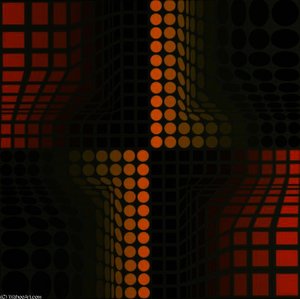
Impressions giclées ou sur toile de qualité musée, avec une production rapide et des finitions au choix. ( Commander la reproduction peinte à la main Acheter l'image haute résolution)





























Choisissez parmi nos formats prédéfinis qui respectent les proportions originales de l’œuvre.

Vous pouvez saisir vos propres dimensions pour vous adapter à un cadre ou à un espace spécifique. Si la taille sélectionnée ne correspond pas aux proportions de l'image originale, nous recadrerons l'œuvre ou étendrons l'image avec une bordure en miroir ou une couleur unie. Une maquette numérique vous sera envoyée pour approbation avant le début de la production.
Veuillez noter que l'aperçu à l'écran ne reflète pas le recadrage ou l'extension réelle. Seule la maquette montrera avec précision la composition finale.
Bien que des tailles personnalisées soient disponibles, nous vous recommandons de choisir une dimension dans la liste prédéfinie afin de préserver les proportions originales.
Livraison dans le monde entier () en 2 semaines au lieu des 4/5 semaines habituelles. (7 septembre)


Zaphir 1
Format de la reproduction
Victor Vasarely’s "Zaphir 1" is more than just a painting; it's an experience, a visual exploration of perception and the power of geometric abstraction. This work, characteristic of Vasarely’s pioneering role in Op Art and Kinetic art, invites viewers into a world where circles—in vibrant hues of blue, green, yellow, orange, and punctuated by stark black—interact to create a dynamic, almost pulsating composition. The painting isn't about depicting a scene or object from the real world; instead, it’s an investigation into how our eyes and brains interpret patterns, shapes, and color relationships. It is a testament to Vasarely’s lifelong dedication to understanding and manipulating visual perception.
To truly appreciate "Zaphir 1," one must understand the journey of its creator. Born Károly Vásárhelyi in Pécs, Croatia (then part of Austria-Hungary), Victor Vasarely initially pursued medical studies before embracing his artistic calling. His formal training at the Podolini-Volkmann Academy and later Sándor Bortnyik’s workshop – deeply influenced by the Bauhaus movement – laid the foundation for his unique style. The Bauhaus ethos, with its emphasis on functional design and geometric abstraction, resonated profoundly with Vasarely's evolving vision. He wasn't interested in replicating reality; he sought to create a new visual language based on fundamental geometric principles. This pursuit led him to abandon traditional painting techniques in favor of a systematic approach, meticulously constructing his compositions from basic shapes—circles, squares, and triangles—arranged according to precise mathematical relationships.
“Zaphir 1” exemplifies Vasarely’s mastery of optical illusion. The arrangement of the circles – varying in size and position – isn't random; it is carefully calculated to create a sense of depth, movement, and vibration. The contrasting colors further amplify this effect, playing tricks on the eye and blurring the boundaries between the individual shapes. It’s as if the circles are not static forms but rather spheres suspended in space, gently rotating or expanding. Vasarely's technique involved layering these geometric elements with precision, creating a complex interplay of positive and negative space that draws the viewer into an immersive visual experience. He aimed to create art that wasn't merely seen but *felt*, engaging the senses and challenging conventional notions of perception.
While seemingly abstract, Vasarely’s work carries a deeper symbolic weight. His systematic approach was not just about aesthetics; it was also rooted in his belief that art should be accessible to everyone. He envisioned a world where art wasn't confined to museums or galleries but integrated into everyday life—enhancing urban spaces and enriching the human environment. The circles themselves can be interpreted as symbols of wholeness, continuity, and interconnectedness – universal themes that resonate across cultures. "Zaphir 1," therefore, becomes more than just a visually striking composition; it’s a statement about the power of art to inspire, engage, and democratize visual experience. It is an invitation to see the world through a new lens—one shaped by geometry, color, and the boundless possibilities of human perception.
Victor Vasarely (né Károly Vaszary) a été une figure essentielle dans le développement de l'Op Art et de l'art cinétique. Son œuvre cherchait à transcender la peinture traditionnelle en explorant les illusions d’optique et en créant des expériences visuelles dynamiques. Né à Pécs, alors faisant partie de la Hongrie-Autriche (aujourd'hui en Croatie), sa vie précoce a impliqué l'étude de la médecine à l'Université Eötvös Loránd à Budapest avant de se consacrer pleinement à l'art.
La contribution de Vasarely à l’histoire de l’art est multiple. Il a dépassé les techniques picturales traditionnelles pour créer des œuvres qui engagent activement la perception du spectateur. Son approche systématique a remis en question les notions conventionnelles de créativité artistique et a ouvert la voie à l'art généré par ordinateur et à la conception numérique. En embrassant la reproductibilité et les applications commerciales, Vasarely a brouillé les frontières entre les beaux-arts et la culture populaire, laissant une marque durable sur les deux.

1906 - 1997 , Croatie
Explore the mesmerizing world of Victor Vasarely. Discover how his Bauhaus-inspired Op Art masters the science of perception through geometric abstraction and vibrant color. A sophisticated guide for discerning art collectors seeking to understand the legacy of optical illusion.

Embark on a visual journey through the mesmerizing world of Op Art. Discover the masters of optical illusion, explore geometric abstraction, and learn how to curate high-impact kinetic works for your private collection with expert guidance from art professionals.

Explore the profound spiritual depth of geometric abstraction. From Malevich's Suprematism to modern masters, our expert guide reveals how pure form and color command presence in fine art collections.

Discover the profound beauty of abstract art. Our expert guide explores geometric abstraction, Op Art, and Expressionism, offering connoisseurs deep insights into collecting and curating powerful, non-representational masterpieces for sophisticated interiors.

Explore the profound evolution of Neo-Abstract art. Discover how bold geometric forms, vibrant chromatic depth, and tactile textures redefine modern expression for the discerning collector seeking sophisticated, high-impact masterpieces for contemporary interiors.

 Aperçu en situation
 Envoyer
 Partager
 Détails de l'œuvre

 Télécharger
 Articles similaires
 Radiographie
 Diaporama
 Lire la suite







 L'option verre n'est disponible que pour les dimensions inférieures à 110 cm.