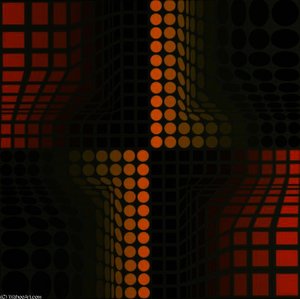
Huile sur toile peinte à la main, avec cadre et dimensions personnalisés, réalisée sur commande par nos artistes. ( Commander l'impression Acheter l'image haute résolution)





























Choisissez parmi nos formats prédéfinis qui respectent les proportions originales de l’œuvre.

Vous pouvez saisir vos propres dimensions pour l'adapter à un cadre ou à un espace spécifique. Si la taille sélectionnée ne correspond pas aux proportions de l'image d'origine, nous recadrerons l'œuvre ou prolongerons la peinture avec des éléments peints à la main supplémentaires. Une maquette numérique vous sera envoyée pour approbation avant le début de la production.
Veuillez noter que l'aperçu à l'écran ne reflète pas le recadrage ou l'extension réels. Seule la maquette montrera fidèlement la composition finale.
Bien que des tailles personnalisées soient disponibles, nous vous recommandons de sélectionner une dimension dans la liste prédéfinie afin de préserver les proportions d'origine.
Livraison dans le monde entier () en 3 à 4 semaines au lieu des 5 semaines habituelles. (6 septembre). Aucun compromis sur la qualité.


Olla
Format de la reproduction
Victor Vasarely’s “Olla,” created in 1988, isn't merely a painting; it’s an experience—a visual vibration that challenges our perception of space and form. This striking work exemplifies the artist’s pioneering role in Op Art (Optical Art), a movement he essentially founded, aiming to create illusions of movement and depth through carefully orchestrated geometric patterns. "Olla," meaning “pot” or “vessel” in Spanish, hints at a contained energy, a vibrant core radiating outward. The title itself is intriguing, suggesting an organic form rendered entirely through the language of pure abstraction.
At first glance, "Olla" presents a deceptively simple composition: three overlapping circles, each varying slightly in size and hue, set against a shimmering gold background. However, this simplicity belies a sophisticated understanding of color theory and spatial relationships. Vasarely wasn't interested in representing the external world; instead, he sought to explore the fundamental principles that govern how we perceive it. The circles aren’t solid forms but rather fields of color interacting with one another, creating an illusion of depth and movement. The gold background isn't merely a backdrop but an active participant, reflecting and amplifying the vibrancy of the overlapping shapes. Vasarely employed screenprinting techniques, allowing for precise control over color placement and layering—a crucial element in achieving the desired optical effect. This method also speaks to his desire to democratize art, making it accessible beyond traditional painting mediums.
To fully appreciate "Olla," one must understand its place within the broader context of 20th-century art. Emerging in the 1960s, Op Art was a reaction against the perceived subjectivity and emotionalism of Abstract Expressionism. Vasarely, along with artists like Bridget Riley, sought to create art based on objective principles—mathematical precision and optical phenomena. His work drew inspiration from various sources, including tribal art, scientific diagrams, and even advertising design. "Olla" reflects this eclectic influence, combining geometric rigor with a playful sense of visual dynamism. It’s a testament to Vasarely's belief that art could be both intellectually stimulating and visually engaging—a bridge between science and aesthetics.
While "Olla" is rooted in mathematical principles, it also evokes a range of emotional responses. The vibrant colors – yellows and golds – convey a sense of energy, optimism, and warmth. The overlapping circles suggest interconnectedness and harmony, while the subtle variations in shape create a feeling of visual tension. The work doesn't depict any recognizable objects or figures, yet it resonates with a primal human fascination for patterns and rhythms. It’s an art that engages not just our intellect but also our senses—a mesmerizing dance of light and color that invites us to question the nature of perception itself. The golden background adds a layer of richness and sophistication, elevating the work beyond mere optical illusion into something truly captivating.
Victor Vasarely (né Károly Vaszary) a été une figure essentielle dans le développement de l'Op Art et de l'art cinétique. Son œuvre cherchait à transcender la peinture traditionnelle en explorant les illusions d’optique et en créant des expériences visuelles dynamiques. Né à Pécs, alors faisant partie de la Hongrie-Autriche (aujourd'hui en Croatie), sa vie précoce a impliqué l'étude de la médecine à l'Université Eötvös Loránd à Budapest avant de se consacrer pleinement à l'art.
La contribution de Vasarely à l’histoire de l’art est multiple. Il a dépassé les techniques picturales traditionnelles pour créer des œuvres qui engagent activement la perception du spectateur. Son approche systématique a remis en question les notions conventionnelles de créativité artistique et a ouvert la voie à l'art généré par ordinateur et à la conception numérique. En embrassant la reproductibilité et les applications commerciales, Vasarely a brouillé les frontières entre les beaux-arts et la culture populaire, laissant une marque durable sur les deux.

1906 - 1997 , Croatie

Explore the mesmerizing world of Victor Vasarely. Discover how his Bauhaus-inspired Op Art masters the science of perception through geometric abstraction and vibrant color. A sophisticated guide for discerning art collectors seeking to understand the legacy of optical illusion.

Embark on a visual journey through the mesmerizing world of Op Art. Discover the masters of optical illusion, explore geometric abstraction, and learn how to curate high-impact kinetic works for your private collection with expert guidance from art professionals.

Explore the profound spiritual depth of geometric abstraction. From Malevich's Suprematism to modern masters, our expert guide reveals how pure form and color command presence in fine art collections.

Discover the profound beauty of abstract art. Our expert guide explores geometric abstraction, Op Art, and Expressionism, offering connoisseurs deep insights into collecting and curating powerful, non-representational masterpieces for sophisticated interiors.

 Aperçu en situation
 Envoyer
 Partager
 Détails de l'œuvre

 Télécharger
 Articles similaires
 Radiographie
 Diaporama
 Lire la suite







 L'option verre n'est disponible que pour les dimensions inférieures à 110 cm.