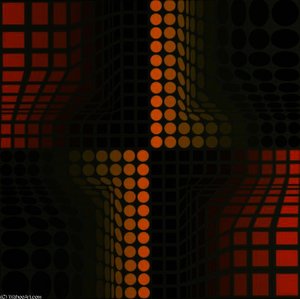
Huile sur toile peinte à la main, avec cadre et dimensions personnalisés, réalisée sur commande par nos artistes. ( Commander l'impression Acheter l'image haute résolution)





























Choisissez parmi nos formats prédéfinis qui respectent les proportions originales de l’œuvre.

Vous pouvez saisir vos propres dimensions pour l'adapter à un cadre ou à un espace spécifique. Si la taille sélectionnée ne correspond pas aux proportions de l'image d'origine, nous recadrerons l'œuvre ou prolongerons la peinture avec des éléments peints à la main supplémentaires. Une maquette numérique vous sera envoyée pour approbation avant le début de la production.
Veuillez noter que l'aperçu à l'écran ne reflète pas le recadrage ou l'extension réels. Seule la maquette montrera fidèlement la composition finale.
Bien que des tailles personnalisées soient disponibles, nous vous recommandons de sélectionner une dimension dans la liste prédéfinie afin de préserver les proportions d'origine.
Livraison dans le monde entier () en 3 à 4 semaines au lieu des 5 semaines habituelles. (6 septembre). Aucun compromis sur la qualité.


Koska Mez
Format de la reproduction
Victor Vasarely's Koska Mez (Honeycomb), painted in 1962, is more than just a visual puzzle; it’s a profound meditation on the nature of perception itself. This vibrant artwork, dominated by a bold yellow square punctuated with countless meticulously placed circles, embodies the core tenets of Op Art – Optical Art – a movement that emerged in the mid-20th century and sought to stimulate optical illusions through geometric abstraction. Vasarely, a key figure in this revolutionary style, wasn’t simply interested in creating pretty pictures; he was driven by a desire to scientifically explore how our eyes and brains interpret visual information. The painting's deceptively simple composition immediately draws the viewer into a dynamic interplay of space and movement, challenging our assumptions about depth and perspective.
Understanding Koska Mez requires acknowledging its historical context. Vasarely’s artistic journey began with a formal medical education, a testament to the rigorous intellectualism that would later inform his work. However, a pivotal encounter with Sándor Bortnyik's ‘Műhely’ workshop – directly influenced by the Bauhaus school – fundamentally shifted his trajectory. The Bauhaus emphasized functional design and geometric abstraction, principles that resonated deeply with Vasarely’s burgeoning interest in visual dynamics. This training instilled within him a fascination with kinetic art—the idea that perception itself could be manipulated through carefully controlled optical effects. The influence of Piet Mondrian and other early abstract artists is also evident, but Vasarely pushed beyond mere representation to create works that actively engaged the viewer’s senses.
Vasarely's technique in Koska Mez is remarkably precise. Each circle, rendered with meticulous attention to detail, contributes to the overall illusion of depth and movement. The varying sizes and positions of the circles create a sense of recession, mimicking the way our eyes perceive distance. He employed a layering technique, applying paint in thin washes to build up the intensity of color and achieve the desired optical effect. This careful control over scale, color, and placement is what elevates the work beyond mere decoration; it’s a deliberate manipulation of visual perception. The use of bright yellow, a color associated with energy and optimism, further amplifies this dynamic quality.
While ostensibly abstract, Koska Mez can be interpreted as representing a microcosm – a ‘honeycomb’ suggesting order within apparent chaos. The repetition of the circles evokes a sense of infinity, mirroring the vastness of space and the complexities of the universe. The artwork's impact is profoundly engaging; it invites contemplation on our relationship with visual information and challenges us to question our own perceptions. Vasarely aimed not just to create an image but to trigger a visceral response – a feeling of movement, energy, and perhaps even a sense of wonder. This piece remains a powerful example of how art can be both intellectually stimulating and emotionally resonant.
Victor Vasarely (né Károly Vaszary) a été une figure essentielle dans le développement de l'Op Art et de l'art cinétique. Son œuvre cherchait à transcender la peinture traditionnelle en explorant les illusions d’optique et en créant des expériences visuelles dynamiques. Né à Pécs, alors faisant partie de la Hongrie-Autriche (aujourd'hui en Croatie), sa vie précoce a impliqué l'étude de la médecine à l'Université Eötvös Loránd à Budapest avant de se consacrer pleinement à l'art.
La contribution de Vasarely à l’histoire de l’art est multiple. Il a dépassé les techniques picturales traditionnelles pour créer des œuvres qui engagent activement la perception du spectateur. Son approche systématique a remis en question les notions conventionnelles de créativité artistique et a ouvert la voie à l'art généré par ordinateur et à la conception numérique. En embrassant la reproductibilité et les applications commerciales, Vasarely a brouillé les frontières entre les beaux-arts et la culture populaire, laissant une marque durable sur les deux.

1906 - 1997 , Croatie

Explore the profound spiritual depth of geometric abstraction. From Malevich's Suprematism to modern masters, our expert guide reveals how pure form and color command presence in fine art collections.
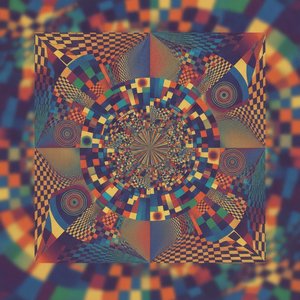
Explore the mesmerizing world of Victor Vasarely. Discover how his Bauhaus-inspired Op Art masters the science of perception through geometric abstraction and vibrant color. A sophisticated guide for discerning art collectors seeking to understand the legacy of optical illusion.

 Aperçu en situation
 Envoyer
 Partager
 Détails de l'œuvre

 Télécharger
 Articles similaires
 Radiographie
 Diaporama

 Lire la suite







 L'option verre n'est disponible que pour les dimensions inférieures à 110 cm.