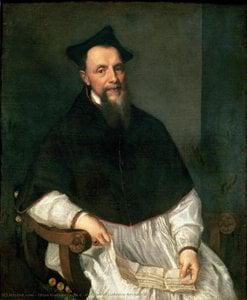
Portrait of Jacopo Strada
The Portrait of Jacopo Strada, painted by the renowned artist Titian Ramsey Peale II, is a captivating piece that showcases the artist’s skill and attention to detail. This oil on canvas painting, measuring 95 x 125 cm, is housed in the esteemed Kunsthistorisches Museum in Vienna, Austria.
Titian Ramsey Peale II was a master of the Renaissance style, and this portrait exemplifies his expertise. The subject, Jacopo Strada, is depicted wearing a red jacket with a fur trim, complemented by a beard and mustache. He holds a statue or figurine in his hand, adding an element of elegance to the scene. The artist’s use of warm colors and subtle lighting creates a cozy atmosphere, drawing the viewer into the painting.
Artistic Style and Technique
The portrait embodies the spirit of Venetian Renaissance art—a style characterized by meticulous observation and refined execution. Peale II skillfully employs chiaroscuro, manipulating light and shadow to sculpt Strada’s form and imbue the scene with depth. Notice how the artist captures Strada's posture with remarkable precision, conveying a sense of quiet contemplation.
Symbolism and Composition
Beyond its aesthetic beauty, the painting is rich in symbolic elements. The clock on the wall above Jacopo Strada’s head serves as a reminder of time’s passage—a common motif in Renaissance portraits intended to convey wisdom and experience. Similarly, the book resting beside Strada symbolizes knowledge and erudition, reflecting Strada's intellectual pursuits.
The artist carefully balances the composition with decorative elements like the vase positioned on the right side of the image. These objects aren’t merely ornamental; they contribute to the overall narrative by hinting at Strada’s interests and social standing. The statue held in Strada’s hand—a Roman copy of Venus Pseliumene—represents beauty and mythological inspiration.
Historical Context
The Kunsthistorisches Museum, where this masterpiece resides, stands as a testament to Habsburg imperial grandeur. It houses an unparalleled collection of royal treasures and artifacts from the Austro-Hungarian Empire, providing invaluable context for understanding the portrait’s significance within its historical milieu. Peale II's work reflects the humanist ideals prevalent during his time—a fascination with classical antiquity and a belief in human reason.
Comparison with Other Works
Titian Ramsey Peale II’s approach aligns closely with that of Titian Vecellio (Titian), whose version of Portrait of Jacopo Strada—also housed in the Kunsthistorisches Museum—offers a contrasting interpretation focused on capturing Strada’s psychological state.
Furthermore, Peale II's exploration of natural history parallels that of Rembrandt Harmenszoon van Rijn, whose portraits often incorporated detailed depictions of flora and fauna. Like Rembrandt, Peale II sought to elevate his art beyond mere representation—aiming for a profound engagement with the subject’s inner life.
For those seeking inspiration or contemplating acquiring a reproduction of this iconic artwork, consider its enduring appeal—a testament to Titian Ramsey Peale II's artistic genius and the timeless beauty of Renaissance painting.



 Aperçu en situation
 Acheter la peinture faite à la main
 Partager
 Partager
 Détails
 Guide
Guide

 Télécharger
 Articles similaires
 Radiographie
 Voir le diaporama
 Statistiques


 Afficher la suite






































 L'option verre n'est disponible que pour les dimensions inférieures à 110 cm.