Aperçu en situation Aperçu en RA Passer au format impression Passer au format image numérique Partager
Détails Guide imprimable Ajouter aux favoris Télécharger Articles similaires Radiographie Voir le diaporama Statistiques

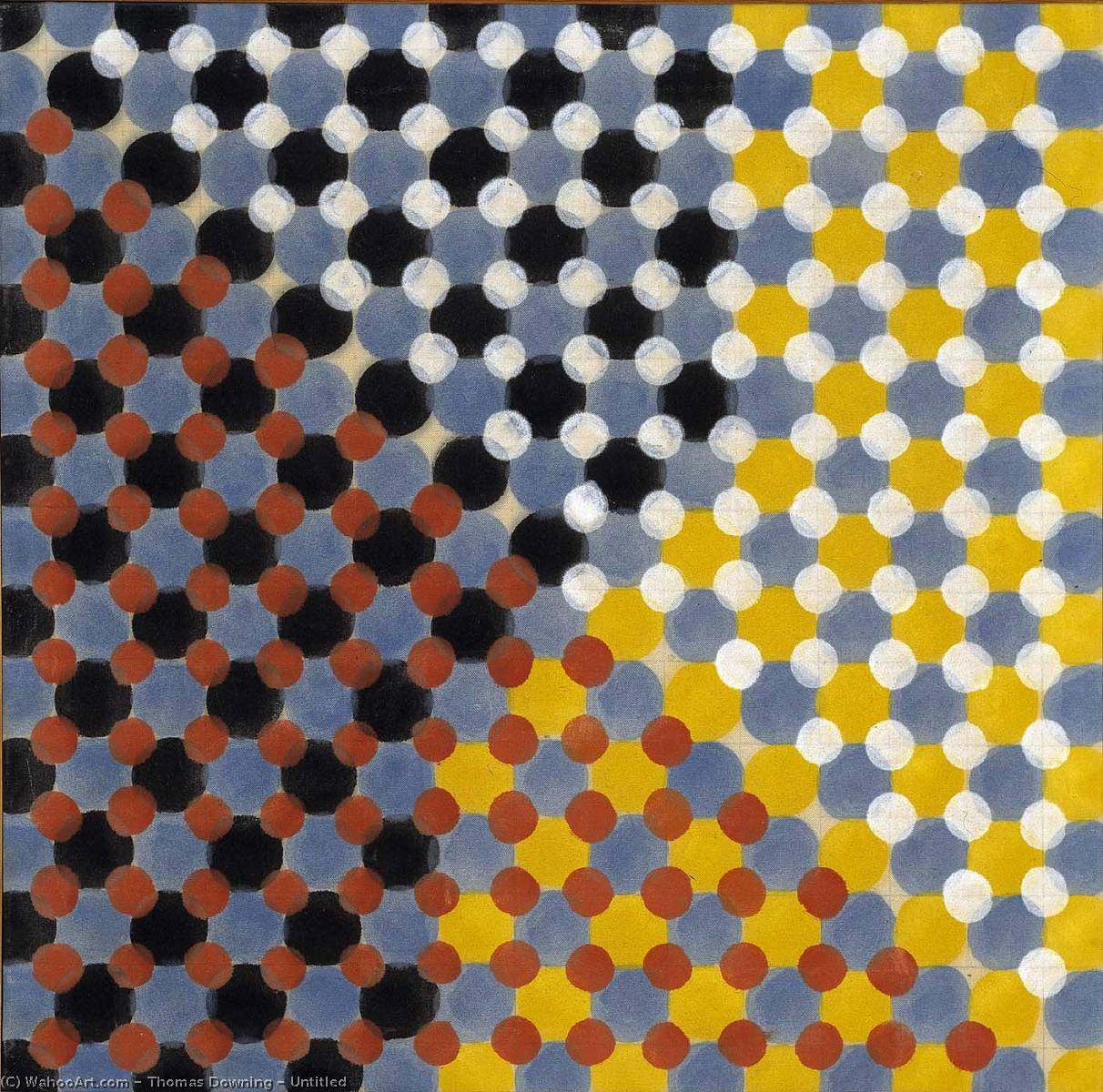
Untitled

  • Date de création1962
  • Dimensions65.0 x 66.0 cm

Discover Thomas Downing: A Washington Color Field painter known for his precise circle spot paintings & influence on artists like Sam Gilliam. Explore his legacy!

L’œuvre d'art présentée sur cette page est protégée par le droit d'auteur, ce qui signifie que nous ne pouvons légalement créer ou vendre de reproduction identique. Cette protection est appliquée en vertu d'accords internationaux tels que la Convention de Berne et par les lois nationales, notamment celles énoncées par le Loi américaine sur le droit d'auteur - Titre 17.

En tant qu'alternative respectueuse et légale, nous proposons des œuvres d'art personnalisées, peintes à la main et inspirées de l'original. Nos artistes talentueux et professionnels étudient avec soin le style, l'ambiance et l'essence artistique de l'œuvre originale pour créer une pièce nouvelle et unique qui évoque la même émotion — tout en restant une création originale en soi.

Cette méthode est pleinement conforme aux réglementations sur le droit d'auteur car elle ne repose pas sur la copie ou la duplication de l'œuvre protégée. Il s'agit plutôt d'une réinterprétation créative — une nouvelle peinture qui s'inspire de l'original sans pour autant lui être identique.

Reproduction à l'huile faite à la main

Huile sur toile peinte à la main, avec cadre et dimensions personnalisés, réalisée sur commande par nos artistes. ( Passer au format impression Passer au format image numérique)

Format standard
personnalisé
CM
INCH

Choisissez parmi nos formats prédéfinis qui respectent les proportions originales de l’œuvre.

largeur
hauteur

Vous pouvez saisir vos propres dimensions pour l'adapter à un cadre ou à un espace spécifique. Si la taille sélectionnée ne correspond pas aux proportions de l'image d'origine, nous recadrerons l'œuvre ou prolongerons la peinture avec des éléments peints à la main supplémentaires. Une maquette numérique vous sera envoyée pour approbation avant le début de la production.
Veuillez noter que l'aperçu à l'écran ne reflète pas le recadrage ou l'extension réels. Seule la maquette montrera fidèlement la composition finale.
Bien que des tailles personnalisées soient disponibles, nous vous recommandons de sélectionner une dimension dans la liste prédéfinie afin de préserver les proportions d'origine.

Exemples de personnalisation possibles : remplacer un visage par la photo du client ; ajouter un animal de compagnie (par exemple, remplacer un chat par un chien) ; inclure un message caché en arrière-plan ; modifier le paysage ou les éléments de l'arrière-plan.
Après la commande, l’équipe WahooArt.com contactera le client par e-mail pour recueillir ses instructions et lui fournira une maquette d’aperçu

Livraison dans le monde entier () en 3 à 4 semaines au lieu des 5 semaines habituelles. (8 octobre). Aucun compromis sur la qualité.

Livraison express gratuite dans le monde entier
Toile de lin de haute qualité
Assurance transport complète
Garantie de remboursement des droits de douane
Garantie de fidélité des couleurs
Garantie de retour de 100 jours (uniquement en cas de défaut)
Garantie de remboursement à 100%
Tarifs dégressifs sur quantité

Prix total

€ 234

Untitled

Technique de reproduction

Format de la reproduction

-

Prix total final

€ 234

The Untitled painting by Thomas Downing, created in 1962, is a fascinating example of geometric abstraction. This acrylic on canvas piece measures 65 x 66 cm and features a complex arrangement of circles, squares, and dots in various colors such as red, yellow, blue, black, white, and orange. The overall composition creates an intricate and eye-catching visual effect.

Geometric Patterns and Influences

The use of geometric patterns in Thomas Downing's work is reminiscent of other notable artists, such as Wassily Wassilyevich Kandinsky, who pioneered abstract art. Kandinsky's Cercle and Square painting, available on WahooArt.com, showcases a similar exploration of geometric forms. The Nine Elements of Chromatique Circle by Wassily Wassilyevich Kandinsky is another notable example, demonstrating the artist's fascination with color theory and geometric patterns.
  • The Arbroath Signal Tower Museum, mentioned in WahooArt.com's documentation, highlights the significance of geometric patterns in art and their connection to various cultural and historical contexts.
  • The concept of tartan, as explained on Wikipedia, also explores the use of geometric patterns in textiles, demonstrating the versatility and timelessness of these designs.
Geometric abstraction continues to inspire artists and art enthusiasts alike, with its unique blend of simplicity and complexity. The Untitled painting by Thomas Downing is a testament to the enduring appeal of geometric patterns in art.
The intersection of art, history, and culture is a fascinating topic, and Thomas Downing's work serves as a prime example of this convergence. By exploring the geometric patterns and influences in his Untitled painting, we can gain a deeper understanding of the artistic movements and cultural contexts that shaped his work.
For those interested in learning more about Thomas Downing and his artistic style, WahooArt.com's collection offers a range of resources and information. The website also features an extensive selection of handmade oil painting reproductions, including works by notable artists like Sonia Delaunay (Sarah Ilinitchna Stern) and Wassily Wassilyevich Kandinsky.

Questions et réponses

Quelle est l'intensité des couleurs dans «Untitled» de Thomas Downing ?

L'intensité des couleurs de « Untitled » est Vivid. L'intensité décrit la force avec laquelle les couleurs apparaissent.

Quelle est la forme de «Untitled» de Thomas Downing et quelles sont ses dimensions ?

«Untitled» de Thomas Downing est une œuvre au format Square de 65 x 66 cm.

Quelle est l'intensité des couleurs de "Untitled" ?

«Untitled» de Thomas Downing est représenté avec une saturation de Balanced Soft et une intensité de Vivid.

À quel artiste est attribuée l'œuvre "Untitled" ?

« Untitled » a été créé par Thomas Downing. Les informations présentes sur cette page décrivent l'œuvre originale de Thomas Downing.

Quelle est l'identité chromatique de «Untitled» de Thomas Downing ?

« Untitled » se définit par une palette Earthy dominée par le Walnut (#844631).

Quelle est la date de création de «Untitled» de Thomas Downing ?

L'œuvre «Untitled» de Thomas Downing date de 1962.

Où puis-je acheter une reproduction peinte à la main de «Untitled» de Thomas Downing ?

« Untitled » est disponible en tant que une reproduction à l'huile peinte à la main sur toile de lin. La commande peut être effectuée sur cette page, avec un choix de formats.


Biographie de l'artiste

The Geometric Rhythm of Thomas Downing

In the vibrant tapestry of mid-century American abstraction, few threads are as precise and mesmerizing as those woven by Thomas Downing. A pivotal figure within the Washington Color Field movement, Downing possessed a singular ability to transform the canvas into a rhythmic playground of geometry and light. Born in Suffolk, Virginia, his journey toward becoming a master of the "spot painting" was marked by a rigorous pursuit of formal excellence. After earning his degree from Randolph-Macon College in 1948, he sought the creative pulse of New York, studying at the prestigious Pratt Institute. This period of intense academic honing prepared him for a transformative voyage through Europe, funded by a grant from the Virginia Museum of Fine Arts. His time at the Académie Julian in Paris allowed him to absorb the nuances of European tradition, providing a classical foundation upon which he would later build his radical, modern abstractions.

Upon returning to the United States following his service in the U.S. Army, Downing settled in Washington, D.C., a city that would become the epicenter of his artistic evolution. It was here that his path intersected with the giants of the era. Seeking to refine his vision within the burgeoning abstract landscape, he studied under Kenneth Noland at Catholic University. This mentorship was more than mere instruction; it was a profound intellectual exchange that helped shape Downing’s place within the Washington Color School. Alongside contemporaries like Howard Mehring and Sam Gilliam, Downing contributed to a movement that moved away from the gestural turbulence of Abstract Expressionism toward a cleaner, more cerebral exploration of color and form. His work became a study in balance, where the weight of a single circle could shift the entire equilibrium of a composition.

The Architecture of Color and Form

Downing’s most enduring legacy lies in his mastery of the Spot Paintings—works characterized by an exquisite arrangement of circles, arcs, and dots. Unlike the chaotic energy of his predecessors, Downing’s compositions felt orchestrated, almost mathematical, yet they pulsed with a life of their and organic vitality. He utilized color not merely as a decorative element but as a structural force. Through the use of symmetry and carefully calculated spacing, he created a sense of depth and movement that drew the viewer into a meditative state. His canvases often featured a complex interplay of primary hues—reds, yellows, and blues—set against stark whites or deep blacks, creating a visual tension that felt both modern and timeless.

The technical brilliance of his work can be seen in pieces such as Red Span and his various Untitled works from the early 1960s. In these paintings, the artist explored:

  • Geometric Precision: The use of perfect circles and arcs to create a sense of cosmic order.
  • Chromatic Harmony: A sophisticated understanding of how adjacent colors interact to produce optical vibrations.
  • Spatial Dynamics: The manipulation of negative space to allow each geometric element to "breathe" on the canvas.

A Legacy Etched in Abstraction

The historical significance of Thomas Downing extends far beyond his personal catalog of works. In 1964, his inclusion in Clement Greenberg’s seminal exhibition, Post-painterly Abstraction, cemented his status as a leading voice in contemporary art. As an educator at the Corcoran College of Art and Design, he also acted as a vital conduit for new ideas, influencing a subsequent generation of artists who sought to find beauty in clarity and structure. His teaching helped foster an environment where the exploration of pure form could flourish.

Though his life ended prematurely and somewhat mysteriously in Provincetown, Massachusetts, in 1985, the impact of his vision remains undiminished. Downing’s work stands as a testament to the power of restraint. He proved that within the confines of a circle or the edge of an arc, there exists an infinite universe of emotion and complexity. Today, his paintings continue to resonate as essential landmarks of American modernism, reminding us that true innovation often lies in the perfect calibration of simplicity.

En bref

  • Artistic Movement Or Style: Washington Color Field
  • Artists Or Movements Influenced By This Artist: Howard Mehring
  • Artists Who Influenced This Artist: Kenneth Noland
  • Date Of Death: October 1985
  • Full Name: Thomas Downing
  • Nationality: American
  • Notable Artworks: ['Spot Paintings']
  • Place Of Birth: Suffolk, Virginia