x
Aperçu en situationAperçu en situation Visualiser en RAVisualiser en RA Commander l'impression Commander l'impressionAcheter l'image haute résolution Acheter l'image haute résolution EnvoyerEnvoyer
Détails de l'œuvreDétails de l'œuvre Ajouter aux favoris Ajouter aux favoris TéléchargerTélécharger Articles similairesArticles similaires RadiographieRadiographie DiaporamaDiaporama

USA

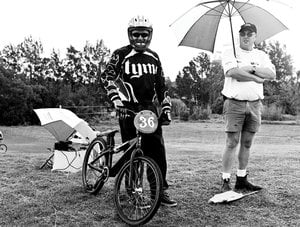
Black & white photo of cyclist Davis Phinney celebrating a race victory in Richmond, VA. Captures energy & excitement – a classic journalistic snapshot of athletic triumph.

The Richmond Times-Dispatch: A historic Virginia newspaper capturing key moments through photojournalism & documenting local events. Also associated with artists Leonard Richmond & Sir William Blake Richmond.

Reproduction à l'huile faite à la main

Huile sur toile peinte à la main, avec cadre et dimensions personnalisés, réalisée sur commande par nos artistes. (Commander l'impression Commander l'impressionAcheter l'image haute résolution Acheter l'image haute résolution)

Format standard
sur mesure
CM
INCH

Choisissez parmi nos formats prédéfinis qui respectent les proportions originales de l’œuvre.

largeur
hauteur

Vous pouvez saisir vos propres dimensions pour l'adapter à un cadre ou à un espace spécifique. Si la taille sélectionnée ne correspond pas aux proportions de l'image d'origine, nous recadrerons l'œuvre ou prolongerons la peinture avec des éléments peints à la main supplémentaires. Une maquette numérique vous sera envoyée pour approbation avant le début de la production.
Veuillez noter que l'aperçu à l'écran ne reflète pas le recadrage ou l'extension réels. Seule la maquette montrera fidèlement la composition finale.
Bien que des tailles personnalisées soient disponibles, nous vous recommandons de sélectionner une dimension dans la liste prédéfinie afin de préserver les proportions d'origine.

Exemples de personnalisation possibles : remplacer un visage par la photo du client ; ajouter un animal de compagnie (par exemple, remplacer un chat par un chien) ; inclure un message caché en arrière-plan ; modifier le paysage ou les éléments de l'arrière-plan.
Après la commande, l’équipe WahooArt.com contactera le client par e-mail pour recueillir ses instructions et lui fournira une maquette d’aperçu

Livraison dans le monde entier () en 3 à 4 semaines au lieu des 5 semaines habituelles. (4 septembre). Aucun compromis sur la qualité.

why_choose_icon
Livraison express gratuite dans le monde entier

why_choose_icon
Toile de lin de qualité supérieure
why_choose_icon
Assurance transport complète
why_choose_icon
Garantie de remboursement des droits de douane
why_choose_icon
Garantie de fidélité des couleurs
why_choose_icon
Politique de retour de 60 jours (uniquement en cas de défaut)
why_choose_icon
Garantie de remboursement à 100%
why_choose_icon
Offre de tarifs dégressifs

Prix total

$ 547

reproduction

USA

Technique de reproduction

Format de la reproduction

-

Prix total

$ 547

Black and white photograph of Davis Phinney, a cyclist on the 7-11 road race team; Phinney, an American, stands with his arms outstretched during the Tour de Trump in downtown Richmond; he wears his

Biographie de l'artiste

A Chronicle of Virginia: The Richmond Times-Dispatch

The story of the Richmond Times-Dispatch is far more than a chronicle of journalistic endeavor; it’s a vibrant tapestry woven into the very fabric of Virginia's history. Emerging from the complex social and political landscape of the 19th century, the paper has evolved from a staunchly partisan voice to become the state’s primary newspaper of record. Its journey reflects not only the changing face of journalism but also the tumultuous shifts in American society itself.

The roots trace back to 1850 with the establishment of the Richmond Dispatch, founded by James A. Cowardin and William H. Davis as a rival publication to the Richmond Compiler, which had previously merged with The Times but ultimately failed in 1853. Quickly gaining prominence, the Dispatch boasted a circulation that tripled its competitors by 1852, fueled by aggressive advertising and a clear editorial stance. Cowardin’s brief foray into Virginia politics as a Whig delegate underscored the paper's growing influence, though it was overshadowed by the looming shadow of the Civil War.

From Confederate Advocate to Post-War Reconstruction

As the nation fractured, the Dispatch became an unwavering voice for the Confederacy. Its pages throbbed with pro-slavery rhetoric, denouncing Union soldiers in fiery terms and documenting the war’s progress—or lack thereof—with a passionate intensity. The paper's survival through the conflict was a testament to its dedication, even as it faced immense challenges, including running the Union blockade to secure new presses from England in 1864. The April 1, 1865 issue marked a poignant end to wartime reporting, followed by the devastating fire that consumed Richmond and the paper’s offices alongside much of the city.

The resilience of the Dispatch was remarkable; it rose from the ashes in December 1865, establishing a new headquarters on 12th and Main Streets. This rebirth coincided with the tumultuous era of Reconstruction. Initially opposing the Ku Klux Klan, the paper later accepted its advertising—a reflection of its complex relationship with the changing political climate and its resistance to Congressional policies. The eventual acceptance of the revised state constitution, even after anti-Confederate provisions were removed, signaled a gradual shift in perspective.

The Consolidation and Rise as Virginia’s News Leader

The late 19th and early 20th centuries witnessed a period of consolidation. The merger with The Times, forming the Richmond Times-Dispatch, solidified its position as the dominant newspaper in Richmond. Under the leadership of figures like Henry K. Ellyson, who briefly served as mayor during a period of intense political strife known as the “Municipal War,” the paper navigated complex local issues and continued to expand its reach throughout Virginia.

By the mid-20th century, the Richmond Times-Dispatch had firmly established itself as "Virginia’s News Leader," serving not only the capital city but also rural regions lacking robust local news coverage. Its circulation steadily grew, becoming second only to Norfolk's The Virginian-Pilot. The paper’s commitment to comprehensive reporting and its role as a newspaper of record cemented its historical significance.

A Legacy in Print and Beyond

Today, the Richmond Times-Dispatch continues to adapt to the evolving media landscape. While embracing digital platforms with a growing subscriber base, it remains dedicated to its core mission: providing Virginians with accurate, insightful news coverage. The paper’s archives—a rich repository of historical photographs and articles—offer a unique window into the state's past, preserving moments of triumph, tragedy, and transformation.

  • Early Photography: The newspaper’s early photographic documentation, such as the black-and-white image of cyclist Davis Phinney celebrating his victory in Richmond, captures the energy and excitement of athletic achievement—a classic example of journalistic storytelling.
  • Community Focus: Images like the “Recycling Cycle” demonstrate a commitment to local issues and environmental awareness.
  • Historical Documentation: Photographs documenting events such as the inspection of a 1942 Mack pumper truck provide valuable insights into Virginia’s social and military history.

The Richmond Times-Dispatch is not merely a newspaper; it's a living chronicle, a testament to the enduring power of journalism in shaping public discourse and preserving the collective memory of a state—and a nation.