Aperçu en situation Aperçu en RA Passer au format impression Acheter la peinture faite à la main Partager
Détails Guide Ajouter aux favoris Télécharger Articles similaires Radiographie Voir le diaporama Statistiques

Landscape with Cows

Experience the dramatic beauty of Peter Paul Rubens' 'Landscape with Cows'! This iconic Baroque masterpiece captures a serene countryside scene, showcasing vibrant colors & dynamic movement – a timeless work of art.

Sir Peter Paul Rubens : Maître baroque ! Compositions dynamiques, couleurs éclatantes & œuvres iconiques comme 'La Massacre des Innocents'. Découvrez sa vie et son art.

Acquérez une image numérique haute résolution et optimisée, d'une qualité bien supérieure à l'aperçu en ligne.

Chaque fichier est méticuleusement préparé par nos spécialistes internes à l'aide d'outils avancés et d'une retouche manuelle experte. Nous garantissons que chaque image possède une clarté exceptionnelle, une précision des couleurs irréprochable et un niveau de détail fin.

Le fichier final est livré par e-mail sous 72 heures, optimisé pour une utilisation immédiate dans des contextes professionnels, éditoriaux et d'impression. Il offre la même qualité de confiance que celle utilisée par les plus grands studios de création, éditeurs et galeries.

Image numérique

Téléchargez un fichier haute résolution pour votre usage personnel, l'impression et vos projets créatifs. ( Passer au format impression Acheter la peinture faite à la main)

Prix total

$ 24,90

Inclus avec chaque commande d'image numérique

Livraison numérique experte, garantie.

En choisissant WahooArt.com, vous n'obtenez pas seulement une simple image : vous recevez une œuvre numérique sublimée avec professionnalisme, conçue avec précision et accompagnée d'une garantie de satisfaction. Voici tout ce qui accompagne automatiquement votre commande :

shipping_icon
Livraison rapide par e-mail

Votre fichier d'image numérique haute résolution vous sera envoyé par e-mail sous 72 heures après votre commande — prêt à un usage immédiat.

canvas_icon
Fichier numérique optimisé par l'IA

Votre œuvre d'art bénéficie d'une optimisation professionnelle grâce à des outils d'IA avancés et une retouche manuelle, garantissant un niveau maximal de détail, de clarté et de fidélité chromatique.

insurance_icon
Réexpédition gratuite à vie

Vous avez accidentellement supprimé ou perdu votre fichier ? Pas d'inquiétude — nous vous le renverrons gratuitement, quand vous le souhaitez.

tax_icon
Aucuns frais de douane — À jamais

Profitez de votre œuvre d'art instantanément sans frais de douane ni de livraison — les téléchargements numériques sont toujours exonérés de taxes.

color_icon
Garantie de fidélité des couleurs

Nous garantissons que votre image numérique reproduit les couleurs de l'original aussi fidèlement que possible grâce à des outils professionnels et une gestion rigoureuse des couleurs.

return_icon
Garantie de satisfaction de 100 jours

Si vous n'êtes pas satisfait de votre image numérique, nous la retoucherons ou vous rembourserons 100% sous 100 jours — sans poser de questions.

guarantee_icon
Garantie de remboursement à 100%

Pas satisfait ? Obtenez un remboursement intégral dans les 100 jours suivant la réception de votre fichier numérique — sans aucune question posée.

discount_icon
Remises sur les commandes groupées

Achetez 3 images, économisez 10% - Achetez 5, économisez 15% - Achetez 10+, économisez 20%. Idéal pour les projets créatifs, les galeries et les agences.

L'essentiel de l'œuvre

  • Movement: Baroque
  • Year: 1636
  • Influences:
    • Classical
    • Christian
  • Artistic style: Dynamic composition
  • Subject or theme: Countryside scene
  • Location: Alte Pinakothek, Munich
  • Medium: Oil on panel

Quiz d'art

Chaque question ne comporte qu'une seule bonne réponse.

Question 1:
What is the primary subject depicted in Peter Paul Rubens’ ‘Landscape with Cows’?
Question 2:
In which museum is Peter Paul Rubens’ ‘Landscape with Cows’ currently housed?
Question 3:
Which artistic style is most prominently displayed in ‘Landscape with Cows’?
Question 4:
What historical context is most relevant to understanding Peter Paul Rubens’ work, including ‘Landscape with Cows’?
Question 5:
What is a key element of Rubens’ composition that contributes to the painting's dynamic feel?

Peter Paul Rubens’ “Landscape with Cows” – A Baroque Symphony of Light and Life

Peter Paul Rubens' "Landscape with Cows," painted in 1636, isn’t merely a depiction of a pastoral scene; it’s an immersive experience—a vibrant testament to the artist’s mastery of color, movement, and the very essence of Baroque dynamism. Housed within the Alte Pinakothek in Munich, Germany, this oil-on-panel masterpiece invites us into a world where nature and humanity intertwine with breathtaking beauty and subtle drama. The painting immediately captivates with its rich palette—a symphony of deep greens, earthy browns, and brilliant blues that seem to shimmer under an unseen light source. Rubens’ signature technique is on full display: loose brushstrokes create a sense of restless energy, while carefully rendered details – the texture of the cows' coats, the folds in their clothing, the individual blades of grass – ground the scene in tangible reality.

At the heart of the composition are several figures engaged in quiet activities. A group of men and women tend to the livestock, their postures suggesting a harmonious relationship with the animals and the land. A solitary horse stands amongst them, adding another layer of visual interest. The inclusion of these human elements isn’t simply decorative; it underscores Rubens' fascination with the interplay between man and nature—a recurring theme in his work. Notice how he doesn’t impose himself onto the landscape but rather integrates the figures seamlessly into the natural world, creating a sense of unity and balance.

The Baroque Vision: Movement, Color, and Sensuality

Rubens was a pivotal figure in the development of Baroque art, and “Landscape with Cows” exemplifies many of the stylistic hallmarks of his approach. The painting is characterized by an intense dynamism—a sense of constant motion that draws the viewer’s eye across the canvas. This isn't achieved through sharp lines or rigid forms but rather through the skillful manipulation of color and light. Rubens employed a technique known as ‘sfumato,’ subtly blurring outlines and creating soft transitions between colors, lending the scene an ethereal quality. The lighting itself is dramatic—a warm, golden glow that illuminates the figures and landscape, casting long shadows and adding depth to the composition.

Furthermore, Rubens’ work was deeply rooted in classical and Christian traditions. He frequently referenced mythological and historical subjects, imbuing his paintings with layers of symbolism and allegory. While “Landscape with Cows” appears deceptively simple on the surface, it's filled with subtle references to the harmony between humanity and nature—a concept central to both classical philosophy and Renaissance thought. The painting’s serene atmosphere evokes a sense of peace and contentment, reflecting Rubens’ belief in the restorative power of nature.

Historical Context: A Master at Work

Peter Paul Rubens was born in Siegen, Germany, in 1577, and his life was marked by both artistic triumph and personal upheaval. Forced to flee his native Antwerp due to religious persecution, he eventually established himself as one of the most celebrated artists of the Flemish Baroque tradition. His diplomatic career—serving as court painter to both Philip IV of Spain and Charles I of England—further broadened his influence and exposed him to diverse cultural influences. Rubens’ work was profoundly shaped by these experiences, reflecting a deep understanding of human nature and a keen awareness of the political and social forces shaping his time.

The Detroit Institute of Arts houses many notable works by Rubens, including “Fall of Phaeton” and “Massacre of the Innocents,” demonstrating his versatility and mastery across various genres. His legacy continues to inspire artists today, and reproductions of his paintings—such as "Landscape with Cows"—offer a tangible connection to this extraordinary artistic genius.

A Timeless Masterpiece: Reproduction and Beyond

“Landscape with Cows” is more than just a painting; it’s an invitation to step into a world of beauty, tranquility, and profound human connection. For art enthusiasts seeking to own a piece of this rich artistic heritage, WahooArt.com offers meticulously crafted oil painting reproductions that capture the essence of Rubens' original masterpiece. These handmade reproductions faithfully recreate the artist’s vibrant colors, dynamic brushstrokes, and captivating composition, allowing you to bring the beauty of “Landscape with Cows” into your own home.

Beyond its aesthetic appeal, this artwork speaks to a deeper human longing—a desire for connection with nature, a celebration of life's simple pleasures, and an appreciation for the enduring power of art. Consider adding a reproduction of "Landscape with Cows" to your collection – a timeless reminder of Rubens’ genius and his profound understanding of the human spirit.


Biographie de l'artiste

A Life Forged in Baroque Splendor

Sir Peter Paul Rubens, a name synonymous with the very essence of Baroque dynamism, was far more than simply a painter; he was a diplomat, a scholar, and a cultural architect who fundamentally reshaped the artistic landscape of 17th-century Europe. Born in Siegen, Germany, in 1577, his early life was marked by displacement—a formative experience that subtly permeated his later work with an undercurrent of drama and emotional depth. His father, Jan Rubens, a lawyer fleeing religious persecution for his Calvinist beliefs, uprooted the family from their native Antwerp, then under Spanish rule. This initial exile instilled in young Peter Paul a profound sense of resilience and adaptability—qualities that would serve him remarkably well throughout his multifaceted career. Following his father’s death in 1587, the family returned to Antwerp, where he received a humanist education before embarking on his artistic training around 1590, apprenticing under Tobias Verhaecht and Adam van Noort, honing foundational skills in drawing and painting techniques. However, it was his time with Otto van Veen that proved pivotal, exposing him to the rich legacy of Italian Renaissance art—a world he would soon embrace wholeheartedly. This early exposure to the works of Michelangelo, Raphael, and Titian laid the groundwork for his distinctive style, a synthesis of classical ideals and vibrant Baroque expression.

The Italian Awakening and Artistic Synthesis

In 1600, Rubens embarked on a transformative journey to Italy—a pilgrimage that irrevocably shaped his artistic vision. For eight years, he immersed himself in the masterpieces of Michelangelo, Raphael, and Titian, absorbing their mastery of form, color, and composition with an almost obsessive dedication. The influence of these Renaissance giants is readily apparent in his early Italian works, characterized by classical themes—mythological narratives, allegorical scenes—and idealized figures rendered with a breathtaking sense of beauty and grace. Yet, Rubens didn’t merely imitate; he synthesized these influences with his own innate talent, developing a distinctive style marked by vibrant hues, dynamic compositions, and a sensuous depiction of the human form. He studied anatomy meticulously, resulting in figures that possessed both physical realism and emotional power—robust bodies imbued with life and movement. His palette exploded with color – deep reds, rich blues, and luminous yellows creating an intense visual experience. He wasn’t simply copying; he was translating the spirit of the Renaissance into a distinctly Flemish idiom. This period wasn't solely about artistic development; it was a profound intellectual awakening, fostering a deep appreciation for classical mythology and literature which would become recurring motifs throughout his oeuvre. Upon returning to Antwerp in 1608, Rubens swiftly established himself as the leading artist of his time, receiving a flood of commissions that testified to his burgeoning reputation and solidifying his position at the forefront of Flemish art.

A Master of Many Forms: Painting Beyond Boundaries

Rubens’s artistic output was astonishingly diverse and prolific. He didn't confine himself to a single genre; instead, he excelled in history paintings—grand narratives depicting significant events from classical antiquity and biblical stories—mythological scenes brimming with fantastical creatures and dramatic action, portraits capturing the elegance and power of nobility, landscapes offering breathtaking vistas, and religious works imbued with profound spiritual meaning. His large-scale canvases, often intended for churches, palaces, and public spaces, were breathtaking displays of technical virtuosity and dramatic storytelling. The Descent from the Cross (c. 1616-1617), a monumental triptych housed in the Alte Pinakothek in Munich, exemplifies his masterful use of light and shadow to create a scene of profound emotional intensity—the grief and despair of Mary Magdalene contrasted with the stoic acceptance of Christ. The Raising of the Cross (1610-1611), with its swirling figures and dynamic composition, showcases his ability to convey movement and energy—a hallmark of his Baroque style. Even in seemingly static subjects like The Judgement of Paris (c. 1636), Rubens infused a sense of life and vitality through his vibrant color palette and sensual depiction of the human form. His technique was equally remarkable – a masterful command of oil painting, employing impasto to create texture and depth, alongside delicate glazing techniques to achieve luminous effects. He frequently employed allegorical figures and symbolic imagery, layering narratives with complex meanings that invited contemplation and interpretation.

Diplomacy, Legacy, and Enduring Influence

Rubens’s influence extended far beyond the realm of art. His diplomatic skills were highly sought after by the Southern Netherlands (modern-day Belgium), and he undertook numerous missions to England, France, and Spain, negotiating treaties and fostering political alliances—a unique dual role that afforded him a nuanced perspective on European affairs and further enhanced his reputation as a man of intellect and influence. He was known for his charisma, his generosity, and his ability to navigate the complex world of courtly politics. In 1630, he married Hélène Fourment, who became both his muse and frequent subject in his paintings – her youthful beauty gracing many of his later works, embodying the sensuality and vitality that characterized his style. He continued to paint prolifically until his death in Antwerp in 1640, leaving behind a vast legacy that continues to inspire awe and admiration. His impact on subsequent generations of artists is immeasurable; painters like Anthony van Dyck, Jacob Jordaens, and Eugène Delacroix all drew inspiration from his dynamic compositions, vibrant colors, and sensuous figures. Rubens didn’t just define the Baroque style—he elevated painting to a new level of prestige and influence, solidifying Antwerp as a major center of artistic production during the 17th century. He remains, centuries later, a towering figure in the history of art, a testament to the power of human creativity and the enduring allure of Baroque splendor.

Key Characteristics of Rubens’s Style

  • Dynamic Composition: Rubens' paintings are known for their energetic and dramatic arrangements of figures.
  • Vibrant Color Palette: He employed a rich, warm color scheme that brought his canvases to life.
  • Sensuous Figures: His depictions of the human form were characterized by fullness, vitality, and often, overt sensuality.
  • Masterful Use of Light and Shadow: Rubens skillfully manipulated light and shadow to create depth, drama, and emotional impact.
  • Allegorical Symbolism: His works frequently incorporated allegorical figures and symbolic imagery, adding layers of meaning and complexity.

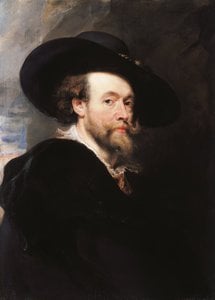
Pierre Paul Rubens

Pierre Paul Rubens

1577 - 1640 , Allemagne

En bref

  • Artistic Movement Or Style: Baroque
  • Artists Or Movements Influenced By This Artist: ['Anthony van Dyck']
  • Artists Who Influenced This Artist:
    • Michelangelo
    • Titian
  • Date Of Birth: 1577
  • Date Of Death: 1640
  • Full Name: Sir Peter Paul Rubens
  • Nationality: Flemish
  • Notable Artworks:
    • La Descente de la Croix
    • Massacre des Innocents
  • Place Of Birth: Siegen, Allemagne