Aperçu en situation Aperçu en RA Acheter la peinture faite à la main Passer au format image numérique Partager
Détails Guide imprimable Ajouter aux favoris Télécharger Articles similaires Radiographie Voir le diaporama Statistiques

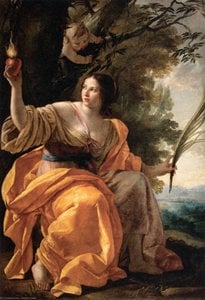
The Fortune Teller

Discover "The Fortune Teller" by Simon Vouet (1617), a dramatic Baroque masterpiece depicting a mysterious scene of prophecy. Explore its rich details and historical context.

Simon Vouet (1590-1649) : Peintre baroque français majeur, il introduit les tendances artistiques italiennes en France et influence des générations d'artistes par ses portraits & compositions grandioses.

Giclées et impressions d'art

Impressions giclées ou sur toile de qualité musée, avec une production rapide et des finitions au choix. ( Acheter la peinture faite à la main Passer au format image numérique)

Corner sample of the P118B picture frame: polystyrène moulé, 5 cm wide and 3 cm thick
P118B €10
Corner sample of the P118H picture frame: polystyrène moulé, 5 cm wide and 3 cm thick
P118H €10
Corner sample of the P118W picture frame: polystyrène moulé, 5 cm wide and 3 cm thick
P118W €10
Corner sample of the P438Z picture frame: polystyrène moulé, 5.5 cm wide and 3.5 cm thick
P438Z €10
Corner sample of the P508JH picture frame: polystyrène moulé, 7 cm wide and 3.5 cm thick
P508JH €12
Corner sample of the P508YH picture frame: polystyrène moulé, 7 cm wide and 3.5 cm thick
P508YH €12
Corner sample of the P805H picture frame: polystyrène moulé, 5 cm wide and 3.5 cm thick
P805H €10
Corner sample of the P805Z picture frame: polystyrène moulé, 5 cm wide and 3.5 cm thick
P805Z €10
Corner sample of the P919BZ picture frame: polystyrène moulé, 7 cm wide and 3.5 cm thick
P919BZ €10
Corner sample of the P919G picture frame: polystyrène moulé, 7 cm wide and 3.5 cm thick
P919G €10
Corner sample of the P919XJ picture frame: polystyrène moulé, 7 cm wide and 3.5 cm thick
P919XJ €10
Corner sample of the P959ZH picture frame: polystyrène moulé, 5 cm wide and 3 cm thick
P959ZH €10
Corner sample of the P968JZ picture frame: polystyrène moulé, 6 cm wide and 4 cm thick
P968JZ €12
Corner sample of the W106C picture frame: bois massif, 5 cm wide and 3 cm thick
W106C €8
Corner sample of the W218G picture frame: bois massif, 5 cm wide and 3 cm thick
W218G €10
Corner sample of the W218JH picture frame: bois massif, 5 cm wide and 3 cm thick
W218JH €8
Corner sample of the W218Y picture frame: bois massif, 5 cm wide and 3 cm thick
W218Y €10
Corner sample of the W307PJ picture frame: bois massif, 6 cm wide and 3 cm thick
W307PJ €10
Corner sample of the W316G picture frame: bois massif, 6 cm wide and 3 cm thick
W316G €10
Corner sample of the W316PJ picture frame: bois massif, 6 cm wide and 3 cm thick
W316PJ €8
Corner sample of the W316Y picture frame: bois massif, 6 cm wide and 3 cm thick
W316Y €10
Corner sample of the W398PJ picture frame: bois massif, 5 cm wide and 3 cm thick
W398PJ €8
Corner sample of the W4111J picture frame: bois massif, 6.5 cm wide and 3.5 cm thick
W4111J €10
Corner sample of the W500HY picture frame: bois massif, 7 cm wide and 5 cm thick
W500HY €15
Corner sample of the W500JH picture frame: bois massif, 7 cm wide and 5 cm thick
W500JH €15
Corner sample of the W692G picture frame: bois massif, 8 cm wide and 4 cm thick
W692G €12
Corner sample of the W849H picture frame: bois massif, 5 cm wide and 3 cm thick
W849H €8
Corner sample of the W940BG picture frame: bois massif, 7.5 cm wide and 4.5 cm thick
W940BG €15
Corner sample of the W953PJ picture frame: bois massif, 6 cm wide and 3.5 cm thick
W953PJ €8

Format standard
personnalisé
CM
INCH

Choisissez parmi nos formats prédéfinis qui respectent les proportions originales de l’œuvre.

largeur
hauteur

Saisissez la largeur et la hauteur souhaitées pour qu'elles s'adaptent à votre cadre ou à votre mur. Une impression ne peut être que découpée, elle ne peut jamais être agrandie au-delà de l'image originale ; ainsi, un format de forme différente entraînera la perte d'une partie de l'image. Nous vous envoyons une maquette numérique pour approbation avant toute impression. L'image présentée sur cette page ne montre pas le recadrage réel — seule la maquette le permet.

Livraison dans le monde entier () en 2 semaines au lieu des 4/5 semaines habituelles. (22 octobre)

Livraison express gratuite dans le monde entier
Toile de lin de haute qualité
Assurance transport complète
Garantie de remboursement des droits de douane
Garantie de fidélité des couleurs
Garantie de retour de 100 jours (uniquement en cas de défaut)
Garantie de remboursement à 100%
Tarifs dégressifs sur quantité

Prix total

€ 60

The Fortune Teller

Giclées et impressions d'art

Format de la reproduction

-

Prix total final

€ 60

L'essentiel de l'œuvre

  • Subject or theme: Fortune-telling
  • Movement: Baroque
  • Artistic style: Portraiture, narrative
  • Dimensions: 95 x 135 cm
  • Title: The Fortune Teller
  • Location: Galleria Nazionale

Quiz d'art

Chaque question ne comporte qu'une seule bonne réponse.

Question 1:
What is the primary subject depicted in Simon Vouet’s ‘The Fortune Teller’?
Question 2:
The painting ‘The Fortune Teller’ is characterized by which artistic technique?
Question 3:
Which artist significantly influenced Simon Vouet’s style, particularly in his use of dramatic lighting?
Question 4:
In what museum is ‘The Fortune Teller’ currently housed?
Question 5:
What does the dark background in ‘The Fortune Teller’ primarily serve to achieve?

The Enigmatic Allure of Simon Vouet’s “The Fortune Teller”

Simon Vouet's "The Fortune Teller," painted in 1617, isn’t merely a portrait; it’s a carefully constructed tableau brimming with intrigue and a palpable sense of the mystical. Housed within the venerable Galleria Nazionale d’Arte Antica in Rome, this oil on canvas invites viewers into a dimly lit chamber where the boundaries between reality and prophecy blur. Vouet, a pivotal figure bridging the Mannerist and Baroque eras, masterfully employs chiaroscuro – the dramatic interplay of light and shadow – to draw our attention to the central figures and imbue the scene with an almost theatrical intensity.

The composition itself is deliberately layered. At its heart sits a man, his features obscured by a wide-brimmed hat and a flowing beard, engaged in a hushed conversation. He holds an open book, seemingly offering guidance or revealing secrets. Flanking him are two women, their attire – one clad in vibrant red, the other in deep blue – adding splashes of color to the predominantly dark palette. Their attentive gazes suggest they are both recipients and observers of this unfolding drama. The background, rendered in muted tones, serves primarily as a backdrop, emphasizing the figures and creating an atmosphere of hushed anticipation.

A Masterclass in Baroque Technique

Vouet’s technique is a fascinating blend of influences. He absorbed the dramatic lighting favored by Caravaggio, but tempered it with a more refined elegance characteristic of French portraiture. Notice how light pools around the faces and hands, highlighting their expressions and gestures while leaving much of the scene shrouded in shadow. This creates a sense of depth and mystery, inviting speculation about the events taking place within the room. The brushstrokes are smooth and blended, contributing to the painting’s overall polished appearance – a hallmark of Vouet's style.

The use of *sfumato*, another technique borrowed from Leonardo da Vinci, is subtly present, softening edges and creating an atmospheric haze that further enhances the sense of depth. Vouet wasn’t simply replicating Caravaggio; he was adapting his innovations to suit the evolving tastes of the French court, resulting in a uniquely sophisticated style.

Symbolism and Historical Context

"The Fortune Teller" is steeped in symbolism, reflecting the prevailing fascination with astrology, divination, and the occult during the early 17th century. The book held by the central figure likely represents knowledge, prophecy, or perhaps even fate itself. The women, often interpreted as representing fortune tellers or advisors, are positioned to receive this information. The red and blue garments could symbolize different types of wisdom or guidance – a common motif in Renaissance art.

Painted during a period of significant artistic transition in France, Vouet’s work exemplifies the shift from the rigid formality of Mannerism towards the more dynamic and emotionally expressive style of the Baroque. His patronage by influential figures like Cardinal Richelieu helped establish him as one of the leading artists of his time, shaping the course of French painting for decades to come.

A Timeless Appeal: Reproduction Possibilities

The enduring appeal of “The Fortune Teller” lies in its ability to evoke a sense of mystery and intrigue. It’s a scene ripe with narrative possibilities, prompting viewers to imagine the story behind the figures and their exchange. Today, high-quality reproductions of this captivating artwork are available through WahooArt.com, meticulously crafted using traditional oil painting techniques and premium materials, ensuring that the drama and emotional depth of Vouet's original masterpiece are faithfully preserved. These reproductions offer a beautiful way to bring this iconic work into your home or office – a testament to the enduring power of art.

For further exploration, consider visiting the Galleria Nazionale d’Arte Antica in Rome or delving into online resources like the Web Gallery of Art (The Fortune Teller by VOUET, Simon) and exploring Valentin de Boulogne's work for a deeper understanding of Caravaggio’s influence.

Questions et réponses

Quelle technique et quel style caractérisent «The Fortune Teller» de Simon Vouet ?

Dans « The Fortune Teller », la technique du Oil On Canvas rencontre le mouvement French Baroque.

Où devrait être accrochée une reproduction de «The Fortune Teller» de Simon Vouet ?

Le format (Landscape) et l'espace recommandé (Living Room) sont les deux caractéristiques de disposition enregistrées pour «The Fortune Teller» de Simon Vouet.

À quel mouvement artistique appartient «The Fortune Teller» de Simon Vouet ?

«The Fortune Teller» de Simon Vouet appartient au mouvement French Baroque. Ce mouvement apporte le contexte stylistique de l'œuvre.


Biographie de l'artiste

Simon Vouet : Pionnier de la Peinture Baroque Française

  • Né: 9 janvier 1590, Paris, France
  • Décédé: 30 juin 1649, Paris, France

Simon Vouet fut une figure essentielle dans la transition de la peinture française du maniérisme au style baroque. Né au sein d'une famille artistique – son père Laurent était peintre et son frère Aubin a également embrassé l'art – Vouet reçut une formation précoce qui posa les bases de son succès futur. Son petit-fils, Ludovico Dorigny, poursuivrait l’héritage artistique familial.

Première Carrière et Influences Italiennes (1608-1627)

  • Portraits précoces : Vouet débuta sa carrière en tant que portraitiste, démontrant un talent précoce.
  • Voyage en Angleterre (1608) : À l'âge de 14 ans, il se rendit en Angleterre pour peindre un portrait commandé, témoignant de sa réputation naissante.
  • Empire Ottoman et Venise : En 1611, Vouet rejoignit la suite du baron de Sancy, ambassadeur français auprès de l'Empire ottoman, à nouveau pour des travaux de portraiture. Ce voyage le mena par Constantinople puis à Venise en 1612.
  • Rome (1614-1627) : Son séjour à Rome s’avéra transformateur. Il y resta pendant treize ans, s'immergeant dans la scène artistique florissante de la période baroque naissante.

Durant son passage en Italie, Vouet absorba diverses influences. Il étudia les techniques d'éclairage dramatique pionniérées par Caravage, embrassa des éléments du maniérisme italien et analysa méticuleusement les palettes de couleurs et la perspective di sotto in su employée par Paolo Veronese. Il puisait également son inspiration dans les œuvres de Carracci, Guercino, Lanfranco et Guido Reni, synthétisant ces styles diversifiés en une vision artistique unique.

Développement du Style Distinctif de Vouet

  • Élection à l'Accademia di San Luca (1624) : Son succès à Rome culmina par son élection au poste de président de la prestigieuse Accademia di San Luca, témoignant de ses compétences et de sa reconnaissance dans le monde artistique italien.
  • Synthèse des Influences : Le style de Vouet se caractérisait par sa capacité à absorber et à distiller diverses influences artistiques. Il ne copiait pas simplement ; il intégrait ces éléments dans une esthétique baroque italienne cohérente et distincte.
  • Introduction du Baroque en France : À son retour en France en 1627, Vouet joua un rôle crucial dans l'introduction du style baroque italien à la peinture française, impactant considérablement le paysage artistique du pays.

Réalisations Majeures et Héritage

  • Premier Peintre du Roi : Vouet fut nommé Premier peintre du Roi – un poste de prestige et d'influence considérables.
  • Atelier prolifique : Il maintint un atelier vaste et actif, formant de nombreux artistes qui façonnèrent la génération suivante de peintres français.
  • Élèves notables : Parmi ses élèves les plus influents figuraient Charles Le Brun (qui organisa par la suite toute la peinture décorative à Versailles), Valentin de Boulogne, Charles Alphonse du Fresnoy, Pierre Mignard, Eustache Le Sueur et Claude Mellan.

  • Influence sur l'art français : L’impact de Vouet s’étendit au-delà de ses propres œuvres ; ses élèves portèrent son style et ses techniques à travers la France, établissant une école de peinture baroque distincte. Son influence est particulièrement évidente dans les vastes décors commandés par Louis XIV.

Signification Historique

L'héritage de Simon Vouet repose sur son rôle essentiel de pont entre l’art italien et français. Il importa avec succès le dynamisme et la grandeur du baroque italien, le transformant en un style qui résonnait avec les goûts de la cour et de l'aristocratie françaises. Son influence est indéniable dans le développement de la peinture française au XVIIe siècle, et ses contributions continuent d’être reconnues par les historiens de l’art aujourd’hui.

Simon Vouet

Simon Vouet

1590 - 1649 , France

En bref

  • Artistes Influents:
    • Caravaggio
    • Paolo Veronese
    • Carracci
    • Guercino
    • Lanfranco
    • Guido Reni
  • Date De Décès: 30 juin 1649
  • Date De Naissance: 9 janvier 1590
  • Influences Artistiques:
    • Charles Le Brun
    • Valentin de Boulogne
  • Lieu De Naissance: Paris, France
  • Mouvement Artistique: Baroque français
  • Nationalité: Française
  • Nom Complet: Simon Vouet
  • Œuvres Notables:
    • LA RICHESSE
    • Gaucher de Chatillon
    • L'apothéose de saint Louis
    • Vénus et Adonis
Explorez des œuvres d'art classées par thèmes, styles et caractéristiques.