Aperçu en situation Aperçu en RA Acheter la peinture faite à la main Passer au format image numérique Partager
Détails Guide Ajouter aux favoris Télécharger Articles similaires Radiographie Voir le diaporama Statistiques

Calumny (detail)3

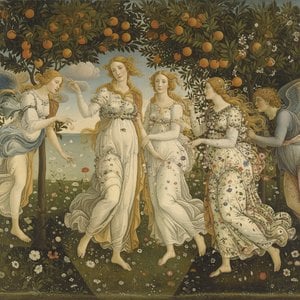
Botticelli’s ‘Calumny,’ a dramatic depiction of accusation and punishment during the Florentine Renaissance, captures a tense moment with meticulous detail—a man crowned in shame surrounded by judgmental figures. Explore this iconic masterpiece and bring its timeless beauty into your home.

Explorez l'art captivant de Sandro Botticelli (1445-1510), un maître de la peinture de la Renaissance primitive. Connu pour sa ligne élégante, ses œuvres emblématiques telles que 'La Naissance de Vénus' & 'Le Printemps', et pour avoir relié les styles gothique et renaissance. Découvrez son héritage !

Giclées et impressions d'art

Impressions giclées ou sur toile de qualité musée, avec une production rapide et des finitions au choix. ( Acheter la peinture faite à la main Passer au format image numérique)

P118B $10
P118H $10
P118W $10
P438Z $10
P508JH $12
P508YH $12
P805H $10
P805Z $10
P919BZ $10
P919G $10
P919XJ $10
P959ZH $10
P968JZ $12
W106C $8
W218G $10
W218JH $8
W218Y $10
W307PJ $10
W316G $10
W316PJ $8
W316Y $10
W398PJ $8
W4111J $10
W500HY $15
W500JH $15
W692G $12
W849H $8
W940BG $15
W953PJ $8

Format standard
personnalisé
CM
INCH

Choisissez parmi nos formats prédéfinis qui respectent les proportions originales de l’œuvre.

largeur
hauteur

Vous pouvez saisir vos propres dimensions pour vous adapter à un cadre ou à un espace spécifique. Si la taille sélectionnée ne correspond pas aux proportions de l'image originale, nous recadrerons l'œuvre ou étendrons l'image avec une bordure en miroir ou une couleur unie. Une maquette numérique vous sera envoyée pour approbation avant le début de la production.
Veuillez noter que l'aperçu à l'écran ne reflète pas le recadrage ou l'extension réelle. Seule la maquette montrera avec précision la composition finale.
Bien que des tailles personnalisées soient disponibles, nous vous recommandons de choisir une dimension dans la liste prédéfinie afin de préserver les proportions originales.

Livraison dans le monde entier () en 2 semaines au lieu des 4/5 semaines habituelles. (22 septembre)

why_choose_icon
Livraison express gratuite dans le monde entier
why_choose_icon
Toile de lin de haute qualité
why_choose_icon
Assurance transport complète
why_choose_icon
Garantie de remboursement des droits de douane
why_choose_icon
Garantie de fidélité des couleurs
why_choose_icon
Garantie de retour de 100 jours (uniquement en cas de défaut)
why_choose_icon
Garantie de remboursement à 100%
why_choose_icon
Tarifs dégressifs sur quantité

Prix total

$ 68

reproduction

Calumny (detail)3

Giclées et impressions d'art

Format de la reproduction

-

Prix total final

$ 68

L'essentiel de l'œuvre

  • Influences: Humanism
  • Notable elements: Crown, Accusation
  • Year: c. 1495
  • Artistic style: Elegant
  • Artist: Sandro Botticelli
  • Medium: Oil paint
  • Subject: Allegory

A Symphony of Scandal and Grace

In the quiet intensity of Sandro Botticelli’s Calumny, we are invited into a world where the air itself feels heavy with accusation and whispered secrets. This evocative detail captures a moment frozen in time, a dramatic confrontation that serves as a window into the turbulent soul of Renaissance Florence. At its heart lies a man, perhaps bearing the weight of a crown, subjected to the piercing gaze and relentless judgment of a surrounding throng. The scene is not merely a depiction of conflict; it is a psychological landscape where the boundaries between private torment and public humiliation blur, creating an atmosphere of profound tension that continues to captivate viewers centuries after its creation.

The composition breathes with a sense of orchestrated chaos, yet it is held together by Botticelli’s unparalleled mastery of line and form. As one observes the figures gathered around the central protagonist, there is a palpable sense of movement—the leaning bodies, the accusing gestures, and the watchful eyes of those standing in the periphery. The presence of seemingly mundane objects, such as a solitary chair or a bowl tucked into the corner, grounds this high drama in a tangible, domestic reality, making the unfolding scandal feel disturbingly intimate. For the discerning collector, this piece offers more than just visual beauty; it provides a narrative depth that transforms any space into a gallery of historical reflection.

The Ethereal Touch of the Florentine Master

To look closely at Calumny is to witness the pinnacle of Botticelli’s signature technique. Eschewing the heavy, muscular shadows of his contemporaries, Botticelli employs a luminous, pastel palette that lends the work an almost otherworldly glow. Through the meticulous application of glazes—thin, translucent layers of pigment—he achieves a depth of color that seems to radiate from within the panel itself. His use of delicate, flowing lines defines the intricate folds of drapery and the expressive, often melancholic, features of his subjects with a grace that is uniquely his own.

The palette, dominated by soft creams, pale yellows, and ethereal blues, works in subtle harmony with the subject matter. Rather than using harsh contrasts to denote conflict, Botticelli uses these muted hues to heighten the sense of melancholy and psychological complexity. This delicate approach ensures that even the most intense moments of accusation are rendered with a poetic elegance. For interior designers seeking to introduce a sense of sophisticated calm paired with intellectual intrigue, the soft luminosity of this work provides an exquisite focal point that complements both classical and contemporary settings.

Echoes of Political Intrigue and Human Emotion

Beyond its aesthetic brilliance, Calumny is a profound historical document, reflecting the political instability of late 15th-century Florence. Painted during a period of shifting allegiances and intense scrutiny under the influence of the Medici family, the work likely mirrors the real-world scandals and accusations of corruption that haunted the era's most powerful figures. The figures in the painting are not mere archetypes; they embody the very essence of social anxiety, representing the fear of losing one's honor to the venomous spread of false rumors.

This layer of historical symbolism imbues the artwork with a timeless emotional resonance. The struggle against injustice and the vulnerability of the individual in the face of public opinion are themes that remain strikingly relevant today. Owning a high-quality reproduction of this masterpiece allows one to possess a piece of history that speaks to the enduring human condition. It is an investment in art that does not merely decorate a wall but invites conversation, contemplation, and a deep connection to the dramatic legacy of the Italian Renaissance.


Biographie de l'artiste

jeune vie et formation

Sandro Botticelli, né Alessandro di Mariano di Vanni Filipepi vers 1445, est une figure clé de la Renaissance italienne précoce. Initialement relégué à l'arrière-plan après sa mort, l'œuvre de Botticelli a été revitalisée au XIXe siècle par les préréfables, conduisant à une réévaluation de ses contributions artistiques. Botticelli est né à Florence, en Italie, et y a vécu toute sa vie dans le même quartier. Sa famille, dont son père Mariano di Vanni d'Amadeo Filipepi, était impliquée dans diverses professions, ce qui leur a permis de se rencontrer avec des artistes. Giorgio Vasari rapportait que Botticelli avait initialement été formé comme orfèvre.

style artistique et œuvres notables

L'œuvre de Botticelli est caractérisée par une élégante linéarité, reliant le gothique italien tardif à la Renaissance précoce. Ses œuvres les plus célèbres, La Naissance de Vénus et *Primavera*, sont exposées à la Galerie des Offices à Florence, qui abrite une importante collection de ses œuvres. * La Naissance de Vénus (voir sur WahooArt) * *Primavera* (explorer l'art de Sandro Botticelli sur WahooArt) * Nativité mystique (National Gallery, Londres), datée 1501, est la seule œuvre de Botticelli avec une date claire.

héritage et influence

Le style de Botticelli a évolué vers une approche plus personnelle dans les années 1490, s'écartant des contemporains comme Léonard de Vinci et du style de la Renaissance haute émergente. Son œuvre a été reconnue comme une contribution significative au mouvement artistique de la Renaissance italienne. * le mouvement artistique de la Renaissance italienne * Sandro Botticelli sur Wikipédia
  • Des artistes notables de la Renaissance italienne comprennent Sandro Botticelli, Léonard de Vinci, Michel-Ange et Titien.
  • La Galerie des Offices à Florence abrite une importante collection d'œuvres de Botticelli.
  • L'œuvre de Botticelli a été reconnue comme une figure clé de la Renaissance italienne précoce.
**Dates clés :** * 1445 : Sandro Botticelli est né à Florence, en Italie. * 1474 : a passé du temps à Pise. * 1481-1482 : a travaillé sur la Chapelle Sixtine à Rome. * 1501 : Nativité mystique (National Gallery, Londres) a été datée.
Sandro Botticelli

Sandro Botticelli

1445 - 1510 , Italie

En bref

  • Artistes Influents:
    • Fra Angelico
    • Paolo Uccello
  • Date De Décès: 1510
  • Date De Naissance: c. 1445
  • Lieu De Naissance: Florence, Italie
  • Mouvement Artistique: Renaissance italienne
  • Nationalité: Italienne
  • Nom Complet: Sandro Botticelli
  • Oeuvres Notables:
    • La Naissance de Vénus
    • Primavera
    • Nativité mystique
Explorez des œuvres d'art classées par thèmes, styles et caractéristiques.