Aperçu en situation Visualiser en RA Commander la reproduction peinte à la main Passer au format numérique Envoyer
Détails de l'œuvre Guide Ajouter aux favoris Télécharger l'image Articles similaires Radiographie Diaporama Q&A Statistiques

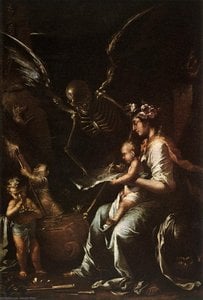
The Prodigal Son

Salvator Rosa’s "The Prodigal Son" (1651) is a dramatic Baroque masterpiece depicting repentance & faith. Explore this iconic oil painting's rich symbolism & dynamic composition.

Découvrez Salvator Rosa (1615-1673), peintre baroque italien rebelle ! Paysages dramatiques, thèmes philosophiques & influence sur Luca Giordano. Explorez ses chefs-d'œuvre !

Giclées et impressions d'art

Impressions giclées ou sur toile de qualité musée, avec une production rapide et des finitions au choix. ( Commander la reproduction peinte à la main Passer au format numérique)

Corner sample of the P118B picture frame: polystyrène moulé, 5 cm wide and 3 cm thick
P118B €10
Corner sample of the P118H picture frame: polystyrène moulé, 5 cm wide and 3 cm thick
P118H €10
Corner sample of the P118W picture frame: polystyrène moulé, 5 cm wide and 3 cm thick
P118W €10
Corner sample of the P438Z picture frame: polystyrène moulé, 5.5 cm wide and 3.5 cm thick
P438Z €10
Corner sample of the P508JH picture frame: polystyrène moulé, 7 cm wide and 3.5 cm thick
P508JH €12
Corner sample of the P508YH picture frame: polystyrène moulé, 7 cm wide and 3.5 cm thick
P508YH €12
Corner sample of the P805H picture frame: polystyrène moulé, 5 cm wide and 3.5 cm thick
P805H €10
Corner sample of the P805Z picture frame: polystyrène moulé, 5 cm wide and 3.5 cm thick
P805Z €10
Corner sample of the P919BZ picture frame: polystyrène moulé, 7 cm wide and 3.5 cm thick
P919BZ €10
Corner sample of the P919G picture frame: polystyrène moulé, 7 cm wide and 3.5 cm thick
P919G €10
Corner sample of the P919XJ picture frame: polystyrène moulé, 7 cm wide and 3.5 cm thick
P919XJ €10
Corner sample of the P959ZH picture frame: polystyrène moulé, 5 cm wide and 3 cm thick
P959ZH €10
Corner sample of the P968JZ picture frame: polystyrène moulé, 6 cm wide and 4 cm thick
P968JZ €12
Corner sample of the W106C picture frame: bois massif, 5 cm wide and 3 cm thick
W106C €8
Corner sample of the W218G picture frame: bois massif, 5 cm wide and 3 cm thick
W218G €10
Corner sample of the W218JH picture frame: bois massif, 5 cm wide and 3 cm thick
W218JH €8
Corner sample of the W218Y picture frame: bois massif, 5 cm wide and 3 cm thick
W218Y €10
Corner sample of the W307PJ picture frame: bois massif, 6 cm wide and 3 cm thick
W307PJ €10
Corner sample of the W316G picture frame: bois massif, 6 cm wide and 3 cm thick
W316G €10
Corner sample of the W316PJ picture frame: bois massif, 6 cm wide and 3 cm thick
W316PJ €8
Corner sample of the W316Y picture frame: bois massif, 6 cm wide and 3 cm thick
W316Y €10
Corner sample of the W398PJ picture frame: bois massif, 5 cm wide and 3 cm thick
W398PJ €8
Corner sample of the W4111J picture frame: bois massif, 6.5 cm wide and 3.5 cm thick
W4111J €10
Corner sample of the W500HY picture frame: bois massif, 7 cm wide and 5 cm thick
W500HY €15
Corner sample of the W500JH picture frame: bois massif, 7 cm wide and 5 cm thick
W500JH €15
Corner sample of the W692G picture frame: bois massif, 8 cm wide and 4 cm thick
W692G €12
Corner sample of the W849H picture frame: bois massif, 5 cm wide and 3 cm thick
W849H €8
Corner sample of the W940BG picture frame: bois massif, 7.5 cm wide and 4.5 cm thick
W940BG €15
Corner sample of the W953PJ picture frame: bois massif, 6 cm wide and 3.5 cm thick
W953PJ €8

Format standard
sur mesure
CM
INCH

Choisissez parmi nos formats prédéfinis qui respectent les proportions originales de l’œuvre.

largeur
hauteur

Saisissez la largeur et la hauteur souhaitées pour qu'elles s'adaptent à votre cadre ou à votre mur. Une impression peut être recadrée, mais jamais agrandie au-delà de l'image originale ; ainsi, un format de forme différente entraînera la perte d'une partie de l'image. Nous vous envoyons une maquette numérique pour approbation avant toute impression. L'image présentée sur cette page ne montre pas le recadrage réel — seule la maquette le permet.

Livraison dans le monde entier () en 2 semaines au lieu des 4/5 semaines habituelles. (29 octobre)

Livraison express gratuite dans le monde entier
Toile de lin de qualité supérieure
Assurance transport complète
Garantie de remboursement des droits de douane
Garantie de fidélité des couleurs
Politique de retour de 100 jours (uniquement en cas de défaut)
Garantie de remboursement à 100%
Offre de tarifs dégressifs

Prix total

€ 60

The Prodigal Son

Giclées et impressions d'art

Format de la reproduction

-

Prix total

€ 60

Salvator Rosa’s Dramatic Depiction of Repentance: “The Prodigal Son”

Salvator Rosa's "The Prodigal Son," painted in 1651, is not merely a religious scene; it’s a visceral portrayal of human fallibility and the transformative power of divine forgiveness. This oil-on-canvas masterpiece immediately commands attention with its dramatic chiaroscuro – the stark contrast between light and shadow – characteristic of the Baroque period. Rosa masterfully employs diagonal lines, originating from the kneeling figure at the heart of the composition, to draw the viewer’s eye directly into the scene, creating a dynamic sense of movement and urgency. The stormy sky above, rendered in turbulent browns and ochres, mirrors the turmoil within the young man's soul, hinting at the struggle between earthly desires and spiritual longing.

The painting centers on a youth, clad in humble garments, kneeling in supplication amidst a herd of cattle – a potent symbol of his former life of luxury and indulgence. The setting is deliberately rural, emphasizing the stark contrast between the prodigal son’s past and his present state of humility. Rosa's meticulous technique is evident in every detail: the rough texture of the man’s skin, the shaggy coats of the cattle, and the intricate foliage of the background trees are all rendered with remarkable realism. The loose brushstrokes, however, prevent the work from feeling static, contributing to a sense of raw emotion and immediacy. Rosa's use of color is restrained yet powerful, dominated by earthy tones that evoke a somber atmosphere, punctuated by flashes of light highlighting the central figure – a deliberate focus on his vulnerability and plea for redemption.

A Baroque Masterpiece: Style and Technique

Salvator Rosa’s style defies easy categorization. While undeniably rooted in the Baroque tradition—known for its theatricality, emotional intensity, and dramatic lighting—Rosa injected a distinctly personal element into his work. He drew inspiration from both the naturalism of artists like Peter Paul Rubens and the classical ideals of Nicolas Poussin, yet he refused to be bound by any single movement or style. This resulted in a unique visual language characterized by a heightened sense of drama, an interest in capturing fleeting moments of human experience, and a willingness to depict subjects from unconventional perspectives. Rosa’s skill as a printmaker also informed his painting; the same attention to detail and dramatic composition found in his etchings are evident here.

The perspective employed is particularly noteworthy. The cattle and trees receding into the distance appear smaller and less defined, creating a sense of depth and drawing the viewer’s eye towards the central figure. This technique not only enhances the realism of the scene but also reinforces the idea of the prodigal son's journey from worldly possessions to spiritual humility. Rosa’s masterful use of light and shadow further emphasizes this transition, highlighting the man’s face and body while plunging the background into darkness – a visual metaphor for his past sins.

Symbolism and Spiritual Depth

Beyond its immediate visual impact, “The Prodigal Son” is rich in symbolic meaning. The kneeling posture of the young man represents submission to God and a recognition of his wrongdoing. The cattle, traditionally associated with wealth and earthly possessions, serve as a stark reminder of the prodigal son’s former life of extravagance. The stormy sky symbolizes the spiritual struggle he faces – the conflict between his desires and his conscience. Crucially, the father's immediate embrace upon seeing his son is not merely an act of familial love; it represents God’s boundless mercy and forgiveness—a central tenet of Christian faith.

Rosa’s choice to depict the moment *after* the son has returned – after the initial plea for forgiveness – is particularly poignant. It suggests that redemption is not simply a matter of acknowledging one's sins but also of experiencing God’s unconditional love and acceptance. The painting, therefore, offers a powerful meditation on themes of repentance, forgiveness, and the enduring hope found in faith.

WahooArt Reproductions: Bringing “The Prodigal Son” to Life

WahooArt is proud to offer meticulously crafted hand-painted reproductions of Salvator Rosa’s "The Prodigal Son." Each reproduction captures the painting's dramatic intensity, rich textures, and profound symbolism with unparalleled accuracy. Whether you are an art collector, interior designer seeking a statement piece, or simply an admirer of Baroque art, our high-quality reproductions provide a beautiful and authentic way to experience this iconic masterpiece. Explore our range of sizes and framing options to find the perfect addition to your home or office – a timeless testament to human redemption and divine grace.

Questions et réponses

À quelle période de la carrière de Salvator Rosa appartient « The Prodigal Son » ?

Au cours de la carrière de Salvator Rosa, « The Prodigal Son » s'inscrit dans la période Mature Period. Cette phase permet de le comparer aux autres œuvres de l'artiste.

Comment les couleurs de «The Prodigal Son» de Salvator Rosa traduisent-elles l'émotion qui s'en dégage ?

La palette Tons terreux de «The Prodigal Son» de Salvator Rosa s'harmonise avec son ton émotionnel Mélancolique. La couleur est l'un des moyens par lesquels une œuvre transmet une émotion.

Puis-je prévisualiser «The Prodigal Son» de Salvator Rosa avant de commander ?

La page Aperçu en situation de « The Prodigal Son » vous permet de prévisualiser l'œuvre avant de passer commande.


Biographie de l'artiste

La Jeunesse et la Formation

Salvator Rosa, peintre baroque italien, poète et graveur, est né à Arenella, près de Naples, soit le 20 juin, soit le 21 juillet 1615. Sa mère, Giulia Greca Rosa, était issue d'une famille grecque sicilienne. Malgré les aspirations de son père à ce qu’il devienne avocat ou prêtre, Salvator manifesta très tôt une préférence pour les arts.

L'Ascension Artistique

La carrière artistique de Salvator Rosa se caractérisa par un style non conventionnel et extravagant qui le distinguait de ses contemporains. Il fut actif à Naples, Rome et Florence, son œuvre étant influencée par le naturalisme de Ribera et le classicisme de Poussin. Cependant, il refusa d'être lié à un style ou un mouvement particulier.
  • Pythagore émergeant des enfers (Kimbell Art Museum, Fort Worth, États-Unis), l’une de ses œuvres les plus célèbres, illustre son mélange unique de thèmes philosophiques et artistiques.
  • Le Baptême de l'eunuque (Chrysler Museum of Art, Norfolk, États-Unis) témoigne de sa capacité à insuffler un drame intense même dans des récits bibliques mineurs.

Influences et Héritage

L’œuvre de Salvator Rosa eut une influence significative sur le développement de l'art baroque. Son impact se retrouve dans les œuvres d'artistes ultérieurs, tels que Luca Giordano, qui continuaient à repousser les limites de l'expression artistique. Liens importants : Profil de Salvator Rosa sur WahooArt Wikipédia: Salvatore Rosa

Un Artiste Rebelle et Innovant

Rosa était un artiste profondément rebelle, défiant les conventions artistiques de son époque. Ses paysages sombres et sauvages, souvent peuplés de figures marginales, étaient une rupture avec les vues classiques et idéalisées de Claude Lorrain. Il est considéré comme un précurseur du romantisme, anticipant l'accent mis sur la puissance brute de la nature et l'exploration des émotions intenses. Son œuvre a connu un regain d’intérêt à la fin du XXe siècle, bien qu’il ne soit pas classé parmi les plus grands peintres baroques par les historiens de l'art contemporains, il est reconnu comme un peintre de paysages innovant et un pionnier du mouvement romantique.

Conclusion

La vie et l'œuvre de Salvator Rosa continuent de fasciner les amateurs d’art et les historiens. Son style non conventionnel et sa rébellion constante contre les normes de son temps ont consolidé sa place dans l'histoire de l'art baroque. En tant que peintre, poète et graveur, il demeure une figure énigmatique, et son œuvre continue d'inspirer de nouvelles générations d’artistes et d’amateurs d’art. Musées : Kimbell Art Museum, Chrysler Museum of Art
Salvator Rosa

Salvator Rosa

1615 - 1673 , Italie

L'essentiel de l'artiste

  • Artistic Movement Or Style: Baroque
  • Artists Or Movements Influenced By This Artist:
    • Luca Giordano
    • Romantisme
  • Artists Who Influenced This Artist:
    • Ribera
    • Poussin
  • Date Of Birth: 20 juin ou 21 juillet 1615
  • Date Of Death: 15 mars 1673
  • Full Name: Salvator Rosa
  • Nationality: Italien
  • Notable Artworks:
    • Pythagore sortant des enfers
    • Le baptême de l'eunuque
  • Place Of Birth (City And Country): Arénèlle, Italie
Explorez des œuvres d'art classées par thèmes, styles et caractéristiques.