x
Aperçu en situationAperçu en situation Visualiser en RAVisualiser en RA Commander la reproduction peinte à la main Commander la reproduction peinte à la mainAcheter l'image haute résolution Acheter l'image haute résolution EnvoyerEnvoyer
Détails de l'œuvreDétails de l'œuvre Ajouter aux favoris Ajouter aux favoris TéléchargerTélécharger Articles similairesArticles similaires RadiographieRadiographie DiaporamaDiaporama

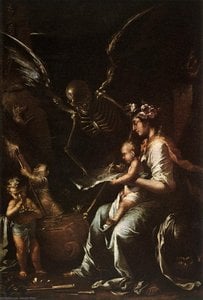
St. Francis in Ecstasy

Salvator Rosa's 'St. Francis in Ecstasy' captures the saint’s divine moment of revelation. A Baroque masterpiece featuring dramatic light, nature, and spiritual intensity.

Découvrez Salvator Rosa (1615-1673), peintre baroque italien rebelle ! Paysages dramatiques, thèmes philosophiques & influence sur Luca Giordano. Explorez ses chefs-d'œuvre !

Giclées et impressions d'art

Impressions giclées ou sur toile de qualité musée, avec une production rapide et des finitions au choix. (Commander la reproduction peinte à la main Commander la reproduction peinte à la mainAcheter l'image haute résolution Acheter l'image haute résolution)

P118B $10
P118H $10
P118W $10
P438Z $10
P508JH $12
P508YH $12
P805H $10
P805Z $10
P919BZ $10
P919G $10
P919XJ $10
P959ZH $10
P968JZ $12
W106C $8
W218G $10
W218JH $8
W218Y $10
W307PJ $10
W316G $10
W316PJ $8
W316Y $10
W398PJ $8
W4111J $10
W500HY $15
W500JH $15
W692G $12
W849H $8
W940BG $15
W953PJ $8

Format standard
sur mesure
CM
INCH

Choisissez parmi nos formats prédéfinis qui respectent les proportions originales de l’œuvre.

largeur
hauteur

Vous pouvez saisir vos propres dimensions pour vous adapter à un cadre ou à un espace spécifique. Si la taille sélectionnée ne correspond pas aux proportions de l'image originale, nous recadrerons l'œuvre ou étendrons l'image avec une bordure en miroir ou une couleur unie. Une maquette numérique vous sera envoyée pour approbation avant le début de la production.
Veuillez noter que l'aperçu à l'écran ne reflète pas le recadrage ou l'extension réelle. Seule la maquette montrera avec précision la composition finale.
Bien que des tailles personnalisées soient disponibles, nous vous recommandons de choisir une dimension dans la liste prédéfinie afin de préserver les proportions originales.

Livraison dans le monde entier () en 2 semaines au lieu des 4/5 semaines habituelles. (3 septembre)

why_choose_icon
Livraison express gratuite dans le monde entier

why_choose_icon
Toile de lin de qualité supérieure
why_choose_icon
Assurance transport complète
why_choose_icon
Garantie de remboursement des droits de douane
why_choose_icon
Garantie de fidélité des couleurs
why_choose_icon
Politique de retour de 60 jours (uniquement en cas de défaut)
why_choose_icon
Garantie de remboursement à 100%
why_choose_icon
Offre de tarifs dégressifs

Prix total

$ 68

reproduction

St. Francis in Ecstasy

Giclées et impressions d'art

Format de la reproduction

-

Prix total

$ 68

Informations clés

  • Artistic style: Dramatic landscape
  • Movement: Baroque
  • Subject or theme: Religious ecstasy
  • Notable elements: Mystical light, tree
  • Medium: Oil on canvas
  • Influences:
    • Ribera
    • Poussin

Quiz d'art

Chaque question ne comporte qu'une seule bonne réponse.

Question 1:
What artistic movement is Salvator Rosa primarily associated with?
Question 2:
In 'St. Francis in Ecstasy,' what is the primary source of light?
Question 3:
Which of the following best describes the landscape in 'St. Francis in Ecstasy'?
Question 4:
Salvator Rosa was known for his unconventional approach to painting. What is a key characteristic of this approach?
Question 5:
What is the significance of the rocky cave in 'St. Francis in Ecstasy'?

Salvator Rosa’s “St. Francis in Ecstasy”: A Baroque Vision of Divine Connection

Salvator Rosa's "St. Francis in Ecstasy," painted circa 1647, isn’t merely a depiction of a saint; it’s a profound meditation on the intersection of earthly experience and divine revelation. This arresting work, currently residing within the Phillips Collection in Washington D.C., embodies the artist’s signature blend of dramatic landscape, intense emotion, and philosophical depth – hallmarks that cemented his place as a pivotal figure in the transition from Mannerism to Baroque painting. Rosa masterfully captures a moment of profound spiritual intensity, transforming a simple religious scene into a visually arresting exploration of faith and nature.

The composition immediately draws the eye to St. Francis himself, kneeling within a shadowed cave entrance. He’s not presented as an idealized figure of serene piety but rather as a man consumed by ecstatic fervor. His arms are outstretched, palms open towards a radiant light that streams down from above, piercing through the turbulent sky and illuminating the surrounding landscape. This dramatic use of chiaroscuro – the interplay of light and dark – is characteristic of Baroque painting and serves to heighten the emotional impact of the scene. The stark contrast between the darkness of the cave and the brilliance of the divine light underscores the transformative nature of Francis’s experience.

A Landscape as Theology: Rosa's Revolutionary Approach

What distinguishes “St. Francis in Ecstasy” is not simply its religious subject matter, but rather Rosa’s innovative approach to landscape painting. He moves beyond traditional depictions of pastoral beauty, instead presenting a rugged, almost hostile environment – a rocky hillside, tangled vegetation, and a distant mountain range – as the backdrop for this profound spiritual encounter. This wasn't merely an aesthetic choice; it reflected Rosa’s belief that nature itself was imbued with divine presence. He saw in the wildness of the landscape a reflection of God’s power and majesty, mirroring the intensity of Francis’s ecstatic experience.

Rosa’s technique is equally remarkable. He employs loose, expressive brushstrokes – a deliberate departure from the polished surfaces favored by many of his contemporaries – to convey a sense of movement and dynamism. The colors are rich and saturated, particularly in the depiction of the light, which seems to emanate from within the canvas itself. The layering of paint creates a palpable texture, inviting the viewer to engage with the work on a tactile level. Notice how he uses subtle variations in tone to suggest depth and atmosphere, creating a convincing illusion of space.

Symbolism and Spiritual Resonance

Beyond its visual impact, “St. Francis in Ecstasy” is laden with symbolic meaning. The cave itself represents the earthly realm, a place of solitude and introspection where Francis sought communion with God. The thorny crown, depicted amongst his possessions within the cave, symbolizes the stigmata – the wounds received by St. Francis as a sign of his identification with Christ’s suffering. The light streaming down from above signifies divine grace and redemption.

Rosa's choice to depict Francis *in* the act of ecstasy—not simply after it—is crucial. He captures the very moment of transformation, when the saint is enveloped in a state of heightened awareness and connection with the divine. The painting isn’t about depicting faith; it’s about illustrating its transformative power – a power that can be experienced through direct engagement with nature and a willingness to surrender oneself to the unknown.

A Legacy of Romantic Vision

“St. Francis in Ecstasy” stands as a pivotal work in the development of landscape painting, foreshadowing the rise of Romanticism. Rosa’s emphasis on emotional intensity, dramatic lighting, and the sublime beauty of nature paved the way for later artists who sought to capture the power of individual experience within the vastness of the natural world. Reproductions of this powerful image continue to resonate with viewers today, offering a glimpse into a profound spiritual vision—a testament to Rosa’s artistic genius and his enduring legacy.


Biographie de l'artiste

La Jeunesse et la Formation

Salvator Rosa, peintre baroque italien, poète et graveur, est né à Arenella, près de Naples, soit le 20 juin, soit le 21 juillet 1615. Sa mère, Giulia Greca Rosa, était issue d'une famille grecque sicilienne. Malgré les aspirations de son père à ce qu’il devienne avocat ou prêtre, Salvator manifesta très tôt une préférence pour les arts.

L'Ascension Artistique

La carrière artistique de Salvator Rosa se caractérisa par un style non conventionnel et extravagant qui le distinguait de ses contemporains. Il fut actif à Naples, Rome et Florence, son œuvre étant influencée par le naturalisme de Ribera et le classicisme de Poussin. Cependant, il refusa d'être lié à un style ou un mouvement particulier.
  • Pythagore émergeant des enfers (Kimbell Art Museum, Fort Worth, États-Unis), l’une de ses œuvres les plus célèbres, illustre son mélange unique de thèmes philosophiques et artistiques.
  • Le Baptême de l'eunuque (Chrysler Museum of Art, Norfolk, États-Unis) témoigne de sa capacité à insuffler un drame intense même dans des récits bibliques mineurs.

Influences et Héritage

L’œuvre de Salvator Rosa eut une influence significative sur le développement de l'art baroque. Son impact se retrouve dans les œuvres d'artistes ultérieurs, tels que Luca Giordano, qui continuaient à repousser les limites de l'expression artistique. Liens importants : Profil de Salvator Rosa sur WahooArt Wikipédia: Salvatore Rosa

Un Artiste Rebelle et Innovant

Rosa était un artiste profondément rebelle, défiant les conventions artistiques de son époque. Ses paysages sombres et sauvages, souvent peuplés de figures marginales, étaient une rupture avec les vues classiques et idéalisées de Claude Lorrain. Il est considéré comme un précurseur du romantisme, anticipant l'accent mis sur la puissance brute de la nature et l'exploration des émotions intenses. Son œuvre a connu un regain d’intérêt à la fin du XXe siècle, bien qu’il ne soit pas classé parmi les plus grands peintres baroques par les historiens de l'art contemporains, il est reconnu comme un peintre de paysages innovant et un pionnier du mouvement romantique.

Conclusion

La vie et l'œuvre de Salvator Rosa continuent de fasciner les amateurs d’art et les historiens. Son style non conventionnel et sa rébellion constante contre les normes de son temps ont consolidé sa place dans l'histoire de l'art baroque. En tant que peintre, poète et graveur, il demeure une figure énigmatique, et son œuvre continue d'inspirer de nouvelles générations d’artistes et d’amateurs d’art. Musées : Kimbell Art Museum, Chrysler Museum of Art
Salvator Rosa

Salvator Rosa

1615 - 1673 , Italie

L'essentiel de l'artiste

  • Artistic Movement Or Style: Baroque
  • Artists Or Movements Influenced By This Artist:
    • Luca Giordano
    • Romantisme
  • Artists Who Influenced This Artist:
    • Ribera
    • Poussin
  • Date Of Birth: 20 juin ou 21 juillet 1615
  • Date Of Death: 15 mars 1673
  • Full Name: Salvator Rosa
  • Nationality: Italien
  • Notable Artworks:
    • Pythagore sortant des enfers
    • Le baptême de l'eunuque
  • Place Of Birth (City And Country): Arénèlle, Italie
Explorez des œuvres d'art classées par thèmes, styles et caractéristiques.