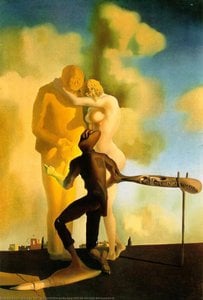
Impressions giclées ou sur toile de qualité musée, avec une production rapide et des finitions au choix. ( Commander la reproduction peinte à la main Acheter l'image haute résolution)





























Choisissez parmi nos formats prédéfinis qui respectent les proportions originales de l’œuvre.

Vous pouvez saisir vos propres dimensions pour vous adapter à un cadre ou à un espace spécifique. Si la taille sélectionnée ne correspond pas aux proportions de l'image originale, nous recadrerons l'œuvre ou étendrons l'image avec une bordure en miroir ou une couleur unie. Une maquette numérique vous sera envoyée pour approbation avant le début de la production.
Veuillez noter que l'aperçu à l'écran ne reflète pas le recadrage ou l'extension réelle. Seule la maquette montrera avec précision la composition finale.
Bien que des tailles personnalisées soient disponibles, nous vous recommandons de choisir une dimension dans la liste prédéfinie afin de préserver les proportions originales.
Livraison dans le monde entier () en 2 semaines au lieu des 4/5 semaines habituelles. (7 septembre)


Suez
Format de la reproduction
Salvador Dalí's ‘Suez,’ painted in 1932, is not merely an image; it’s a visceral plunge into the depths of the human psyche. The painting presents a stark and unsettling vision – a colossal chasm carved into the earth, its sheer scale dwarfing any sense of human presence. Dominated by earthy browns, muted greens, and ochre tones, the canvas evokes a feeling of age, decay, and an almost geological timelessness. The meticulous detail with which Dalí renders this impossible space is breathtaking; it’s hyperrealism employed not to depict reality, but to construct a profoundly *un*realistic one. The composition draws the eye relentlessly downward, emphasizing the abyss and creating a sense of vertigo. A single bucket, positioned at the very bottom and illuminated by an unseen, powerful light source, becomes a focal point – a fragile beacon in overwhelming darkness.
‘Suez’ is quintessential Dalí, firmly rooted within the Surrealist movement. Emerging in the aftermath of World War I, Surrealism sought to liberate thought, language, and human experience from the constraints of reason, embracing the illogical, the dreamlike, and the subconscious. Dalí, arguably its most recognizable figure, translated these principles into a highly personal visual vocabulary. He wasn’t simply painting dreams; he was attempting to codify their logic – a logic that operates outside the boundaries of waking consciousness. The influence of psychoanalysis, particularly the work of Sigmund Freud, is palpable in ‘Suez.’ The chasm itself can be interpreted as a symbolic representation of the unconscious mind, vast and unknowable, while the bucket might represent a fragile hope or a hidden treasure buried within its depths. This ambiguity is central to Dalí’s power; he doesn't offer answers, but rather invites viewers to confront their own interpretations and anxieties.
Dalí’s mastery of oil painting technique is on full display in ‘Suez.’ The canvas isn’t merely painted; it’s *constructed*. He employs a meticulous, almost photographic realism to depict the rough texture of the chasm walls, suggesting weathered stone or earth. This precision contrasts sharply with the irrationality of the scene itself, creating a powerful tension. The dramatic lighting – that single, intense beam cutting through the darkness – is crucial. It not only highlights the bucket but also sculpts the forms within the chasm, emphasizing their depth and creating stark shadows that heighten the sense of unease. The use of perspective further enhances this illusion of depth, drawing the viewer into the painting’s unsettling world. The visible brushstrokes, while controlled, remind us that we are looking at a hand-crafted object, adding another layer of complexity to the experience.
Born in 1904, Salvador Dalí lived through a period of immense social and political upheaval. The rise of fascism, the looming threat of another world war, and the rapid advancements in science all contributed to a sense of anxiety and uncertainty that permeated his work. ‘Suez,’ created during this turbulent era, can be seen as a reflection of these anxieties – a visual metaphor for the precariousness of existence and the darkness lurking beneath the surface of reality. Today, Dalí’s influence continues to resonate across art, fashion, film, and popular culture. His iconic imagery has become instantly recognizable, and his exploration of the subconscious remains profoundly relevant. A reproduction of ‘Suez’ isn’t just a decorative piece; it’s an invitation to contemplate the mysteries of the human mind and the enduring power of Surrealism.
Dalí’s artistic repertoire included painting, sculpture, film, graphic arts, animation, fashion, and photography, at times in collaboration with other artists. He also wrote fiction, poetry, autobiography, essays, and criticism.
To the dismay of those who held his work in high regard, and to the irritation of his critics, his eccentric and ostentatious public behavior often drew more attention than his artwork.

Salvador Domingo Felipe Jacinto Dalí i Domènech, Marquis de Dalí de Púbol, connu mondialement sous le nom de Salvador Dalí, était un peintre espagnol surréaliste né le 11 mai 1904 à Figueres, en Espagne. Il est décédé le 23 janvier 1989, laissant derrière lui un héritage qui continue de captiver et de défier les publics du monde entier.
La jeunesse de Dalí a été marquée par une relation complexe avec son père, ce qui a profondément influencé ses thèmes artistiques et sa personnalité. Il a démontré un talent artistique dès son plus jeune âge, recevant une formation formelle à l'Académie des Beaux-Arts de San Fernando à Madrid. Un moment décisif s'est produit à 16 ans lorsqu'il a découvert la peinture moderne, déclenchant un intérêt intense qui a conduit à sa première exposition publique en 1919.
Le parcours artistique de Dalí était une évolution dynamique façonnée par plusieurs influences clés :
Sa visite en 1926 à Paris s'est avérée cruciale, l'immergant dans le mouvement surréaliste naissant et le connectant avec les artistes de l'époque. Il est rapidement devenu une figure centrale du groupe.
La contribution de Dalí au surréalisme n'était pas seulement une participation, mais une redéfinition radicale de ses possibilités. Il a développé sa méthode « paranoïaque-critique » signature, impliquant des états paranoïdes auto-induits pour libérer les images du subconscient et les traduire en art. Cette approche lui a permis de créer des paysages étranges et oniriques peuplés d'horloges qui fondent, de figures déformées et d’objets symboliques – caractéristiques de son style immédiatement reconnaissable.
La Persistance de la Mémoire (1931) est sans doute l'œuvre la plus célèbre de Dalí, encapsulant l'exploration surréaliste du temps, de la mémoire et de la décomposition à travers son image emblématique.
La carrière prolifique de Dalí a produit un vaste corpus d’œuvres englobant la peinture, la sculpture, le cinéma (collaborations avec Alfred Hitchcock et Walt Disney) et la conception. Certaines œuvres notables comprennent :
Les thèmes récurrents dans l’art de Dalí comprennent : le temps, la mémoire, la décomposition, la sexualité, la religion, la science et l'inconscient. Ses œuvres présentent souvent des fourmis, des œufs, des crochets, des tiroirs et des objets qui fondent – tous imprégnés de sens personnel et symbolique.
Dalí a continué à créer et à exposer ses œuvres tout au long de sa vie, bien que ses années tardives aient été marquées par une excentricité croissante et des entreprises commerciales. Il s'est marié à Gala Éluard en 1934, une relation qui a profondément influencé son art et lui a fourni un soutien indéfectible. Gala l’a servi de muse et de gérante d’entreprise.
Dalí est décédé en 1989 à l'âge de 84 ans. Son héritage est immense. Il reste l'un des artistes les plus reconnaissables et les plus influents du XXe siècle, influençant la mode, le cinéma, la publicité et la culture populaire. Le Musée Salvador Dalí à Saint-Pétersbourg, en Floride, abrite une vaste collection, témoignant de son attrait durable.
Salvador Dalí a transcendé les frontières de l'art, devenant un symbole culturel. Son exploration de l'inconscient, combinée à sa maîtrise technique et à sa personnalité flamboyante, a assuré sa place en tant que véritable visionnaire et maître du surréalisme. Il continue d’inspirer les artistes et de captiver le public du monde entier.
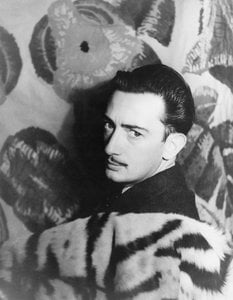
1904 - 1989 , Espagne

Embark on a visual journey through the subconscious. Explore the profound symbolism of Surrealist masterpieces, from Dalí's melting clocks to dreamlike landscapes, and learn how to curate these evocative visions into your private art collection with expert guidance.

 Aperçu en situation
 Envoyer
 Partager
 Détails de l'œuvre

 Télécharger
 Articles similaires
 Radiographie
 Diaporama

 Lire la suite







 L'option verre n'est disponible que pour les dimensions inférieures à 110 cm.