Impressions giclées ou sur toile de qualité musée, avec une production rapide et des finitions au choix. ( Commander la reproduction peinte à la main Acheter l'image haute résolution)





























Choisissez parmi nos formats prédéfinis qui respectent les proportions originales de l’œuvre.

Vous pouvez saisir vos propres dimensions pour vous adapter à un cadre ou à un espace spécifique. Si la taille sélectionnée ne correspond pas aux proportions de l'image originale, nous recadrerons l'œuvre ou étendrons l'image avec une bordure en miroir ou une couleur unie. Une maquette numérique vous sera envoyée pour approbation avant le début de la production.
Veuillez noter que l'aperçu à l'écran ne reflète pas le recadrage ou l'extension réelle. Seule la maquette montrera avec précision la composition finale.
Bien que des tailles personnalisées soient disponibles, nous vous recommandons de choisir une dimension dans la liste prédéfinie afin de préserver les proportions originales.
Livraison dans le monde entier () en 2 semaines au lieu des 4/5 semaines habituelles. (6 septembre)


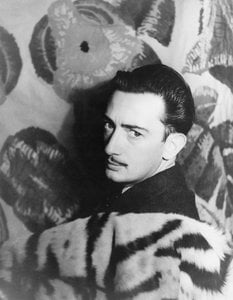
Study for a Portrait (unfinished)
Format de la reproduction
In the quiet, shadowed corners of art history, few works possess the haunting allure of Salvador Dalí's "Study for a Portrait (unfinished)." Created around 1948, this piece serves as a profound window into the artist’s psyche during a period of intense personal and creative transition. Rather than offering a polished, finished likeness, Dalí presents us with a fragment of a soul—a woman captured in a moment of glancing over her shoulder, her form emerging from an abyss of darkness. The unfinished nature of the canvas is not a failure of completion, but rather a deliberate invitation to the viewer. It mirrors the fluid, often incomplete state of our own subconscious dreams, where identities are perpetually forming and dissolving within the mist of memory.
To gaze upon this work is to engage in a silent dialogue with the Surrealist movement itself. Dalí, a master of disrupting reality to access the realm of the subconscious, uses this study to explore themes of femininity, vulnerability, and the elusive nature of representation. The subject’s pose—a subtle twist of the torso and a watchful gaze—suggests an awareness of being observed, creating a dynamic tension that pulls the viewer into her private orbit. For the collector or the lover of fine art, this painting offers more than mere decoration; it provides a psychological anchor, a piece of history that demands contemplation and rewards deep emotional investment.
The true magic of this study lies in its physical presence, specifically through Dalí’s masterful application of the impasto technique. Upon close inspection, the canvas reveals a rugged, topographical landscape of oil paint. These thick, deliberate layers of pigment do more than just define the contours of the woman's shoulders and neck; they embody the very weight of emotion. The texture mimics the organic irregularities of human flesh, lending a palpable sense of life and vulnerability to the figure. This tactile richness transforms the painting from a flat image into a three-dimensional experience, where light and shadow dance across the ridges of dried paint.
The color palette, though presented here in a striking grayscale through photographic study, speaks to a sophisticated use of tonal gradation. The interplay between deep, impenetrable blacks and soft, luminous grays creates a sense of atmospheric depth that is both mysterious and intimate. For interior designers seeking to create a space of sophistication and drama, the monochromatic strength of this piece offers unparalleled versatility. It can anchor a minimalist modern gallery or add a layer of intellectual depth to a classic study, acting as a focal point that draws the eye through its subtle shifts in light and shadow.
Owning a reproduction of such a significant work allows one to bring the spirit of 1940s Surrealism into the contemporary home. "Study for a Portrait" is not merely an aesthetic choice; it is an atmospheric one. It embodies the tension between what is seen and what is hidden, making it an ideal centerpiece for those who appreciate art that challenges the intellect while soothing the senses. The soft, diffused lighting captured in the work creates a sense of tranquility, yet the underlying themes of introspection and mystery ensure that the piece remains perpetually engaging.
Whether you are an art historian captivated by Dalí’s technical evolution or a decorator looking to infuse a room with a sense of timeless mystery, this artwork stands as a testament to the power of the unfinished. It reminds us that beauty often resides in the incomplete, and that the most profound truths are frequently found in the shadows of what remains unsaid. By integrating this piece into your collection, you are not just displaying a portrait; you are hosting a masterpiece of psychological depth and textural brilliance.

Salvador Domingo Felipe Jacinto Dalí i Domènech, Marquis de Dalí de Púbol, connu mondialement sous le nom de Salvador Dalí, était un peintre espagnol surréaliste né le 11 mai 1904 à Figueres, en Espagne. Il est décédé le 23 janvier 1989, laissant derrière lui un héritage qui continue de captiver et de défier les publics du monde entier.
La jeunesse de Dalí a été marquée par une relation complexe avec son père, ce qui a profondément influencé ses thèmes artistiques et sa personnalité. Il a démontré un talent artistique dès son plus jeune âge, recevant une formation formelle à l'Académie des Beaux-Arts de San Fernando à Madrid. Un moment décisif s'est produit à 16 ans lorsqu'il a découvert la peinture moderne, déclenchant un intérêt intense qui a conduit à sa première exposition publique en 1919.
Le parcours artistique de Dalí était une évolution dynamique façonnée par plusieurs influences clés :
Sa visite en 1926 à Paris s'est avérée cruciale, l'immergant dans le mouvement surréaliste naissant et le connectant avec les artistes de l'époque. Il est rapidement devenu une figure centrale du groupe.
La contribution de Dalí au surréalisme n'était pas seulement une participation, mais une redéfinition radicale de ses possibilités. Il a développé sa méthode « paranoïaque-critique » signature, impliquant des états paranoïdes auto-induits pour libérer les images du subconscient et les traduire en art. Cette approche lui a permis de créer des paysages étranges et oniriques peuplés d'horloges qui fondent, de figures déformées et d’objets symboliques – caractéristiques de son style immédiatement reconnaissable.
La Persistance de la Mémoire (1931) est sans doute l'œuvre la plus célèbre de Dalí, encapsulant l'exploration surréaliste du temps, de la mémoire et de la décomposition à travers son image emblématique.
La carrière prolifique de Dalí a produit un vaste corpus d’œuvres englobant la peinture, la sculpture, le cinéma (collaborations avec Alfred Hitchcock et Walt Disney) et la conception. Certaines œuvres notables comprennent :
Les thèmes récurrents dans l’art de Dalí comprennent : le temps, la mémoire, la décomposition, la sexualité, la religion, la science et l'inconscient. Ses œuvres présentent souvent des fourmis, des œufs, des crochets, des tiroirs et des objets qui fondent – tous imprégnés de sens personnel et symbolique.
Dalí a continué à créer et à exposer ses œuvres tout au long de sa vie, bien que ses années tardives aient été marquées par une excentricité croissante et des entreprises commerciales. Il s'est marié à Gala Éluard en 1934, une relation qui a profondément influencé son art et lui a fourni un soutien indéfectible. Gala l’a servi de muse et de gérante d’entreprise.
Dalí est décédé en 1989 à l'âge de 84 ans. Son héritage est immense. Il reste l'un des artistes les plus reconnaissables et les plus influents du XXe siècle, influençant la mode, le cinéma, la publicité et la culture populaire. Le Musée Salvador Dalí à Saint-Pétersbourg, en Floride, abrite une vaste collection, témoignant de son attrait durable.
Salvador Dalí a transcendé les frontières de l'art, devenant un symbole culturel. Son exploration de l'inconscient, combinée à sa maîtrise technique et à sa personnalité flamboyante, a assuré sa place en tant que véritable visionnaire et maître du surréalisme. Il continue d’inspirer les artistes et de captiver le public du monde entier.
1904 - 1989 , Espagne

Embark on a visual journey through the subconscious. Explore the profound symbolism of Surrealist masterpieces, from Dalí's melting clocks to dreamlike landscapes, and learn how to curate these evocative visions into your private art collection with expert guidance.

Embark on a journey through the subconscious with our expert guide to Surrealism. Discover the profound symbolism of masters like Dalí and Ernst, exploring how dreamlike imagery reshaped art history and continues to inspire collectors and enthusiasts worldwide.

 Aperçu en situation
 Envoyer
 Partager
 Détails de l'œuvre

 Télécharger
 Articles similaires
 Radiographie
 Diaporama

 Lire la suite







 L'option verre n'est disponible que pour les dimensions inférieures à 110 cm.