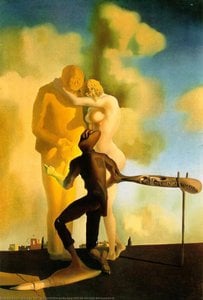
Huile sur panneauSurrealism
 1934Moderne
 15.0 x 22.0 cm
Huile sur toile peinte à la main, avec cadre et dimensions personnalisés, réalisée sur commande par nos artistes. ( Commander l'impression Acheter l'image haute résolution)





























Choisissez parmi nos formats prédéfinis qui respectent les proportions originales de l’œuvre.

Vous pouvez saisir vos propres dimensions pour l'adapter à un cadre ou à un espace spécifique. Si la taille sélectionnée ne correspond pas aux proportions de l'image d'origine, nous recadrerons l'œuvre ou prolongerons la peinture avec des éléments peints à la main supplémentaires. Une maquette numérique vous sera envoyée pour approbation avant le début de la production.
Veuillez noter que l'aperçu à l'écran ne reflète pas le recadrage ou l'extension réels. Seule la maquette montrera fidèlement la composition finale.
Bien que des tailles personnalisées soient disponibles, nous vous recommandons de sélectionner une dimension dans la liste prédéfinie afin de préserver les proportions d'origine.
Livraison dans le monde entier () en 3 à 4 semaines au lieu des 5 semaines habituelles. (7 septembre). Aucun compromis sur la qualité.


Image Paranoïaque-Astrale
Format de la reproduction
Salvador Dalí's "Paranoiac-Astral Image," painted in 1934, isn’t merely a landscape; it’s an immersive journey into the fractured psyche. This small yet intensely powerful oil on panel invites viewers to confront the unsettling beauty of the subconscious mind, a realm where reality bends and logic dissolves. Measuring just 15 x 22 centimeters, the painting belies its compact size with the vastness of its symbolic landscape – a beach bathed in an eerie, almost hallucinatory light, populated by figures caught in moments of profound disorientation.
The scene unfolds with a deliberate ambiguity. A solitary man, his back turned to us, strides away from the viewer along a seemingly endless shoreline. His posture suggests both determination and a profound sense of isolation. Beside him, a dog – often interpreted as a symbol of loyalty and companionship – appears strangely detached, almost spectral in its presence. Further down the beach, a chair sits abandoned, a silent witness to this strange procession. Two boats punctuate the horizon: one close to the center, hinting at travel or transition, and another receding into the distance on the right, perhaps representing an unattainable destination. These elements aren’t arranged casually; they are carefully positioned to create a narrative of departure, uncertainty, and the elusive nature of reality itself.
“Paranoiac-Astral Image” is a quintessential example of Dalí's mature surrealist style. He meticulously rendered each element with an almost photographic precision – the glistening sand, the reflective surface of the water, the folds of the man’s clothing – yet imbued them with dreamlike distortions and impossible juxtapositions. The use of oil on panel allows for a remarkable level of detail and texture, creating a palpable sense of depth and atmosphere. Notice how Dalí employs a muted color palette—ochres, blues, and grays—to heighten the painting’s unsettling mood. The sharp contrasts between light and shadow further contribute to the feeling of disorientation, as if the viewer is caught in a shifting, unstable reality.
Dalí's technique isn’t simply about replicating what he sees; it’s about translating his inner world onto canvas. The painting embodies his exploration of paranoia – not as a clinical diagnosis, but as a state of heightened awareness and subjective experience. The title itself suggests this internal landscape, hinting at the distorted perceptions and fragmented thoughts that characterize paranoid states. It's important to note that Dalí often described his creative process as “paranoiac-critical,” a method of self-induced psychosis designed to unlock subconscious imagery.
The symbolism within "Paranoiac-Astral Image" is rich and layered, inviting endless interpretation. The man’s retreat could represent a psychological journey – a departure from reality into the realm of dreams and anxieties. The boats might symbolize different paths or possibilities, yet their distant location suggests that these journeys are ultimately futile or unattainable. The dog's detached presence raises questions about loyalty and companionship in the face of existential uncertainty. Some art historians have linked the painting to Dalí’s personal struggles with his father, suggesting that the solitary figure represents a fractured relationship.
The overall composition creates an atmosphere of profound unease and introspection. The lack of a clear focal point forces the viewer to confront their own anxieties and uncertainties. Dalí deliberately avoids providing easy answers, instead inviting us to engage with the painting on a deeply personal level. It’s a testament to his genius that “Paranoiac-Astral Image” continues to resonate with audiences today, prompting reflection on the nature of reality, consciousness, and the human psyche.
"Paranoiac-Astral Image" stands as a pivotal work in Salvador Dalí's oeuvre and within the broader history of surrealist art. Its exploration of the subconscious mind profoundly influenced subsequent generations of artists, shaping movements like pop art and conceptual art. The painting’s unsettling imagery and psychological depth continue to captivate viewers, demonstrating Dalí’s mastery of creating visually arresting and intellectually stimulating works. If you are seeking a piece that transcends mere decoration and offers a profound meditation on the human condition, consider exploring high-quality reproductions of “Paranoiac-Astral Image.” For more surrealist masterpieces by Salvador Dalí or other influential artists, visit WahooArt.

Salvador Domingo Felipe Jacinto Dalí i Domènech, Marquis de Dalí de Púbol, connu mondialement sous le nom de Salvador Dalí, était un peintre espagnol surréaliste né le 11 mai 1904 à Figueres, en Espagne. Il est décédé le 23 janvier 1989, laissant derrière lui un héritage qui continue de captiver et de défier les publics du monde entier.
La jeunesse de Dalí a été marquée par une relation complexe avec son père, ce qui a profondément influencé ses thèmes artistiques et sa personnalité. Il a démontré un talent artistique dès son plus jeune âge, recevant une formation formelle à l'Académie des Beaux-Arts de San Fernando à Madrid. Un moment décisif s'est produit à 16 ans lorsqu'il a découvert la peinture moderne, déclenchant un intérêt intense qui a conduit à sa première exposition publique en 1919.
Le parcours artistique de Dalí était une évolution dynamique façonnée par plusieurs influences clés :
Sa visite en 1926 à Paris s'est avérée cruciale, l'immergant dans le mouvement surréaliste naissant et le connectant avec les artistes de l'époque. Il est rapidement devenu une figure centrale du groupe.
La contribution de Dalí au surréalisme n'était pas seulement une participation, mais une redéfinition radicale de ses possibilités. Il a développé sa méthode « paranoïaque-critique » signature, impliquant des états paranoïdes auto-induits pour libérer les images du subconscient et les traduire en art. Cette approche lui a permis de créer des paysages étranges et oniriques peuplés d'horloges qui fondent, de figures déformées et d’objets symboliques – caractéristiques de son style immédiatement reconnaissable.
La Persistance de la Mémoire (1931) est sans doute l'œuvre la plus célèbre de Dalí, encapsulant l'exploration surréaliste du temps, de la mémoire et de la décomposition à travers son image emblématique.
La carrière prolifique de Dalí a produit un vaste corpus d’œuvres englobant la peinture, la sculpture, le cinéma (collaborations avec Alfred Hitchcock et Walt Disney) et la conception. Certaines œuvres notables comprennent :
Les thèmes récurrents dans l’art de Dalí comprennent : le temps, la mémoire, la décomposition, la sexualité, la religion, la science et l'inconscient. Ses œuvres présentent souvent des fourmis, des œufs, des crochets, des tiroirs et des objets qui fondent – tous imprégnés de sens personnel et symbolique.
Dalí a continué à créer et à exposer ses œuvres tout au long de sa vie, bien que ses années tardives aient été marquées par une excentricité croissante et des entreprises commerciales. Il s'est marié à Gala Éluard en 1934, une relation qui a profondément influencé son art et lui a fourni un soutien indéfectible. Gala l’a servi de muse et de gérante d’entreprise.
Dalí est décédé en 1989 à l'âge de 84 ans. Son héritage est immense. Il reste l'un des artistes les plus reconnaissables et les plus influents du XXe siècle, influençant la mode, le cinéma, la publicité et la culture populaire. Le Musée Salvador Dalí à Saint-Pétersbourg, en Floride, abrite une vaste collection, témoignant de son attrait durable.
Salvador Dalí a transcendé les frontières de l'art, devenant un symbole culturel. Son exploration de l'inconscient, combinée à sa maîtrise technique et à sa personnalité flamboyante, a assuré sa place en tant que véritable visionnaire et maître du surréalisme. Il continue d’inspirer les artistes et de captiver le public du monde entier.
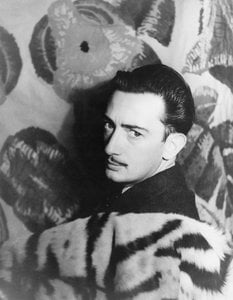
1904 - 1989 , Espagne

Embark on a visual journey through the subconscious. Explore the profound symbolism of Surrealist masterpieces, from Dalí's melting clocks to dreamlike landscapes, and learn how to curate these evocative visions into your private art collection with expert guidance.

Master the complexities of Salvador Dalí’s genius. Explore an expert analysis of the Paranoiac-Critical Method and the profound symbolism within his Surrealist masterpieces for the discerning art collector.

Embark on a journey through the subconscious with our expert guide to Surrealism. Discover the profound symbolism of masters like Dalí and Ernst, exploring how dreamlike imagery reshaped art history and continues to inspire collectors and enthusiasts worldwide.

Embark on a sophisticated journey through the surrealist movement. Discover how masters like Dalí and Ernst blurred the lines between dreams and reality through innovative techniques, exploring the profound impact of the subconscious on fine art history with expert authority.

 Aperçu en situation
 Envoyer
 Partager
 Détails de l'œuvre

 Télécharger
 Articles similaires
 Radiographie
 Diaporama
 Lire la suite







 L'option verre n'est disponible que pour les dimensions inférieures à 110 cm.