CONSEIL EN ART GRATUIT

x
Commander la reproduction Commander la reproductionAcheter l'image haute résolution Acheter l'image haute résolution PartagerPartager
Détails de l'œuvreDétails de l'œuvre Ajouter aux favoris Ajouter aux favoris TéléchargerTélécharger Articles similairesArticles similaires RadiographieRadiographie DiaporamaDiaporama

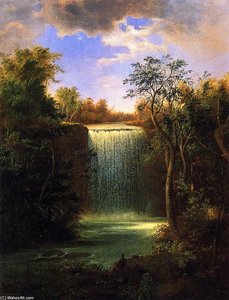
Landscape Mural

Robert Seldon Duncanson’s ‘Landscape Mural’ (1852) captures Ohio Valley beauty with atmospheric perspective & evokes the Hudson River School's romantic style. Explore this iconic American landscape painting.

Découvrez Robert S. Duncanson (1821-1872), pionnier afro-américain de paysages, reconnu internationalement ! Explorez ses vues paisibles de la vallée de l'Ohio et les métaphores raciales potentielles dans son art romantique.

Giclée / Impression d'art

Impression giclée ou sur toile de qualité musée, avec une production rapide et des finitions au choix.

P118B $10
P118H $10
P118W $10
P438Z $10
P508JH $12
P508YH $12
P805H $10
P805Z $10
P919BZ $10
P919G $10
P919XJ $10
P959ZH $10
P968JZ $12
W106C $8
W218G $10
W218JH $8
W218Y $10
W307PJ $10
W316G $10
W316PJ $8
W316Y $10
W398PJ $8
W4111J $10
W500HY $15
W500JH $15
W692G $12
W849H $8
W940BG $15
W953PJ $8

Standard
custom
CM
INCH

Choisissez parmi nos formats prédéfinis qui respectent les proportions originales de l’œuvre.

largeur
hauteur

Vous pouvez saisir vos propres dimensions pour vous adapter à un cadre ou à un espace spécifique. Si la taille sélectionnée ne correspond pas aux proportions de l'image originale, nous recadrerons l'œuvre ou étendrons l'image avec une bordure en miroir ou une couleur unie. Une maquette numérique vous sera envoyée pour approbation avant le début de la production.
Veuillez noter que l'aperçu à l'écran ne reflète pas le recadrage ou l'extension réelle. Seule la maquette montrera avec précision la composition finale.
Bien que des tailles personnalisées soient disponibles, nous vous recommandons de choisir une dimension dans la liste prédéfinie afin de préserver les proportions originales.

Livraison dans le monde entier () en 2 semaines au lieu des 4/5 semaines habituelles. (4 juillet)

why_choose_icon
Livraison express gratuite dans le monde entier
why_choose_icon
Toile de lin de haute qualité
why_choose_icon
Assurance transport complète
why_choose_icon
Garantie de remboursement des frais de douane
why_choose_icon
Garantie de fidélité des couleurs
why_choose_icon
Politique de retour de 60 jours (uniquement en cas de défaut)
why_choose_icon
Garantie de remboursement à 100%
why_choose_icon
Réduction sur les achats groupés

Prix total

-

reproduction

Landscape Mural

Giclée / Impression d'art

Format de reproduction

-

Prix total final

-

En bref

  • Dimensions: 110 x 79 in.
  • Movement: Hudson River School
  • Location: Taft Museum, Cincinnati
  • Influences:
    • Cole
    • Hudson River School
  • Subject or theme: Ohio Valley landscape
  • Title: Landscape Mural
  • Year: 1852

Quiz d'art

Chaque question ne comporte qu'une seule bonne réponse.

Question 1:
What artistic movement is Robert Seldon Duncanson’s ‘Landscape Mural’ primarily associated with?
Question 2:
Approximately when was ‘Landscape Mural’ created?
Question 3:
What is a key characteristic of the ‘Hudson River School’ style, as exemplified by Duncanson's work?
Question 4:
Robert Seldon Duncanson was notable for being one of the first African American artists to achieve international acclaim. What contributed to this recognition?
Question 5:
The Taft Museum of Art houses ‘Landscape Mural’. What type of painting technique was used to create this mural?

Description de l'œuvre

Robert Seldon Duncanson’s “Landscape Mural”: A Window into the Soul of Ohio

Robert Seldon Duncanson's "Landscape Mural," completed in 1852, isn’t merely a depiction of a river valley; it’s an immersive experience, a carefully constructed panorama that speaks volumes about the artist’s vision and the burgeoning artistic landscape of mid-19th century America. Commissioned by Nicholas Longworth, a prominent Cincinnati merchant and art patron, this monumental work—measuring nearly 11 feet by 8 feet—was intended to adorn the entry hall of his grand home, transforming a domestic space into a sanctuary of natural beauty. Duncanson, a pioneering African American artist navigating a world rife with racial prejudice, utilized the mural as a platform to express both his artistic skill and his deeply felt connection to the American wilderness.

The painting’s style firmly places it within the Hudson River School tradition, an influential movement of landscape painters that flourished in the United States during the mid-19th century. Like his contemporaries—Thomas Cole, Frederic Church, and Asher B. Durand—Duncanson sought to capture the sublime grandeur of nature, imbuing his scenes with a sense of awe and spiritual resonance. However, Duncanson’s approach distinguishes him; he moved beyond simple representation, employing atmospheric perspective – a technique borrowed from European masters – to create an illusion of depth and distance that draws the viewer into the heart of the scene. Notice how the colors subtly shift and fade as they recede into the background, mimicking the way light behaves in reality, and creating a powerful sense of spatial realism.

A Symphony of Color and Light: Technique and Materials

Duncanson’s masterful technique is evident in every brushstroke. He employed a fresco secco method – painting directly onto dry plaster—a challenging approach that demanded precision and control. The pigments, carefully mixed with water, were applied to the wall surface, reacting chemically with the lime mortar as they dried. This process created a durable, luminous finish, ensuring the mural’s longevity. The artist's use of color is particularly noteworthy; he favored muted earth tones—ochres, browns, and greens—to evoke the natural palette of the Ohio River Valley. Yet, within this restrained palette, Duncanson skillfully layered shades and hues to create a rich tapestry of textures and moods. The interplay of light and shadow is expertly rendered, casting dramatic highlights on the water’s surface and creating an ethereal glow that permeates the entire scene.

Symbolism and the American Landscape

Beyond its technical brilliance, “Landscape Mural” is laden with symbolic meaning. Duncanson wasn't simply painting a pretty picture; he was engaging in a complex dialogue about America’s identity and its relationship to nature. The river itself—a central element of the composition—represents both life and transition, flowing relentlessly towards an unseen horizon. The trees lining the banks symbolize strength, resilience, and connection to the earth. The boat on the water suggests human interaction with the natural world, but also hints at the potential for disruption. Some scholars have interpreted the mural as a subtle commentary on the challenges faced by African Americans in a nation grappling with issues of slavery and racial inequality – Duncanson’s position as an artist of color within this context adds another layer of significance to his work.

A Legacy of Vision: The Artist and His Time

Robert Seldon Duncanson's “Landscape Mural” stands as a testament to his artistic talent, his unwavering determination, and the transformative power of art. As one of the first African American artists to achieve widespread recognition in America and abroad, Duncanson’s work challenged prevailing notions of race and representation within the art world. His ability to capture the beauty and spirit of the American landscape—while simultaneously engaging with complex social and political issues—solidifies his place as a pivotal figure in the history of American art. Today, this magnificent mural continues to inspire and captivate viewers, offering a glimpse into the soul of Ohio and the visionary mind of its most celebrated artist.


Biographie de l'artiste

Robert Seldon Duncanson : Une Vie et un Héritage

  • Né: Fayetteville, New York (vers 1821)
  • Décédé: 21 décembre 1872
  • Origine: WahooArt

Première Vie et Développement Artistique

  • La famille de Duncanson était d'ascendance européenne et africaine. Son père, John Dean Duncanson, un commerçant noir libre, a inculqué à ses enfants la valeur du travail acharné et de l'éducation.
  • La famille déménagea à Monroe, dans le Michigan, où Robert fit son apprentissage en menuiserie et en peinture. Il a démontré un talent précoce pour l'art, ce qui l'a conduit à se consacrer au portrait.
  • En 1840, il s'installa à Cincinnati, Ohio, un centre culturel florissant connu sous le nom d'"Athènes de l'Ouest". Cet environnement a offert des opportunités de croissance artistique et d'exposition.
  • Duncanson était largement autodidacte, étudiant les gravures et les estampes, esquissant à partir de la nature et copiant les œuvres d'autres artistes. Il n'a pas reçu de formation formelle mais a développé un œil aiguisé et une compétence technique.

Style Artistique et Influences

  • Influence de l’École du fleuve Hudson : Le style de Duncanson était fortement influencé par l'École du fleuve Hudson, connue pour ses représentations romantiques des régions sauvages américaines. Des artistes comme Thomas Cole ont été une source d'inspiration importante.
  • Concentration sur le paysage : Il s’est tourné vers les paysages, capturant des scènes de la vallée de l'Ohio et au-delà.
  • Romantisme : Ses œuvres transmettaient souvent un sentiment de grandeur, de tranquillité et de connexion spirituelle avec la nature, caractéristique du romantisme.
  • Palette de couleurs et technique : Duncanson employait une palette de couleurs riches et des détails méticuleux dans ses peintures, démontrant une maîtrise de la technique.

Réalisations Majeures et Reconnaissance

  • Premières expositions : Ses œuvres ont été exposées à l'Académie des beaux-arts de Cincinnati dès 1842, ce qui lui a valu une reconnaissance au sein de la communauté artistique locale.
  • Tournée européenne (1853-1854) : Un tournant important dans sa carrière fut un voyage en Europe où il étudia les maîtres européens et élargit ses horizons artistiques.
  • Acclamation internationale : Duncanson a obtenu une reconnaissance internationale, exposant ses œuvres en Angleterre, en Écosse, au Canada et aux États-Unis. Il est devenu le premier artiste afro-américain à obtenir un tel éloge généralisé.
  • Tradition de la vallée de l'Ohio : Il a joué un rôle clé dans le développement de la tradition du paysage de la vallée de l'Ohio, contribuant de manière significative à son identité artistique.

Signification Historique et Héritage

  • Pionnier pour les artistes noirs : Le succès de Duncanson a brisé les barrières pour les artistes afro-américains à une époque de préjugés raciaux et de discrimination. Il a servi d'inspiration aux générations futures.
  • Identité raciale dans l’art : Les historiens de l'art débattent de la mesure dans laquelle sa race a influencé son expression artistique, certains suggérant des représentations symboliques subtiles de thèmes raciaux au sein de ses paysages.
  • Figure oubliée redécouverte : Pendant de nombreuses années, le travail de Duncanson a été largement négligé. Des recherches et expositions récentes ont permis de porter une nouvelle attention à ses contributions à l'histoire de l'art américain.
  • Témoignage de résilience : Son histoire est un témoignage de la résilience et du talent des Afro-Américains face à l'adversité, démontrant leur capacité à atteindre l'excellence artistique malgré les défis systémiques.
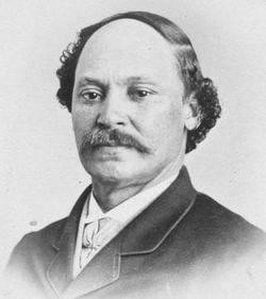
Robert Seldon Duncanson

Robert Seldon Duncanson

1821 - 1872 , États-Unis d'Amérique

En bref

  • Artistes Influents: ['Thomas Cole']
  • Date De Décès: 21 décembre 1872
  • Date De Naissance: c. 1821
  • Lieu De Naissance: Fayetteville, États-Unis
  • Mouvement Artistique: École du fleuve Hudson
  • Nationalité: Américain
  • Nom Complet: Robert Seldon Duncanson
  • Oeuvres Notables:
    • Roses Still Life
    • Waterfall...
    • Vulture and Its Prey
    • Minnenopa Falls
Explorez des œuvres d'art classées par thèmes, styles et caractéristiques.