jeunesse et débuts artistiques
René François Ghislain Magritte, artiste surréaliste belge renommé, est né le 21 novembre 1898 à Lessines, province de la Haine, en Belgique. Sa jeunesse reste quelque peu mystérieuse, avec peu d'informations connues sur son enfance. Cependant, il est documenté qu’il a commencé des cours de dessin en 1910.
évolution artistique et influences
Le style artistique de Magritte a évolué considérablement au fil des ans, influencé par divers mouvements tels que l’impressionnisme, le futurisme et le cubisme. Ses premières peintures, datant d'environ 1915, étaient de style impressionniste. De 1916 à 1918, il a étudié à l’Académie Royale des Beaux-Arts de Bruxelles, sous la direction de Constant Montald.
période surréaliste et œuvres notables
En 1926, Magritte a produit sa première peinture surréaliste,
Le jockey perdu (The Lost Jockey), marquant le début de son association avec le mouvement surréaliste. Son œuvre est caractérisée par des images stimulantes et provocatrices, souvent représentant des objets ordinaires dans des contextes inhabituels, remettant en question la perception de la réalité par les observateurs.
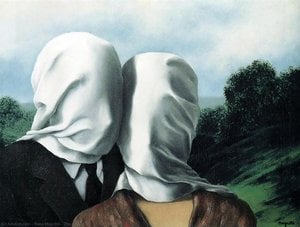
- Les amants (1927-1928), une série de peintures mettant en scène des personnes dont les visages sont dissimulés par du tissu, est vraisemblablement inspirée par l'histoire de la mort de sa mère.
- Les amants, une autre œuvre emblématique, présente un couple s’embrassant avec les visages couverts de tissu blanc, invitant le spectateur à réfléchir sur l'amour et l'identité. (Disponible à l'achat en reproduction à l'huile artisanale ou impression sur toile à WahooArt.com)
vie tardive et héritage
L’œuvre de Magritte a été exposée aux États-Unis en 1936 et à nouveau lors de deux expositions rétrospectives, l'une au Musée d'Art Moderne en 1965 et l'autre au Metropolitan Museum of Art en 1992. Il est resté engagé politiquement à gauche, mais a plaidé pour l’autonomie artistique.
Musées notables présentant l'œuvre de Magritte :
Conclusion
L’héritage de René Magritte en tant que maître surréaliste perdure, ses images stimulantes continuant à inspirer et à intriguer. Son œuvre, caractérisée par son mélange unique de l'ordinaire et du surprenant, reste un pilier essentiel de l'art surréaliste.
En savoir plus sur René Magritte



 Aperçu en situation
 Passer au format impression
 Partager
 Partager
 Détails

 Télécharger
 Articles similaires
 Radiographie
 Voir le diaporama
 Statistiques


 Afficher la suite






































 L'option verre n'est disponible que pour les dimensions inférieures à 110 cm.