Aperçu en situationAperçu en situation Visualiser en RAVisualiser en RA Passer au format impression Passer au format impressionPasser à l'image numérique Passer à l'image numérique EnvoyerEnvoyer
Détails de l'œuvreDétails de l'œuvre Ajouter aux favoris Ajouter aux favoris TéléchargerTélécharger Articles similairesArticles similaires RadiographieRadiographie DiaporamaDiaporama StatistiquesStatistiques

The ellipse

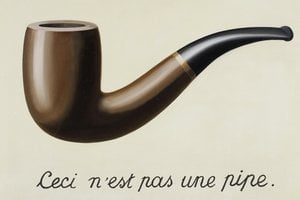
René Magritte's 'The Ellipse' (1948) is a surreal masterpiece featuring a haunting image of a man holding a gun to his mouth, challenging perception and exploring hidden realities within a symbolic painting.

René Magritte (1898-1967) était un peintre surréaliste belge réputé pour ses peintures stimulantes qui remettaient en question la réalité. Explorez des œuvres emblématiques telles que « Les Amants » et son utilisation d'objets ordinaires dans des contextes inattendus. Découvrez des reproductions chez WahooArt.

Reproduction à l'huile faite à la main

Huile sur toile peinte à la main, avec cadre et dimensions personnalisés, réalisée sur commande par nos artistes. (Passer au format impression Passer au format impressionPasser à l'image numérique Passer à l'image numérique)

P118B $10
P118H $10
P118W $10
P438Z $10
P508JH $12
P508YH $12
P805H $10
P805Z $10
P919BZ $10
P919G $10
P919XJ $10
P959ZH $10
P968JZ $12
W106C $8
W218G $10
W218JH $8
W218Y $10
W307PJ $10
W316G $10
W316PJ $8
W316Y $10
W398PJ $8
W4111J $10
W500HY $15
W500JH $15
W692G $12
W849H $8
W940BG $15
W953PJ $8

Format standard
personnalisé
CM
INCH

Choisissez parmi nos formats prédéfinis qui respectent les proportions originales de l’œuvre.

largeur
hauteur

Vous pouvez saisir vos propres dimensions pour l'adapter à un cadre ou à un espace spécifique. Si la taille sélectionnée ne correspond pas aux proportions de l'image d'origine, nous recadrerons l'œuvre ou prolongerons la peinture avec des éléments peints à la main supplémentaires. Une maquette numérique vous sera envoyée pour approbation avant le début de la production.
Veuillez noter que l'aperçu à l'écran ne reflète pas le recadrage ou l'extension réels. Seule la maquette montrera fidèlement la composition finale.
Bien que des tailles personnalisées soient disponibles, nous vous recommandons de sélectionner une dimension dans la liste prédéfinie afin de préserver les proportions d'origine.

Exemples de personnalisation possibles : remplacer un visage par la photo du client ; ajouter un animal de compagnie (par exemple, remplacer un chat par un chien) ; inclure un message caché en arrière-plan ; modifier le paysage ou les éléments de l'arrière-plan.
Après la commande, l’équipe WahooArt.com contactera le client par e-mail pour recueillir ses instructions et lui fournira une maquette d’aperçu

Livraison dans le monde entier () en 3 à 4 semaines au lieu des 5 semaines habituelles. (10 septembre). Aucun compromis sur la qualité.

why_choose_icon
Livraison express gratuite dans le monde entier
why_choose_icon
Toile de lin de haute qualité
why_choose_icon
Assurance transport complète
why_choose_icon
Garantie de remboursement des droits de douane
why_choose_icon
Garantie de fidélité des couleurs
why_choose_icon
Garantie de retour de 100 jours (uniquement en cas de défaut)
why_choose_icon
Garantie de remboursement à 100%
why_choose_icon
Tarifs dégressifs sur quantité

Prix total

$ 272

reproduction

The ellipse

Technique de reproduction

Format de la reproduction

-

Prix total final

$ 272

Informations clés

  • Location: WikiArt.org
  • Notable elements: Pig with gun, ellipse
  • Influences: Magritte
  • Medium: Gouache on paper
  • Title: The Ellipse
  • Movement: Surrealism
  • Artistic style: Symbolic painting

Quiz d'art

Chaque question ne comporte qu'une seule bonne réponse.

Question 1:
What is the primary subject depicted in René Magritte’s ‘The Ellipse’?
Question 2:
Which artistic movement is most closely associated with René Magritte’s work, as evidenced by ‘The Ellipse’?
Question 3:
What is the significance of the red plaid shirt worn by the figure in ‘The Ellipse’?
Question 4:
In what year was René Magritte’s ‘The Ellipse’ painted?
Question 5:
Considering Magritte's known interest in challenging perception, what might ‘The Ellipse’ be suggesting about the nature of reality?

René Magritte’s “The Ellipse”: A Surrealist Enigma

René Magritte's "The Ellipse," painted in 1948, is not merely a depiction of a man holding a gun to his mouth; it’s a meticulously constructed visual paradox, a profound meditation on perception, reality, and the unsettling nature of representation. This iconic work, rendered in gouache on paper, embodies the core tenets of Surrealism – a movement Magritte both embraced and subtly subverted. The painting immediately confronts the viewer with an arresting image: a figure, seemingly ordinary yet imbued with a palpable sense of dread, positioned against a stark, almost clinical backdrop. The man’s posture, the gun's placement, and the overall composition create a disquieting tension that lingers long after the initial viewing.

Magritte’s artistic journey was deeply shaped by personal tragedy – the untimely death of his mother at a young age. This event, coupled with his early exposure to Impressionism before gravitating towards Surrealism, instilled within him a fascination with hidden meanings and the power of suggestion. “The Ellipse” can be interpreted as an extension of this preoccupation; it’s not about literal depiction but rather about evoking a feeling, a sense of unease that stems from the collision of familiar elements in an unfamiliar arrangement. The painting's deliberate ambiguity forces the viewer to actively engage with the artwork, questioning what is being presented and how it relates to their own understanding of the world.

Symbolism and Interpretation

The symbolism within “The Ellipse” is layered and open to interpretation, a hallmark of Magritte’s approach. The man holding the gun is perhaps the most obvious element, representing self-destruction, vulnerability, or even a symbolic gesture of defiance against an unseen force. However, the context surrounding this central image – the stark background, the muted colors, and the almost detached manner in which the scene is presented – complicates any simplistic reading. The ellipse itself, a geometric shape often associated with precision and order, contrasts sharply with the chaotic emotional state suggested by the figure’s posture.

Furthermore, the painting's placement within Magritte’s “Vache” period (French for ‘nasty’ or ‘mean’) is significant. This phase saw a shift in his artistic style towards more provocative and often unsettling imagery, characterized by grotesque figures and jarring juxtapositions. The use of bright, almost garish colors during this time was intended to shock the viewer and challenge conventional notions of beauty and representation. The painting’s title, “The Ellipse,” adds another layer of intrigue; it could refer to a mathematical concept – a curve defined by two foci – or simply serve as a deliberate misdirection, further emphasizing the artwork's surreal quality.

Technique and Artistic Style

Magritte’s technique in "The Ellipse" is deceptively simple. He employs gouache on paper, a medium known for its opacity and ability to create rich, layered colors. The brushstrokes are loose and expressive, contributing to the painting's overall sense of immediacy and emotional intensity. Despite this seemingly straightforward approach, Magritte meticulously crafted each element of the composition, paying close attention to detail and creating a carefully balanced visual arrangement. The use of light and shadow is particularly effective in highlighting the figure’s form and emphasizing his vulnerability.

The painting's style firmly aligns with Surrealism, but it also incorporates elements of Cubism and Dadaism – movements that Magritte admired and drew inspiration from. The fragmented perspective, the distorted proportions, and the deliberate ambiguity all contribute to the artwork’s unsettling effect. Magritte wasn’t simply replicating reality; he was actively constructing a new visual language, one that challenged viewers to question their assumptions about perception and representation.

A Timeless Masterpiece: Reproduction Possibilities

WahooArt offers meticulously crafted hand-painted reproductions of “The Ellipse,” allowing art lovers to experience the profound impact of this iconic work in a tangible way. Our skilled artists replicate Magritte’s distinctive style, capturing the painting's subtle nuances and emotional depth with remarkable accuracy. Whether you choose a large-scale canvas for your grand salon or a smaller print for your study, our reproductions provide an authentic representation of this seminal Surrealist masterpiece.

Beyond simply replicating the image, WahooArt’s team ensures that each reproduction is infused with the same artistic intention as the original – to provoke thought, evoke emotion, and challenge conventional ways of seeing. Explore our selection of “The Ellipse” reproductions today and bring this enigmatic work into your home or office.


Biographie de l'artiste

jeunesse et débuts artistiques

René François Ghislain Magritte, artiste surréaliste belge renommé, est né le 21 novembre 1898 à Lessines, province de la Haine, en Belgique. Sa jeunesse reste quelque peu mystérieuse, avec peu d'informations connues sur son enfance. Cependant, il est documenté qu’il a commencé des cours de dessin en 1910.

évolution artistique et influences

Le style artistique de Magritte a évolué considérablement au fil des ans, influencé par divers mouvements tels que l’impressionnisme, le futurisme et le cubisme. Ses premières peintures, datant d'environ 1915, étaient de style impressionniste. De 1916 à 1918, il a étudié à l’Académie Royale des Beaux-Arts de Bruxelles, sous la direction de Constant Montald.

période surréaliste et œuvres notables

En 1926, Magritte a produit sa première peinture surréaliste, Le jockey perdu (The Lost Jockey), marquant le début de son association avec le mouvement surréaliste. Son œuvre est caractérisée par des images stimulantes et provocatrices, souvent représentant des objets ordinaires dans des contextes inhabituels, remettant en question la perception de la réalité par les observateurs.
  • Les amants (1927-1928), une série de peintures mettant en scène des personnes dont les visages sont dissimulés par du tissu, est vraisemblablement inspirée par l'histoire de la mort de sa mère.
  • Les amants, une autre œuvre emblématique, présente un couple s’embrassant avec les visages couverts de tissu blanc, invitant le spectateur à réfléchir sur l'amour et l'identité. (Disponible à l'achat en reproduction à l'huile artisanale ou impression sur toile à WahooArt.com)

vie tardive et héritage

L’œuvre de Magritte a été exposée aux États-Unis en 1936 et à nouveau lors de deux expositions rétrospectives, l'une au Musée d'Art Moderne en 1965 et l'autre au Metropolitan Museum of Art en 1992. Il est resté engagé politiquement à gauche, mais a plaidé pour l’autonomie artistique. Musées notables présentant l'œuvre de Magritte :

Conclusion

L’héritage de René Magritte en tant que maître surréaliste perdure, ses images stimulantes continuant à inspirer et à intriguer. Son œuvre, caractérisée par son mélange unique de l'ordinaire et du surprenant, reste un pilier essentiel de l'art surréaliste. En savoir plus sur René Magritte
René Magritte

René Magritte

1898 - 1967 , Belgique

En bref

  • Artistes Influents: ['Constant Montald']
  • Date De Décès: 1967
  • Date De Naissance: 21 novembre 1898
  • Lieu De Naissance: Lessines, Belgique
  • Mouvement Artistique: Surréalisme
  • Nationalité: Belge
  • Nom Complet: René Magritte
  • Oeuvres Notables:
    • Le Jockey Perdu
    • Les Amants
    • La Trahison des images
    • Temps suspendu
Explorez des œuvres d'art classées par thèmes, styles et caractéristiques.