The Taste of Sorrow: A Surrealist Meditation on Loss and Perception
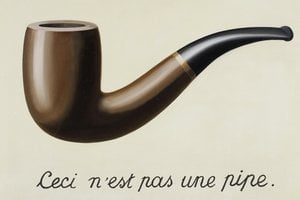
René Magritte’s “The Taste of Sorrow,” completed in 1948, is more than just a painting; it's an invitation to contemplate the elusive nature of reality itself. Executed in oil on canvas measuring 59.4 x 49.5 cm, this artwork resides within the Barber Institute of Fine Arts’ collection in Birmingham, UK, representing a pivotal moment in Magritte’s Surrealist oeuvre.
The composition immediately draws the viewer into a dreamlike landscape dominated by muted tones—primarily grey and dark green—creating an atmosphere of melancholy and introspection. At its core is a striking figure: a bird rendered with meticulous detail, positioned on the left side of the canvas. Its wings are subtly outstretched, conveying both vulnerability and resilience. However, it’s not merely the bird's form that captivates; its gaze directs itself squarely at the observer, establishing an unsettling connection between subject and viewer—a hallmark of Magritte’s artistic approach.
Beneath the bird lies a crimson curtain, serving as a dramatic counterpoint to the verdant hues surrounding it. This curtain isn't simply decorative; it symbolizes concealment and obscures what lies behind it, mirroring the broader Surrealist preoccupation with hidden meanings and repressed desires. Magritte’s masterful use of color contributes significantly to the painting’s emotional impact—the scarlet curtain embodies passion and sorrow simultaneously.
The stylistic hallmarks of “The Taste of Sorrow” firmly situate it within the Surrealist movement, spearheaded by André Breton. Magritte's technique is characterized by precise blending and layering of pigments, resulting in a velvety surface texture that enhances the painting’s ethereal quality. He employs trompe-l'œil—optical illusion—to blur distinctions between reality and representation, as evidenced by the curtain itself. This deliberate manipulation of perception aligns perfectly with Surrealist principles aimed at disrupting conventional thought patterns.
Beyond its formal considerations, “The Taste of Sorrow” resonates deeply with themes of grief and remembrance. The bird’s posture—looking downwards—suggests contemplation and sorrowful reflection. Magritte's subtle symbolism invites viewers to ponder the intangible aspects of experience – those feelings and ideas that exist beyond our immediate grasp. It is a painting that lingers in the mind long after viewing, prompting questions about how we perceive the world around us and confronting us with the inescapable presence of loss.
This artwork’s enduring appeal stems from Magritte's ability to distill complex psychological concepts into visually arresting imagery. “The Taste of Sorrow” stands as a testament to Surrealism’s power to provoke contemplation and challenge accepted notions of reality—a captivating piece for collectors and interior designers seeking inspiration.



 Aperçu en situation
 Acheter la peinture faite à la main
 Partager
 Partager
 Détails
 Guide
Guide

 Télécharger
 Articles similaires
 Radiographie
 Voir le diaporama
 Statistiques


 Afficher la suite






































 L'option verre n'est disponible que pour les dimensions inférieures à 110 cm.