


 Huile sur toileArt muralBaroque Painting
 1643
1643 203.0 x 185.0 cm
 Musée de l'Ermitage
Acquérez une image numérique haute résolution et optimisée, d'une qualité bien supérieure à l'aperçu en ligne.
Chaque fichier est méticuleusement préparé par nos spécialistes internes à l'aide d'outils avancés et d'une retouche manuelle experte. Nous garantissons que chaque image possède une clarté exceptionnelle, une précision des couleurs irréprochable et un niveau de détail fin.
Le fichier final est livré par e-mail sous 72 heures, optimisé pour une utilisation immédiate dans des contextes professionnels, éditoriaux et d'impression. Il offre la même qualité de confiance que celle utilisée par les plus grands studios de création, éditeurs et galeries.
Téléchargez un fichier haute résolution pour votre usage personnel, l'impression et vos projets créatifs. ( Commander l'impression Commander la reproduction peinte à la main)
En choisissant WahooArt.com, vous n'obtenez pas seulement une simple image : vous recevez une œuvre numérique sublimée avec professionnalisme, conçue avec précision et accompagnée d'une garantie de satisfaction. Voici tout ce qui accompagne automatiquement votre commande :

Votre fichier d'image numérique haute résolution vous sera envoyé par e-mail sous 72 heures après votre commande — prêt à un usage immédiat.

Votre œuvre d'art bénéficie d'une optimisation professionnelle grâce à des outils d'IA avancés et une retouche manuelle, garantissant un niveau maximal de détail, de clarté et de fidélité chromatique.

Vous avez accidentellement supprimé ou perdu votre fichier ? Pas d'inquiétude — nous vous le renverrons gratuitement, quand vous le souhaitez.

Profitez de votre œuvre d'art instantanément sans frais de douane ni de livraison — les téléchargements numériques sont toujours exonérés de taxes.

Nous garantissons que votre image numérique reproduit les couleurs de l'original aussi fidèlement que possible grâce à des outils professionnels et une gestion rigoureuse des couleurs.

Si vous n'êtes pas satisfait de votre image numérique, nous la retoucherons ou vous rembourserons 100% sous 100 jours - sans poser de questions.

Pas satisfait ? Obtenez un remboursement intégral dans les 100 jours suivant la réception de votre fichier numérique - sans poser de questions.

Achetez 3 images, économisez 10% - Achetez 5, économisez 15% - Achetez 10+, économisez 20%. Idéal pour les projets créatifs, les galeries et les agences.
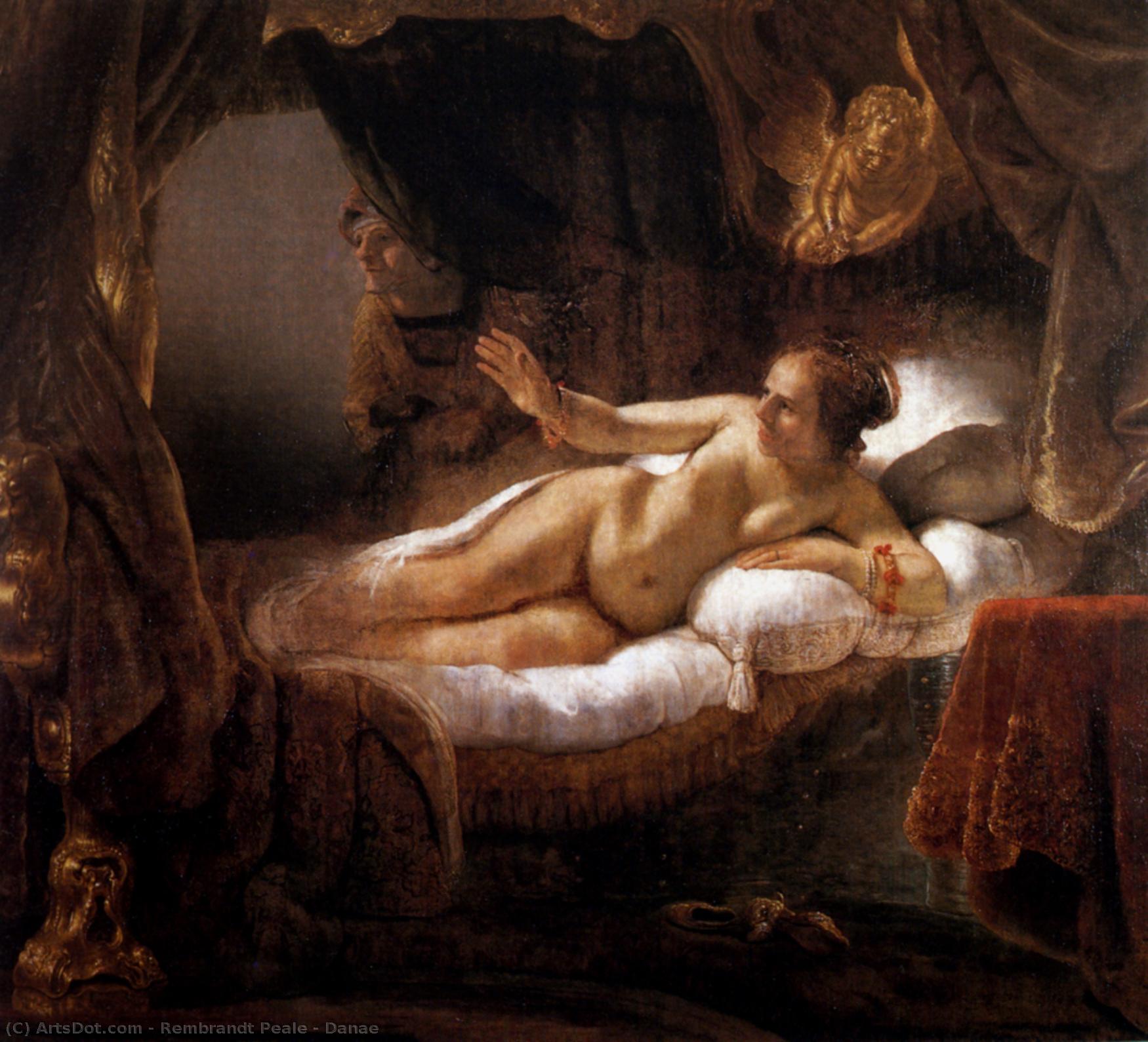
Rembrandt Peale’s “Danaë” – a monumental oil painting completed in 1643 – is far more than a mere depiction of Greek mythology; it's a dramatic exploration of desire, divine intervention, and the vulnerability of womanhood, rendered with the intensity characteristic of the Baroque period. The artwork immediately captivates with its profound chiaroscuro, a masterful manipulation of light and shadow that plunges the scene into an atmosphere of both opulent luxury and unsettling mystery. Peale doesn’t simply illustrate a myth; he constructs a powerful narrative within a richly detailed interior, transporting the viewer to a space brimming with wealth and intrigue.
At the heart of the composition lies Danaë, reclining on a sumptuous bed adorned with pillows and draped in shimmering fabrics. Her nudity, while undeniably provocative, is tempered by a deliberate use of sheer curtains – a strategic device that simultaneously reveals and conceals her form, highlighting both her beauty and the extraordinary event unfolding around her. The golden rain, descending upon her like a celestial blessing (or perhaps a curse), is the painting’s most arresting element. It's not merely paint; it’s an embodiment of Zeus’s divine power, a tangible manifestation of his desire and a potent symbol of both fertility and impending danger. The careful layering of this golden pigment creates an almost luminous effect, drawing the eye directly to Danaë’s face – a face etched with a mixture of apprehension and surrender.
Peale's mastery is evident in every brushstroke. The impasto technique—the application of thick layers of paint—is particularly pronounced in the drapery and the golden rain, lending a remarkable tactile quality to the work. These textures aren’t simply decorative; they contribute significantly to the painting’s dramatic intensity. The composition itself adheres closely to the principles of Baroque art: a pyramidal structure, with Danaë as its apex, directs the viewer's gaze upwards, emphasizing her centrality and importance within the scene. The use of sharp lines defines the architectural elements – the columns, arches, and furniture – creating a sense of solidity and grandeur that contrasts sharply with the fluidity of the draperies.
Furthermore, Peale’s attention to detail is astonishing. The ornate furnishings, the patterned textiles, even the subtle expressions on the figures' faces are rendered with meticulous precision. This commitment to realism, combined with a heightened sense of drama and emotion, firmly places “Danaë” within the Baroque tradition – an era characterized by its theatricality, emotional intensity, and skillful use of light and shadow. The flattened perspective, prioritizing emotional impact over strict adherence to Renaissance principles, further enhances this dramatic effect.
Beyond its immediate visual appeal, “Danaë” is rich in symbolic meaning. The myth itself speaks to the complexities of desire, power, and fate. Zeus, disguised as golden rain, represents divine intervention – a force beyond human control that disrupts the natural order. Danaë’s vulnerability highlights the precariousness of her position, caught between her own desires and the overwhelming power of the gods. The painting was created during a period of intense religious and political upheaval in Europe, and it reflects these anxieties through its exploration of themes of transgression, divine judgment, and the consequences of unchecked desire.
Moreover, “Danaë” offers a fascinating glimpse into the artistic and cultural landscape of early America. Rembrandt Peale was part of a vibrant artistic community centered around Charles Willson Peale’s museum in Philadelphia – a pioneering institution that played a crucial role in shaping American identity. The painting's creation coincided with a growing interest in classical mythology and art, reflecting a broader European trend but also demonstrating the burgeoning confidence and ambition of American artists at the time. The work stands as a testament to Peale’s skill and his contribution to establishing a distinctly American style within the Baroque tradition.
WahooArt offers meticulously crafted hand-painted reproductions of “Danae” in various sizes, allowing you to bring this iconic masterpiece into your home or office. Each reproduction is created using archival-quality materials and techniques, ensuring that it faithfully captures the original’s rich colors, dramatic lighting, and intricate details. Whether you're an art enthusiast, a collector, or simply seeking a stunning piece of décor, a WahooArt reproduction of “Danae” will serve as a timeless reminder of the power and beauty of Baroque art.


1778 - 1860 , États-Unis d'Amérique

 Aperçu en situation
 Envoyer
 Partager
 Détails de l'œuvre

 Télécharger
 Articles similaires
 Radiographie
 Diaporama
 Lire la suite


