Aperçu en situation Aperçu en RA Passer au format impression Passer au format image numérique Partager
Détails Guide Ajouter aux favoris Télécharger Articles similaires Radiographie Voir le diaporama Statistiques

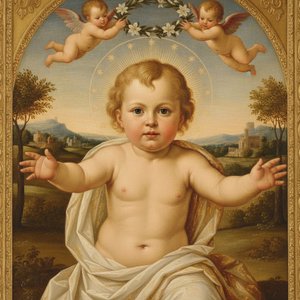
The sistine madonna (detail)2

Marvel at Raphael's 'The Sistine Madonna,' a breathtaking Renaissance masterpiece depicting the Virgin Mary and Child. Experience its serene beauty, intricate details, and profound symbolism – a timeless work of art.

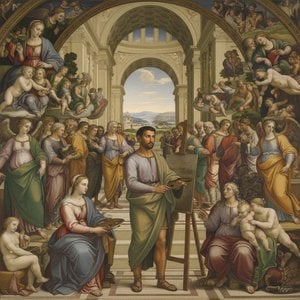
Découvrez Raphaël (1483-1520), le maître de la Renaissance italienne réputé pour son élégance, sa clarté et ses compositions harmonieuses. Explorez les œuvres emblématiques telles que 'La Scuola di Atene', les Madones et les fresques qui définissent la beauté classique. #ArtRenaissance #Italie

Reproduction à l'huile faite à la main

Huile sur toile peinte à la main, avec cadre et dimensions personnalisés, réalisée sur commande par nos artistes. ( Passer au format impression Passer au format image numérique)

P118B $10
P118H $10
P118W $10
P438Z $10
P508JH $12
P508YH $12
P805H $10
P805Z $10
P919BZ $10
P919G $10
P919XJ $10
P959ZH $10
P968JZ $12
W106C $8
W218G $10
W218JH $8
W218Y $10
W307PJ $10
W316G $10
W316PJ $8
W316Y $10
W398PJ $8
W4111J $10
W500HY $15
W500JH $15
W692G $12
W849H $8
W940BG $15
W953PJ $8

Format standard
personnalisé
CM
INCH

Choisissez parmi nos formats prédéfinis qui respectent les proportions originales de l’œuvre.

largeur
hauteur

Vous pouvez saisir vos propres dimensions pour l'adapter à un cadre ou à un espace spécifique. Si la taille sélectionnée ne correspond pas aux proportions de l'image d'origine, nous recadrerons l'œuvre ou prolongerons la peinture avec des éléments peints à la main supplémentaires. Une maquette numérique vous sera envoyée pour approbation avant le début de la production.
Veuillez noter que l'aperçu à l'écran ne reflète pas le recadrage ou l'extension réels. Seule la maquette montrera fidèlement la composition finale.
Bien que des tailles personnalisées soient disponibles, nous vous recommandons de sélectionner une dimension dans la liste prédéfinie afin de préserver les proportions d'origine.

Exemples de personnalisation possibles : remplacer un visage par la photo du client ; ajouter un animal de compagnie (par exemple, remplacer un chat par un chien) ; inclure un message caché en arrière-plan ; modifier le paysage ou les éléments de l'arrière-plan.
Après la commande, l’équipe WahooArt.com contactera le client par e-mail pour recueillir ses instructions et lui fournira une maquette d’aperçu

Livraison dans le monde entier () en 3 à 4 semaines au lieu des 5 semaines habituelles. (21 septembre). Aucun compromis sur la qualité.

why_choose_icon
Livraison express gratuite dans le monde entier
why_choose_icon
Toile de lin de haute qualité
why_choose_icon
Assurance transport complète
why_choose_icon
Garantie de remboursement des droits de douane
why_choose_icon
Garantie de fidélité des couleurs
why_choose_icon
Garantie de retour de 100 jours (uniquement en cas de défaut)
why_choose_icon
Garantie de remboursement à 100%
why_choose_icon
Tarifs dégressifs sur quantité

Prix total

$ 272

reproduction

The sistine madonna (detail)2

Technique de reproduction

Format de la reproduction

-

Prix total final

$ 272

L'essentiel de l'œuvre

  • Artist: Raphael
  • Medium: Oil on canvas
  • Dimensions: 265 x 196 cm
  • Year: 1513–1514
  • Artistic style: Madonna painting
  • Subject or theme: Virgin Mary & Child
  • Notable elements or techniques: Sfumato, Putti

Quiz d'art

Chaque question ne comporte qu'une seule bonne réponse.

Question 1:
What is the primary subject depicted in Raphael’s ‘The Sistine Madonna’?
Question 2:
Which artistic technique is most prominently featured in ‘The Sistine Madonna’?
Question 3:
The painting ‘The Sistine Madonna’ was originally commissioned by which Pope?
Question 4:
What is the significance of the two putti (cherubs) at the base of ‘The Sistine Madonna’?
Question 5:
In what city is ‘The Sistine Madonna’ currently housed?

The Sistine Madonna: A Celestial Encounter

Raphael’s *Sistine Madonna*, painted between 1512 and 1514 for the Basilica of San Sisto in Piacenza, Italy, is far more than a depiction of the Virgin Mary and Child; it's an immersive experience, a carefully orchestrated dialogue between heaven and earth. Commissioned by Pope Julius II as an altarpiece honoring his deceased uncle, Pope Sixtus IV, the painting transcends its initial purpose to become one of the most iconic images in Western art history – a testament to Raphael’s mastery of composition, color, and the profound beauty of Renaissance ideals. The scene unfolds within a hazy, cloud-filled expanse, suggesting an ethereal realm where earthly concerns momentarily recede. The figures themselves are bathed in a soft, diffused light, creating a sense of serenity and timelessness that draws the viewer into their world.

Raphael’s genius lies not just in his technical skill – though it is undeniably exceptional – but also in his ability to imbue the painting with layers of meaning. The composition is meticulously balanced, guiding the eye from the central Madonna and Child towards the flanking saints, Saint Sixtus and Saint Barbara. These figures, chosen for their association with the church of San Sisto, represent a connection between the earthly realm and the divine. The putti, cherubic figures dancing amongst the clouds, add a touch of playful innocence and reinforce the painting’s theme of grace and spiritual elevation. Notice how Raphael subtly incorporates elements of classical antiquity – the drapery echoes ancient Roman sculpture, while the overall structure reflects Renaissance architectural principles.

A Symphony of Color and Technique

The *Sistine Madonna* is a prime example of Raphael's mastery of sfumato, a technique developed by Leonardo da Vinci that employs subtle gradations of light and shadow to create an atmospheric effect. This blurring of outlines softens the figures’ features, lending them an almost dreamlike quality. The colors are rich and luminous – deep blues and purples dominate the background, contrasted with the warm tones of the Madonna's robes and the delicate pinks and yellows of the Child Jesus. Raphael employed a meticulous layering technique, applying thin glazes of paint to build up depth and luminosity. This painstaking process is evident in the intricate details of the drapery, the delicate folds of the angels’ wings, and the subtle variations in color throughout the painting.

The use of gold leaf – particularly in the halos surrounding the figures – further enhances the painting's splendor and reinforces its sacred nature. Raphael’s attention to detail is remarkable; every element, from the smallest fold in a garment to the expression on the Madonna’s face, has been carefully considered and executed with precision. The painting was created using oil paints on a poplar wood panel, a common medium for Renaissance artists. This choice of material contributed to the richness and vibrancy of the colors.

Symbolism and Spiritual Resonance

Beyond its technical brilliance, the *Sistine Madonna* is laden with symbolism. The cloud-filled background represents the heavens, suggesting that the Virgin Mary is ascending to meet Christ. The presence of Saint Sixtus and Saint Barbara underscores the painting’s connection to the church and its history. The two putti, often interpreted as representing innocence and divine grace, symbolize the promise of salvation. Many art historians believe Raphael intended the painting to evoke a sense of awe and reverence, inviting viewers to contemplate the mysteries of faith and redemption.

The image’s enduring appeal lies in its ability to resonate with viewers on an emotional level. The serene beauty of the Madonna and Child, combined with the ethereal atmosphere of the background, creates a feeling of peace and tranquility. It's a scene that speaks to our deepest hopes and aspirations – a reminder of the divine presence in our lives and the promise of eternal salvation. The *Sistine Madonna* continues to captivate audiences centuries after its creation, solidifying Raphael’s legacy as one of the greatest artists of all time.

Bringing the Masterpiece Home

Reproductions of the *Sistine Madonna* offer a stunning way to bring this iconic artwork into your home or office. WahooArt offers high-quality hand-painted reproductions that faithfully capture the painting’s beauty and detail, using archival materials for lasting preservation. Whether you're an art enthusiast, a collector, or simply seeking to add a touch of timeless elegance to your space, a *Sistine Madonna* reproduction is a beautiful and meaningful addition to any collection. Explore our selection today and experience the magic of Raphael’s masterpiece firsthand.


Biographie de l'artiste

**Jeunesse et formation**

Raphaël (Raffaello Sanzio da Urbino), un peintre et architecte italien renommé, est né entre le 28 mars et le 6 avril 1483, dans la petite mais culturellement significative ville d'Urbino. Son père, Giovanni Santi, était peintre de cour du duc, lui offrant une exposition précoce au monde artistique. Après le décès de son père à l’âge de onze ans, Raphaël a vraisemblablement géré l’atelier familial, consolidant ainsi sa base artistique.

**Carrière artistique et influences**

Le parcours artistique de Raphaël peut être divisé en trois phases distinctes, chacune marquée par un style unique :
  • Premières années à Umbrie : caractérisée par l'influence de son père et l'ambiance culturelle d’Urbino.
  • Période florentine (1504-1508) : absorbant les traditions artistiques de Florence, qui a considérablement façonné son style.
  • Période romaine (1508-1520) : travaillant pour deux papes et leurs associés, produisant certaines de ses œuvres les plus célèbres, notamment l’école des Athènes dans la stanza della segnatura du Vatican.

**Œuvres notables et héritage**

Certaines des œuvres notables de Raphaël comprennent :

**Influence et héritage**

L'influence de Raphaël sur l'art est profonde, avec son œuvre constituant un pilier du grand Siècle. Son style serein et harmonieux a servi de modèle à la peinture néoclassique, comme le note l’historien d’art Johann Joachim Winckelmann. Malgré l'influence ultérieure du style de Michel-Ange, Raphaël reste l'un des artistes les plus vénérés de l'histoire. Voir le profil de Raphaël sur WahooArt
Raphaël

Raphaël

1483 - 1520 , Italie

En bref

  • Artistes Influents:
    • Giovanni Santi
    • Pietro Perugino
  • Date De Décès: 6 avril 1520
  • Date De Naissance: 28 mars 1483
  • Influences Artistiques: Peinture néoclassique
  • Lieu De Naissance: Urbino, Italie
  • Mouvement Artistique: Haute Renaissance
  • Nationalité: Italienne
  • Nom Complet: Raphaël (Raffaello Sanzio)
  • Œuvres Notables:
    • L'École d'Athènes
    • Madone Esterházy
    • La Transfiguration
    • Les Stanze Vaticanes
Explorez des œuvres d'art classées par thèmes, styles et caractéristiques.