A Divine Tapestry from the Northern Renaissance
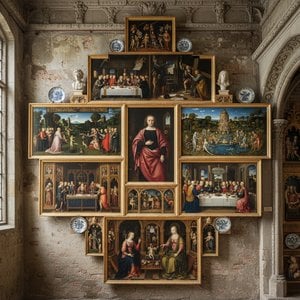
To gaze upon Pieter Coecke van Aelst's depiction of the Holy Trinity is to step directly into the luminous heart of the Northern Renaissance. This panel painting does not merely illustrate a theological concept; it envelops the viewer in an atmosphere of profound, divine mystery. The composition itself is a masterful orchestration of figures, light, and symbolic weight. At its core stands the venerable figure of God the Father, robed in rich reds, holding the symbols of wisdom and authority—a book and a staff—while radiating an ancient, benevolent power. Flanking this central pillar are representations of Christ, identifiable by his halo and the cross he bears, and the Holy Spirit, delicately rendered as an infant upon a cushion to the right. The sheer detail in the rendering of these sacred forms speaks volumes about the devotion and skill of its creator.
Mastery of Flemish Technique and Detail
Technically, this work is a breathtaking testament to the period's dedication to meticulous realism combined with spiritual grandeur. Executed on panel, the artist utilized rich, vibrant pigments—deep blues, opulent golds, and commanding reds—that were hallmarks of high-end religious art in Flanders during the sixteenth century. Observe how the light plays across the voluminous folds of the drapery; it is not merely illumination but a palpable force that grants every garment and every face a three-dimensional presence. The surrounding angels and cherubs are not mere filler; they are integral participants, their varied poses and gazes guiding the eye through the narrative complexity. This commitment to observable detail, characteristic of Northern European painting, elevates the sacred subject matter into something almost tangible for the modern observer.
Symbolism Woven into Sacred Narrative
The symbolism within the Holy Trinity is both profound and deeply accessible. The grouping itself represents the doctrine of the three persons in one Godhead—a concept given visual weight through artistic genius. Beyond the central figures, the inclusion of a detailed landscape background, complete with distant mountains and swirling clouds, suggests that this divine event transcends earthly boundaries, placing it within an eternal, otherworldly realm. Every element, from the book held by the Father to the cross carried by Christ, serves as a visual sermon, inviting contemplation on themes of divinity, sacrifice, and omnipresence. It is art designed not just for viewing, but for spiritual communion.
Bringing Renaissance Majesty Home
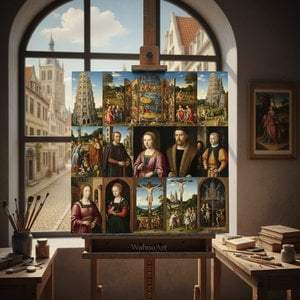
For the collector or designer seeking an anchor piece imbued with history and artistry, this reproduction offers an unparalleled connection to the golden age of Flemish painting. While the original panel by Pieter Coecke van Aelst carries the weight of centuries, owning a high-quality hand-painted rendition allows you to integrate that majesty into your contemporary space. Imagine the rich glow of these colors against modern decor—a focal point that speaks volumes about an appreciation for enduring craftsmanship and profound artistic narrative. It is more than decoration; it is a conversation piece steeped in history, devotion, and unparalleled aesthetic beauty.



 Aperçu en situation
 Acheter la peinture faite à la main
 Partager
 Partager
 Détails
 Guide
Guide

 Télécharger
 Articles similaires
 Radiographie
 Voir le diaporama
 Statistiques


 Afficher la suite






































 L'option verre n'est disponible que pour les dimensions inférieures à 110 cm.