Aperçu en situationAperçu en situation Visualiser en RAVisualiser en RA Commander la reproduction peinte à la main Commander la reproduction peinte à la mainPasser à l'image numérique Passer à l'image numérique EnvoyerEnvoyer
Détails de l'œuvreDétails de l'œuvre Ajouter aux favoris Ajouter aux favoris TéléchargerTélécharger Articles similairesArticles similaires RadiographieRadiographie DiaporamaDiaporama StatistiquesStatistiques

Garçon avec un oiseau

Un tableau captivant de Peter Paul Rubens : un jeune garçon observant un oiseau, symbole d'innocence et de nature sauvage. Découvrez la beauté baroque de cette œuvre.

Sir Peter Paul Rubens : Maître baroque ! Compositions dynamiques, couleurs éclatantes & œuvres iconiques comme 'La Massacre des Innocents'. Découvrez sa vie et son art.

Giclées et impressions d'art

Impressions giclées ou sur toile de qualité musée, avec une production rapide et des finitions au choix. (Commander la reproduction peinte à la main Commander la reproduction peinte à la mainPasser à l'image numérique Passer à l'image numérique)

P118B $10
P118H $10
P118W $10
P438Z $10
P508JH $12
P508YH $12
P805H $10
P805Z $10
P919BZ $10
P919G $10
P919XJ $10
P959ZH $10
P968JZ $12
W106C $8
W218G $10
W218JH $8
W218Y $10
W307PJ $10
W316G $10
W316PJ $8
W316Y $10
W398PJ $8
W4111J $10
W500HY $15
W500JH $15
W692G $12
W849H $8
W940BG $15
W953PJ $8

Format standard
personnalisé
CM
INCH

Choisissez parmi nos formats prédéfinis qui respectent les proportions originales de l’œuvre.

largeur
hauteur

Vous pouvez saisir vos propres dimensions pour vous adapter à un cadre ou à un espace spécifique. Si la taille sélectionnée ne correspond pas aux proportions de l'image originale, nous recadrerons l'œuvre ou étendrons l'image avec une bordure en miroir ou une couleur unie. Une maquette numérique vous sera envoyée pour approbation avant le début de la production.
Veuillez noter que l'aperçu à l'écran ne reflète pas le recadrage ou l'extension réelle. Seule la maquette montrera avec précision la composition finale.
Bien que des tailles personnalisées soient disponibles, nous vous recommandons de choisir une dimension dans la liste prédéfinie afin de préserver les proportions originales.

Livraison dans le monde entier () en 2 semaines au lieu des 4/5 semaines habituelles. (10 septembre)

why_choose_icon
Livraison express gratuite dans le monde entier
why_choose_icon
Toile de lin de haute qualité
why_choose_icon
Assurance transport complète
why_choose_icon
Garantie de remboursement des droits de douane
why_choose_icon
Garantie de fidélité des couleurs
why_choose_icon
Garantie de retour de 100 jours (uniquement en cas de défaut)
why_choose_icon
Garantie de remboursement à 100%
why_choose_icon
Tarifs dégressifs sur quantité

Prix total

$ 68

reproduction

Garçon avec un oiseau

Giclées et impressions d'art

Format de la reproduction

-

Prix total final

$ 68

Informations clés

  • Medium: Oil on panel
  • Influences: Caravaggio
  • Subject or theme: Childhood innocence
  • Location: Kunstsammlungen
  • Title: Boy with Bird
  • Dimensions: 49 x 40 cm
  • Artistic style: Flemish Baroque

Quiz d'art

Chaque question ne comporte qu'une seule bonne réponse.

Question 1:
What artistic style is most closely associated with Peter Paul Rubens’ ‘Boy with Bird’?
Question 2:
In the painting 'Boy with Bird', what is the primary focus of Rubens’ use of light and dark?
Question 3:
Where is ‘Boy with Bird’ currently housed?
Question 4:
What does the bird in ‘Boy with Bird’ likely symbolize?
Question 5:
What is the approximate date of creation for ‘Boy with Bird’?

Le Garçon et l'Oiseau : Une Échappée d’Innocence Baroques

“Le Garçon et l’Oiseau” de Peter Paul Rubens, daté de 1616, est bien plus qu’une simple représentation d’un enfant et d’un oiseau. C'est une fenêtre ouverte sur un monde de curiosité, de tendresse et d’harmonie avec la nature – des thèmes centraux dans l’esthétique baroque flamande. Ce tableau, conservé au Kunstsammlungen Graf von Schönborn Pommersfelden en Allemagne, témoigne de la maîtrise exceptionnelle de Rubens dans la capture de l'essence humaine et de sa capacité à traduire les émotions subtiles à travers une composition dynamique et des couleurs vibrantes. L’œuvre est un exemple saisissant de son approche unique du portrait, où le sujet n’est pas seulement représenté, mais invité à interagir avec son environnement.

La composition du tableau est immédiatement frappante. Au centre, un jeune garçon aux cheveux blonds, vêtu d'une robe blanche immaculée, tend la main vers un oiseau. L’oiseau, lui, semble répondre à cette offre de proximité, comme s’il était en train d’explorer ce nouveau monde tactile. Deux autres oiseaux, plus discrets, se perchent dans le fond, créant une profondeur atmosphérique qui renforce l'impression d'un espace naturel et invitant. Rubens utilise habilement la lumière et l’ombre pour accentuer les formes et créer un contraste saisissant entre la blancheur de la robe du garçon et les tons plus sombres du décor. Cette technique, caractéristique du style baroque, attire immédiatement le regard vers le sujet principal tout en maintenant un équilibre visuel harmonieux.

L'Influence Italienne et l’Évolution d'un Maître

Rubens, né à Siegen en Allemagne en 1577, a passé une partie de sa jeunesse en France avant de s'installer à Anvers. Son parcours artistique est profondément marqué par son séjour en Italie entre 1600 et 1608. Là-bas, il a été fasciné par les chefs-d’œuvre du Renouveau, notamment ceux de Léonard de Vinci, Michel-Ange et Raphaël. Cependant, c'est l'art de Caravaggio qui a eu le plus d'impact sur sa vision artistique. L'utilisation dramatique de la lumière (le *tenebrismo*) et la représentation réaliste des figures ont profondément influencé Rubens, qui a ensuite développé un style propre, caractérisé par une énergie débordante, des couleurs éclatantes et une attention particulière aux détails.

“Le Garçon et l’Oiseau” est donc le fruit d'une synthèse de ces influences. Rubens reprend les principes du classicisme – la composition équilibrée, la recherche de la beauté idéale – mais les infuse d'un dynamisme baroque qui lui est propre. Il s'éloigne des conventions traditionnelles du portrait pour créer une scène plus vivante et expressive, où l’interaction entre l’enfant et l’oiseau évoque un sentiment de joie et de découverte.

Symboles et Émotions : Une Lecture Psychologique

Au-delà de sa valeur esthétique, le tableau est riche en symbolisme. L'oiseau, souvent associé à la liberté, à l'esprit et à l'âme, représente ici une invitation à la contemplation et à la connexion avec la nature. Le garçon, lui, incarne l’innocence et la curiosité enfantine. Leur interaction suggère un échange mutuel, une compréhension instinctive qui transcende les barrières entre l'homme et le monde animal. Certains chercheurs ont interprété cette scène comme une métaphore de la relation entre l'âme humaine et le divin, l’oiseau symbolisant l’Esprit Saint.

Rubens était un maître dans l'art de traduire les émotions à travers ses tableaux. Dans “Le Garçon et l’Oiseau”, il parvient à évoquer un sentiment de tendresse, de sérénité et d’émerveillement. L'œuvre est une véritable invitation au voyage dans le monde de l'enfance, un rappel de la beauté simple et authentique de la nature.

Reproductions et Inspiration

WahooArt propose des reproductions de haute qualité de “Le Garçon et l’Oiseau”, permettant à ses collectionneurs et amateurs d'art de profiter pleinement de la splendeur de cette œuvre. Que vous souhaitiez décorer votre intérieur avec une touche baroque ou simplement admirer le talent exceptionnel de Rubens, nos reproductions offrent une expérience immersive et authentique. Pour en savoir plus sur l’artiste et son œuvre, nous vous invitons à consulter les ressources suivantes :

Découvrez également d'autres œuvres emblématiques de Rubens sur notre site web : https://WahooArt.com


Biographie de l'artiste

A Life Forged in Baroque Splendor

Sir Peter Paul Rubens, a name synonymous with the very essence of Baroque dynamism, was far more than simply a painter; he was a diplomat, a scholar, and a cultural architect who fundamentally reshaped the artistic landscape of 17th-century Europe. Born in Siegen, Germany, in 1577, his early life was marked by displacement—a formative experience that subtly permeated his later work with an undercurrent of drama and emotional depth. His father, Jan Rubens, a lawyer fleeing religious persecution for his Calvinist beliefs, uprooted the family from their native Antwerp, then under Spanish rule. This initial exile instilled in young Peter Paul a profound sense of resilience and adaptability—qualities that would serve him remarkably well throughout his multifaceted career. Following his father’s death in 1587, the family returned to Antwerp, where he received a humanist education before embarking on his artistic training around 1590, apprenticing under Tobias Verhaecht and Adam van Noort, honing foundational skills in drawing and painting techniques. However, it was his time with Otto van Veen that proved pivotal, exposing him to the rich legacy of Italian Renaissance art—a world he would soon embrace wholeheartedly. This early exposure to the works of Michelangelo, Raphael, and Titian laid the groundwork for his distinctive style, a synthesis of classical ideals and vibrant Baroque expression.

The Italian Awakening and Artistic Synthesis

In 1600, Rubens embarked on a transformative journey to Italy—a pilgrimage that irrevocably shaped his artistic vision. For eight years, he immersed himself in the masterpieces of Michelangelo, Raphael, and Titian, absorbing their mastery of form, color, and composition with an almost obsessive dedication. The influence of these Renaissance giants is readily apparent in his early Italian works, characterized by classical themes—mythological narratives, allegorical scenes—and idealized figures rendered with a breathtaking sense of beauty and grace. Yet, Rubens didn’t merely imitate; he synthesized these influences with his own innate talent, developing a distinctive style marked by vibrant hues, dynamic compositions, and a sensuous depiction of the human form. He studied anatomy meticulously, resulting in figures that possessed both physical realism and emotional power—robust bodies imbued with life and movement. His palette exploded with color – deep reds, rich blues, and luminous yellows creating an intense visual experience. He wasn’t simply copying; he was translating the spirit of the Renaissance into a distinctly Flemish idiom. This period wasn't solely about artistic development; it was a profound intellectual awakening, fostering a deep appreciation for classical mythology and literature which would become recurring motifs throughout his oeuvre. Upon returning to Antwerp in 1608, Rubens swiftly established himself as the leading artist of his time, receiving a flood of commissions that testified to his burgeoning reputation and solidifying his position at the forefront of Flemish art.

A Master of Many Forms: Painting Beyond Boundaries

Rubens’s artistic output was astonishingly diverse and prolific. He didn't confine himself to a single genre; instead, he excelled in history paintings—grand narratives depicting significant events from classical antiquity and biblical stories—mythological scenes brimming with fantastical creatures and dramatic action, portraits capturing the elegance and power of nobility, landscapes offering breathtaking vistas, and religious works imbued with profound spiritual meaning. His large-scale canvases, often intended for churches, palaces, and public spaces, were breathtaking displays of technical virtuosity and dramatic storytelling. The Descent from the Cross (c. 1616-1617), a monumental triptych housed in the Alte Pinakothek in Munich, exemplifies his masterful use of light and shadow to create a scene of profound emotional intensity—the grief and despair of Mary Magdalene contrasted with the stoic acceptance of Christ. The Raising of the Cross (1610-1611), with its swirling figures and dynamic composition, showcases his ability to convey movement and energy—a hallmark of his Baroque style. Even in seemingly static subjects like The Judgement of Paris (c. 1636), Rubens infused a sense of life and vitality through his vibrant color palette and sensual depiction of the human form. His technique was equally remarkable – a masterful command of oil painting, employing impasto to create texture and depth, alongside delicate glazing techniques to achieve luminous effects. He frequently employed allegorical figures and symbolic imagery, layering narratives with complex meanings that invited contemplation and interpretation.

Diplomacy, Legacy, and Enduring Influence

Rubens’s influence extended far beyond the realm of art. His diplomatic skills were highly sought after by the Southern Netherlands (modern-day Belgium), and he undertook numerous missions to England, France, and Spain, negotiating treaties and fostering political alliances—a unique dual role that afforded him a nuanced perspective on European affairs and further enhanced his reputation as a man of intellect and influence. He was known for his charisma, his generosity, and his ability to navigate the complex world of courtly politics. In 1630, he married Hélène Fourment, who became both his muse and frequent subject in his paintings – her youthful beauty gracing many of his later works, embodying the sensuality and vitality that characterized his style. He continued to paint prolifically until his death in Antwerp in 1640, leaving behind a vast legacy that continues to inspire awe and admiration. His impact on subsequent generations of artists is immeasurable; painters like Anthony van Dyck, Jacob Jordaens, and Eugène Delacroix all drew inspiration from his dynamic compositions, vibrant colors, and sensuous figures. Rubens didn’t just define the Baroque style—he elevated painting to a new level of prestige and influence, solidifying Antwerp as a major center of artistic production during the 17th century. He remains, centuries later, a towering figure in the history of art, a testament to the power of human creativity and the enduring allure of Baroque splendor.

Key Characteristics of Rubens’s Style

  • Dynamic Composition: Rubens' paintings are known for their energetic and dramatic arrangements of figures.
  • Vibrant Color Palette: He employed a rich, warm color scheme that brought his canvases to life.
  • Sensuous Figures: His depictions of the human form were characterized by fullness, vitality, and often, overt sensuality.
  • Masterful Use of Light and Shadow: Rubens skillfully manipulated light and shadow to create depth, drama, and emotional impact.
  • Allegorical Symbolism: His works frequently incorporated allegorical figures and symbolic imagery, adding layers of meaning and complexity.

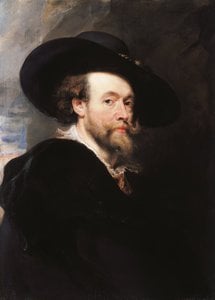
Pierre Paul Rubens

Pierre Paul Rubens

1577 - 1640 , Allemagne

En bref

  • Artistic Movement Or Style: Baroque
  • Artists Or Movements Influenced By This Artist: ['Anthony van Dyck']
  • Artists Who Influenced This Artist:
    • Michelangelo
    • Titian
  • Date Of Birth: 1577
  • Date Of Death: 1640
  • Full Name: Sir Peter Paul Rubens
  • Nationality: Flemish
  • Notable Artworks:
    • La Descente de la Croix
    • Massacre des Innocents
  • Place Of Birth: Siegen, Allemagne
Explorez des œuvres d'art classées par thèmes, styles et caractéristiques.