jeunesse et carrière
pierre-auguste renoir, un artiste français essentiel, est né le 25 février 1841 à Limoges, en France. Il a joué un rôle crucial dans la formation du mouvement impressionniste, réputé pour sa lumière vibrante et ses couleurs saturées. L'œuvre de Renoir célébrait la beauté, en particulier la sensualité féminine, le plaçant dans une lignée d'artistes allant de Rubens à Watteau.
héritage artistique
L'héritage de Renoir s'est étendu au-delà de ses toiles, en tant que patriarche d'une famille où l'art prospérait sous diverses formes. Ses enfants,
pierre renoir (1885–1952), le cinéaste
jean renoir (1894–1979) et l'artiste céramiste
claude renoir (1901–1969), ont chacun apporté des contributions significatives dans leurs domaines respectifs. Son petit-fils, le cinéaste
claude renoir (1913–1993), a davantage fait progresser l'héritage artistique de la famille.
œuvres notables et musées
*
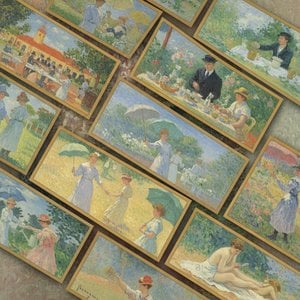
la danse à Bougival, une peinture notable de Renoir, illustre sa maîtrise de la capture de l'essence de l'art impressionniste. * Le
musée des collettes, situé à Cagnes-sur-Mer, en France, est une destination incontournable pour les amateurs d'art. Ce musée, autrefois la maison de pierre-auguste renoir, témoigne de sa vie et de son œuvre, abritant quinze de ses peintures. * Le
musée maurice denis, une autre perle cachée en France, présente une impressionnante collection de peintures post-impressionnistes françaises du XIXe et début du XXe siècle.
explorez l'art de Renoir avec WahooArt
- découvrez le charme du musée des collettes (France) et de son art impressionniste sur WahooArt : [https://WahooArt.com/@@/a@d3aupf](https://WahooArt.com/@@/a@d3aupf)
- explorez les merveilles du musée maurice denis (France) avec WahooArt : /fr/art/show/art-d3aue3-fr/
- visualisez les peintures de Renoir, y compris la danse à Bougival, sur WahooArt : [https://WahooArt.com/@/pierre-auguste renoir](https://WahooArt.com/@/pierre-auguste%20renoir)
expériencez la beauté de l'art de pierre-auguste renoir avec WahooArt.



 Aperçu en situation
 Commander la reproduction peinte à la main
 Envoyer
 Partager
 Détails de l'œuvre

 Télécharger
 Articles similaires
 Radiographie
 Diaporama
 Stats
Stats
 Lire la suite






































 L'option verre n'est disponible que pour les dimensions inférieures à 110 cm.