Aperçu en situation Visualiser en RA Commander la reproduction peinte à la main Passer au format numérique Envoyer
Détails de l'œuvre Guide Ajouter aux favoris Télécharger l'image Articles similaires Radiographie Diaporama Q&A Statistiques

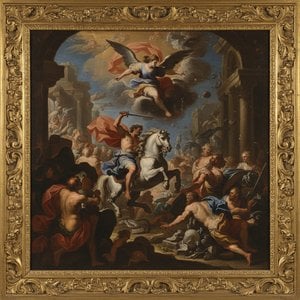
Andromède

Ce chef-d'œuvre baroque montre le sauvetage d'Andromède par Persée. Découvrez cette œuvre iconique et sublimez votre intérieur.

Sir Peter Paul Rubens : Maître baroque ! Compositions dynamiques, couleurs éclatantes & œuvres iconiques comme 'La Massacre des Innocents'. Découvrez sa vie et son art.

Giclées et impressions d'art

Impressions giclées ou sur toile de qualité musée, avec une production rapide et des finitions au choix. ( Commander la reproduction peinte à la main Passer au format numérique)

Corner sample of the P118B picture frame: polystyrène moulé, 5 cm wide and 3 cm thick
P118B €10
Corner sample of the P118H picture frame: polystyrène moulé, 5 cm wide and 3 cm thick
P118H €10
Corner sample of the P118W picture frame: polystyrène moulé, 5 cm wide and 3 cm thick
P118W €10
Corner sample of the P438Z picture frame: polystyrène moulé, 5.5 cm wide and 3.5 cm thick
P438Z €10
Corner sample of the P508JH picture frame: polystyrène moulé, 7 cm wide and 3.5 cm thick
P508JH €12
Corner sample of the P508YH picture frame: polystyrène moulé, 7 cm wide and 3.5 cm thick
P508YH €12
Corner sample of the P805H picture frame: polystyrène moulé, 5 cm wide and 3.5 cm thick
P805H €10
Corner sample of the P805Z picture frame: polystyrène moulé, 5 cm wide and 3.5 cm thick
P805Z €10
Corner sample of the P919BZ picture frame: polystyrène moulé, 7 cm wide and 3.5 cm thick
P919BZ €10
Corner sample of the P919G picture frame: polystyrène moulé, 7 cm wide and 3.5 cm thick
P919G €10
Corner sample of the P919XJ picture frame: polystyrène moulé, 7 cm wide and 3.5 cm thick
P919XJ €10
Corner sample of the P959ZH picture frame: polystyrène moulé, 5 cm wide and 3 cm thick
P959ZH €10
Corner sample of the P968JZ picture frame: polystyrène moulé, 6 cm wide and 4 cm thick
P968JZ €12
Corner sample of the W106C picture frame: bois massif, 5 cm wide and 3 cm thick
W106C €8
Corner sample of the W218G picture frame: bois massif, 5 cm wide and 3 cm thick
W218G €10
Corner sample of the W218JH picture frame: bois massif, 5 cm wide and 3 cm thick
W218JH €8
Corner sample of the W218Y picture frame: bois massif, 5 cm wide and 3 cm thick
W218Y €10
Corner sample of the W307PJ picture frame: bois massif, 6 cm wide and 3 cm thick
W307PJ €10
Corner sample of the W316G picture frame: bois massif, 6 cm wide and 3 cm thick
W316G €10
Corner sample of the W316PJ picture frame: bois massif, 6 cm wide and 3 cm thick
W316PJ €8
Corner sample of the W316Y picture frame: bois massif, 6 cm wide and 3 cm thick
W316Y €10
Corner sample of the W398PJ picture frame: bois massif, 5 cm wide and 3 cm thick
W398PJ €8
Corner sample of the W4111J picture frame: bois massif, 6.5 cm wide and 3.5 cm thick
W4111J €10
Corner sample of the W500HY picture frame: bois massif, 7 cm wide and 5 cm thick
W500HY €15
Corner sample of the W500JH picture frame: bois massif, 7 cm wide and 5 cm thick
W500JH €15
Corner sample of the W692G picture frame: bois massif, 8 cm wide and 4 cm thick
W692G €12
Corner sample of the W849H picture frame: bois massif, 5 cm wide and 3 cm thick
W849H €8
Corner sample of the W940BG picture frame: bois massif, 7.5 cm wide and 4.5 cm thick
W940BG €15
Corner sample of the W953PJ picture frame: bois massif, 6 cm wide and 3.5 cm thick
W953PJ €8

Format standard
sur mesure
CM
INCH

Choisissez parmi nos formats prédéfinis qui respectent les proportions originales de l’œuvre.

largeur
hauteur

Saisissez la largeur et la hauteur souhaitées pour qu'elles s'adaptent à votre cadre ou à votre mur. Une impression peut être recadrée, mais jamais agrandie au-delà de l'image originale ; ainsi, un format de forme différente entraînera la perte d'une partie de l'image. Nous vous envoyons une maquette numérique pour approbation avant toute impression. L'image présentée sur cette page ne montre pas le recadrage réel — seule la maquette le permet.

Livraison dans le monde entier () en 2 semaines au lieu des 4/5 semaines habituelles. (29 octobre)

Livraison express gratuite dans le monde entier
Toile de lin de qualité supérieure
Assurance transport complète
Garantie de remboursement des droits de douane
Garantie de fidélité des couleurs
Politique de retour de 100 jours (uniquement en cas de défaut)
Garantie de remboursement à 100%
Offre de tarifs dégressifs

Prix total

€ 60

Andromède

Giclées et impressions d'art

Format de la reproduction

-

Prix total

€ 60

Informations clés

  • Notable elements or techniques: Clair-obscur
  • Influences: Baroque flamand
  • Medium: Huile sur toile
  • Location: Gemäldegalerie Donaueschingen, Allemagne
  • Subject or theme: Mythologie grecque
  • Artist: Sir Peter Paul Rubens

Quiz d'art

Chaque question ne comporte qu'une seule bonne réponse.

Question 1:
Quel personnage mythologique est représenté dans l'Andromède de Rubens ?
Question 2:
En quelle année l'Andromède a-t-elle été peinte par Pierre Paul Rubens ?
Question 3:
Le style de Rubens est caractérisé par :
Question 4:
Quelle technique Rubens emploie-t-il pour créer de la profondeur et du drame dans l'Andromède ?
Question 5:
Où peut-on trouver le tableau original Andromède de Pierre Paul Rubens ?

Un Sauvetage Céleste : La Brillance Dramatique de l'Andromède de Rubens

Dans le grand théâtre de l'ère baroque, peu de moments capturent l'intensité brute de l'héroïsme et de la grâce divine aussi délicatement que l'Andromède de Pierre Paul Rubens. Peint vers 1638, ce chef-d'œuvre sert de fenêtre époustouflante sur un monde où le mythe et l'émotion entrent en collision. La toile transporte le spectateur vers un paysage marin périlleux, capturant le battement de cœur précis d'un sauvetage. Nous sommes témoins du légendaire Persée descendant sur la scène, ses bras berçant la vulnérable Andromède, qui avait été enchaînée à un rocher escarpé en conséquence de la vanité de sa mère Cassiopée. Il ne s'agit pas seulement d'une représentation d'un mythe grec ; c'est une expérience viscérale de mouvement et de soulagement, où les embruns de l'océan semblent presque palpables à travers le coup de pinceau magistral de Rubens.

La prouesse technique exposée dans cette œuvre n'est rien de moins qu'un triomphe du style baroque flamand. Rubens, titan de son époque, emploie le clair-obscur pour sculpter ses figures hors des ombres, utilisant des contrastes dramatiques entre l'ombre et la lumière pour créer un sentiment de poids tridimensionnel et d'urgence. Son utilisation de la couleur est opulente et chaleureuse, insufflant la vie aux carnations des protagonistes afin qu'ils semblent briller d'une vitalité intérieure. La composition elle-même est un vortex d'énergie tourbillonnant ; il n'y a ici aucune pose statique, seulement le mouvement fluide et musclé caractéristique de la main de Rubens. Pour le collectionneur averti ou le décorateur d'intérieur, ce tableau offre un profond sentiment de dynamisme, en faisant une pièce maîtresse imposante qui insuffle la vie à tout espace sophistiqué.

Symbolisme et Triomphe de la Vertu

Au-delà de sa splendeur visuelle, Andromède est une tapisserie de profonde signification symbolique, résonnant avec les idéaux humanistes du XVIIe siècle. Le tableau fonctionne comme une allégorie de la vertu triomphant du vice. Andromède représente l'innocence et l'âme humaine menacée par les caprices du destin, tandis que Persée se dresse comme l'incarnation du courage héroïque et de la protection divine. La présence d'anges flanquant la scène ajoute une dimension céleste au récit, suggérant que le sauvetage est supervisé par une puissance supérieure et compatissante. Cette couche de garde spirituelle transforme un conte classique en un message universel d'espoir et de rédemption.

Même les éléments les plus sombres de l'histoire servent un dessein ; l'ombre de l'orgueil de Cassiopée plane sur la scène comme une mise en garde contre l'arrogance. Pour ceux qui cherchent à décorer avec un art qui raconte une histoire, cette pièce offre des couches infinies de contemplation. C'est une invitation à réfléchir à la lutte éternelle entre le chaos et l'ordre, entre le péril et le salut. Posséder une reproduction d'une telle œuvre, c'est apporter dans son foyer non seulement une image magnifique, mais aussi un récit profond de résilience et du triomphe ultime de la lumière sur les ténèbres.

Questions et réponses

Quelle atmosphère et quelle émotion se dégagent de « Andromède » ?

«Andromède» de Pierre Paul Rubens dégage un sentiment Dramatique au sein d'une atmosphère globalement Dramatique.

Quelle est la forme de «Andromède» de Pierre Paul Rubens et quelles sont ses dimensions ?

«Andromède» de Pierre Paul Rubens est une œuvre au format Format vertical allongé de 189 x 94 cm.

Qui a créé « Andromède » et dans quel style s'inscrit cette œuvre ?

L'œuvre « Andromède » est signée Pierre Paul Rubens et s'inscrit dans le mouvement Style baroque dramatique.


Biographie de l'artiste

A Life Forged in Baroque Splendor

Sir Peter Paul Rubens, a name synonymous with the very essence of Baroque dynamism, was far more than simply a painter; he was a diplomat, a scholar, and a cultural architect who fundamentally reshaped the artistic landscape of 17th-century Europe. Born in Siegen, Germany, in 1577, his early life was marked by displacement—a formative experience that subtly permeated his later work with an undercurrent of drama and emotional depth. His father, Jan Rubens, a lawyer fleeing religious persecution for his Calvinist beliefs, uprooted the family from their native Antwerp, then under Spanish rule. This initial exile instilled in young Peter Paul a profound sense of resilience and adaptability—qualities that would serve him remarkably well throughout his multifaceted career. Following his father’s death in 1587, the family returned to Antwerp, where he received a humanist education before embarking on his artistic training around 1590, apprenticing under Tobias Verhaecht and Adam van Noort, honing foundational skills in drawing and painting techniques. However, it was his time with Otto van Veen that proved pivotal, exposing him to the rich legacy of Italian Renaissance art—a world he would soon embrace wholeheartedly. This early exposure to the works of Michelangelo, Raphael, and Titian laid the groundwork for his distinctive style, a synthesis of classical ideals and vibrant Baroque expression.

The Italian Awakening and Artistic Synthesis

In 1600, Rubens embarked on a transformative journey to Italy—a pilgrimage that irrevocably shaped his artistic vision. For eight years, he immersed himself in the masterpieces of Michelangelo, Raphael, and Titian, absorbing their mastery of form, color, and composition with an almost obsessive dedication. The influence of these Renaissance giants is readily apparent in his early Italian works, characterized by classical themes—mythological narratives, allegorical scenes—and idealized figures rendered with a breathtaking sense of beauty and grace. Yet, Rubens didn’t merely imitate; he synthesized these influences with his own innate talent, developing a distinctive style marked by vibrant hues, dynamic compositions, and a sensuous depiction of the human form. He studied anatomy meticulously, resulting in figures that possessed both physical realism and emotional power—robust bodies imbued with life and movement. His palette exploded with color – deep reds, rich blues, and luminous yellows creating an intense visual experience. He wasn’t simply copying; he was translating the spirit of the Renaissance into a distinctly Flemish idiom. This period wasn't solely about artistic development; it was a profound intellectual awakening, fostering a deep appreciation for classical mythology and literature which would become recurring motifs throughout his oeuvre. Upon returning to Antwerp in 1608, Rubens swiftly established himself as the leading artist of his time, receiving a flood of commissions that testified to his burgeoning reputation and solidifying his position at the forefront of Flemish art.

A Master of Many Forms: Painting Beyond Boundaries

Rubens’s artistic output was astonishingly diverse and prolific. He didn't confine himself to a single genre; instead, he excelled in history paintings—grand narratives depicting significant events from classical antiquity and biblical stories—mythological scenes brimming with fantastical creatures and dramatic action, portraits capturing the elegance and power of nobility, landscapes offering breathtaking vistas, and religious works imbued with profound spiritual meaning. His large-scale canvases, often intended for churches, palaces, and public spaces, were breathtaking displays of technical virtuosity and dramatic storytelling. The Descent from the Cross (c. 1616-1617), a monumental triptych housed in the Alte Pinakothek in Munich, exemplifies his masterful use of light and shadow to create a scene of profound emotional intensity—the grief and despair of Mary Magdalene contrasted with the stoic acceptance of Christ. The Raising of the Cross (1610-1611), with its swirling figures and dynamic composition, showcases his ability to convey movement and energy—a hallmark of his Baroque style. Even in seemingly static subjects like The Judgement of Paris (c. 1636), Rubens infused a sense of life and vitality through his vibrant color palette and sensual depiction of the human form. His technique was equally remarkable – a masterful command of oil painting, employing impasto to create texture and depth, alongside delicate glazing techniques to achieve luminous effects. He frequently employed allegorical figures and symbolic imagery, layering narratives with complex meanings that invited contemplation and interpretation.

Diplomacy, Legacy, and Enduring Influence

Rubens’s influence extended far beyond the realm of art. His diplomatic skills were highly sought after by the Southern Netherlands (modern-day Belgium), and he undertook numerous missions to England, France, and Spain, negotiating treaties and fostering political alliances—a unique dual role that afforded him a nuanced perspective on European affairs and further enhanced his reputation as a man of intellect and influence. He was known for his charisma, his generosity, and his ability to navigate the complex world of courtly politics. In 1630, he married Hélène Fourment, who became both his muse and frequent subject in his paintings – her youthful beauty gracing many of his later works, embodying the sensuality and vitality that characterized his style. He continued to paint prolifically until his death in Antwerp in 1640, leaving behind a vast legacy that continues to inspire awe and admiration. His impact on subsequent generations of artists is immeasurable; painters like Anthony van Dyck, Jacob Jordaens, and Eugène Delacroix all drew inspiration from his dynamic compositions, vibrant colors, and sensuous figures. Rubens didn’t just define the Baroque style—he elevated painting to a new level of prestige and influence, solidifying Antwerp as a major center of artistic production during the 17th century. He remains, centuries later, a towering figure in the history of art, a testament to the power of human creativity and the enduring allure of Baroque splendor.

Key Characteristics of Rubens’s Style

  • Dynamic Composition: Rubens' paintings are known for their energetic and dramatic arrangements of figures.
  • Vibrant Color Palette: He employed a rich, warm color scheme that brought his canvases to life.
  • Sensuous Figures: His depictions of the human form were characterized by fullness, vitality, and often, overt sensuality.
  • Masterful Use of Light and Shadow: Rubens skillfully manipulated light and shadow to create depth, drama, and emotional impact.
  • Allegorical Symbolism: His works frequently incorporated allegorical figures and symbolic imagery, adding layers of meaning and complexity.

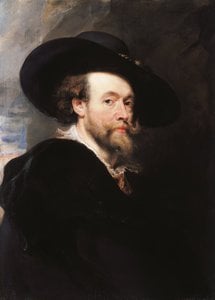
Pierre Paul Rubens

Pierre Paul Rubens

1577 - 1640 , Allemagne

L'essentiel de l'artiste

  • Artistic Movement Or Style: Baroque
  • Artists Or Movements Influenced By This Artist: ['Anthony van Dyck']
  • Artists Who Influenced This Artist:
    • Michelangelo
    • Titian
  • Date Of Birth: 1577
  • Date Of Death: 1640
  • Full Name: Sir Peter Paul Rubens
  • Nationality: Flemish
  • Notable Artworks:
    • La Descente de la Croix
    • Massacre des Innocents
  • Place Of Birth: Siegen, Allemagne
Explorez des œuvres d'art classées par thèmes, styles et caractéristiques.