Aperçu en situation Aperçu en RA Acheter la peinture faite à la main Passer au format image numérique Partager
Détails Guide Ajouter aux favoris Télécharger Articles similaires Radiographie Voir le diaporama Statistiques

Paisagem [Landscape]

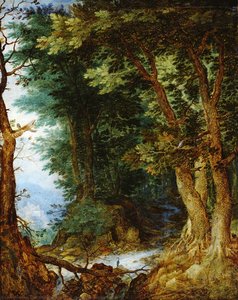
A serene forest landscape featuring sunlit trees and quiet figures by Pedro Weingärtner, capturing a peaceful moment from 1900 that invites you to bring this piece of Brazilian realism into your collection.

Pedro Weingärtner (1853-1929) : peintre brésilien d’influence académique, célèbre pour ses paysages réalistes, ses scènes mythologiques et ses portraits de gauchos. Découvrez son héritage artistique unique !

Giclées et impressions d'art

Impressions giclées ou sur toile de qualité musée, avec une production rapide et des finitions au choix. ( Acheter la peinture faite à la main Passer au format image numérique)

P118B $10
P118H $10
P118W $10
P438Z $10
P508JH $12
P508YH $12
P805H $10
P805Z $10
P919BZ $10
P919G $10
P919XJ $10
P959ZH $10
P968JZ $12
W106C $8
W218G $10
W218JH $8
W218Y $10
W307PJ $10
W316G $10
W316PJ $8
W316Y $10
W398PJ $8
W4111J $10
W500HY $15
W500JH $15
W692G $12
W849H $8
W940BG $15
W953PJ $8

Format standard
personnalisé
CM
INCH

Choisissez parmi nos formats prédéfinis qui respectent les proportions originales de l’œuvre.

largeur
hauteur

Vous pouvez saisir vos propres dimensions pour vous adapter à un cadre ou à un espace spécifique. Si la taille sélectionnée ne correspond pas aux proportions de l'image originale, nous recadrerons l'œuvre ou étendrons l'image avec une bordure en miroir ou une couleur unie. Une maquette numérique vous sera envoyée pour approbation avant le début de la production.
Veuillez noter que l'aperçu à l'écran ne reflète pas le recadrage ou l'extension réelle. Seule la maquette montrera avec précision la composition finale.
Bien que des tailles personnalisées soient disponibles, nous vous recommandons de choisir une dimension dans la liste prédéfinie afin de préserver les proportions originales.

Livraison dans le monde entier () en 2 semaines au lieu des 4/5 semaines habituelles. (22 septembre)

why_choose_icon
Livraison express gratuite dans le monde entier
why_choose_icon
Toile de lin de haute qualité
why_choose_icon
Assurance transport complète
why_choose_icon
Garantie de remboursement des droits de douane
why_choose_icon
Garantie de fidélité des couleurs
why_choose_icon
Garantie de retour de 100 jours (uniquement en cas de défaut)
why_choose_icon
Garantie de remboursement à 100%
why_choose_icon
Tarifs dégressifs sur quantité

Prix total

$ 68

reproduction

Paisagem [Landscape]

Giclées et impressions d'art

Format de la reproduction

-

Prix total final

$ 68

L'essentiel de l'œuvre

  • Year: 1900
  • Subject or theme: Forest landscape with figures
  • Dimensions: 51 x 101 cm
  • Artistic style: Realism and Romanticism
  • Title: Paisagem [Landscape]

A Serene Encounter with Nature

In the quietude of Paisagem [Landscape], created in 1900 by the master Pedro Weingärtner, we are invited into a world where time seems to decelerate. This evocative work captures a sun-drenched moment within a lush forest, where light filters through a dense canopy to illuminate a tranquil clearing. At the heart of this composition sits a modest building, nestled harmoniously among the trees, serving as a silent witness to the passage of time. The scene is not merely a depiction of flora and architecture, but a carefully orchestrated stage where nature and humanity exist in a delicate, peaceful equilibrium. Scattered throughout the landscape are benches, inviting the viewer to mentally step into the frame and find a place of rest amidst the verdant surroundings.

The presence of two solitary figures—one positioned near the left periphery and another closer to the right—infuses the stillness with a gentle pulse of life. These figures do not dominate the landscape; rather, they are integrated into its rhythm, suggesting a profound connection between the human spirit and the natural world. Their placement creates a subtle narrative tension, a sense of shared experience within a vast, breathing ecosystem. For the collector or interior designer, this painting offers more than just visual beauty; it provides a window into a state of mindfulness, making it an ideal centerpiece for spaces dedicated to reflection, study, or quiet relaxation.

The Mastery of Light and Realism

Technically, Paisagem stands as a testament to Weingärtner’s rigorous academic training in the prestigious academies of Germany and France. His ability to manipulate light is nothing short of extraordinary; he employs a technique that allows sunlight to appear almost tactile, as it dances across the leaves and settles upon the forest floor. This mastery of chiaroscuro—the interplay of light and shadow—creates a sense of three-dimensional depth that draws the eye deep into the woodland thicket. The brushwork, while precise enough to maintain the integrity of the realistic style, possesses a soft, atmospheric quality that evokes the romanticism characteristic of his most celebrated works.

The color palette is a sophisticated arrangement of earthy greens, deep browns, and luminous golds, all working in concert to establish a warm, inviting atmosphere. This careful selection of tones ensures that the painting remains timeless, capable of complementing a wide variety of interior aesthetics, from classical traditionalism to more contemporary, organic modernism. To possess a reproduction of this work is to bring a piece of late 19th-century European academic excellence into a modern home, offering an enduring sense of prestige and tranquility.

A Legacy of Brazilian Impressionism

To understand the emotional weight of this landscape, one must consider the historical context of Pedro Weingärtner’s life. As a pioneer who bridged the gap between the rugged landscapes of his native Brazil and the refined academic traditions of Europe, his work carries a unique cultural duality. Paisagem embodies this synthesis—the structural discipline of the German school blended with a romantic sensibility that celebrates the ephemeral beauty of a single moment in time. It is a piece that speaks to the universal human desire for sanctuary.

For those seeking to curate an art collection that inspires peace and intellectual curiosity, this landscape serves as a foundational element. It does not shout for attention; instead, it whispers of ancient forests, quiet afternoons, and the eternal beauty of the natural world. Whether placed in a grand salon or a private library, the painting acts as an emotional anchor, grounding the surrounding space with its profound sense of serenity and historical depth.


Biographie de l'artiste

Early Life and Artistic Beginnings

Pedro Weingärtner Weingaertner, a pivotal figure in Brazilian art, was born on July 26th, 1853, in Porto Alegre, the vibrant capital of Rio Grande do Sul. His early life was deeply rooted in German immigrant heritage, a legacy that would profoundly shape his artistic sensibilities and ultimately propel him to international recognition. Initially, Weingärtner’s artistic journey began as a largely amateur pursuit, nurtured by his brother, Inácio, a skilled lithographer, and possibly guided by Delfim da Câmara, a local painter. This informal training provided the foundational elements for his later development, laying the groundwork for a career that would seamlessly blend European academic traditions with distinctly Brazilian themes. His formal artistic education commenced in 1878 when he embarked on a transformative journey to Germany, enrolling at the Grossherzoglich Badische Kunstschule in Karlsruhe. This institution proved to be a crucible of artistic refinement, where he was rigorously mentored by renowned figures such as Ferdinand Keller, Theodor Poeckh, and Ernst Hildebrand – masters who instilled within him a deep appreciation for classical techniques and compositional principles. A further step in his artistic evolution saw Weingärtner follow Keller to Berlin in 1880, joining the local academy and continuing his intensive studies. This period of concentrated learning solidified his technical skills and broadened his exposure to diverse artistic approaches.

Parisian Influences and Early Style Development

In 1882, seeking further inspiration and a change of scenery, Weingärtner ventured to France, where he enrolled at the Académie Julian under the tutelage of Tony Robert-Fleury and William-Adolphe Bouguereau – two prominent figures in the French academic art scene. This immersion within the Parisian artistic milieu proved crucial in shaping his distinctive style. Bouguereau’s influence is particularly evident in Weingärtner's early works, characterized by a meticulous attention to detail, a refined draftsmanship, and a penchant for idealized beauty. Robert-Fleury, on the other hand, introduced him to a more dynamic approach, encouraging him to explore narrative scenes and capture fleeting moments of emotion. Weingärtner’s artistic style during this period was a fascinating synthesis of these influences – a careful balance between academic rigor and a burgeoning sense of individual expression. He began to experiment with mythological subjects, landscapes imbued with the spirit of Brazil, and genre paintings that offered glimpses into the lives of ordinary people, particularly immigrants and the *gaucho*—a quintessential figure from Rio Grande do Sul, embodying the region’s rugged independence and rural traditions.

Return to Brazil and a Distinctive Brazilian Voice

Upon his return to Brazil in 1885, Weingärtner established himself as a significant artistic voice within the nation's burgeoning art scene. He continued to refine his style, incorporating elements of Romanticism alongside his commitment to academic principles. Crucially, he began to focus on subjects deeply rooted in Brazilian culture and identity—a departure from purely classical themes. His paintings of *gauchos* – their lives, their landscapes, their traditions – became a defining feature of his oeuvre, offering a poignant portrayal of a unique cultural heritage. These works weren’t merely depictions; they were imbued with a deep sense of empathy and respect for the *gaucho* way of life. Weingärtner's artistic vision resonated powerfully with Brazilian audiences, establishing him as a key figure in shaping a distinctly Brazilian artistic identity.

Later Years and Legacy

Throughout his later years, Weingärtner spent considerable time residing and painting in Rome, a city that had long been a magnet for artists seeking inspiration from antiquity. He was deeply moved by the ruins of Pompeii and Herculaneum, which fueled his fascination with classical art and architecture. His Roman period witnessed a remarkable flowering of creativity, producing some of his most celebrated works—a testament to his enduring artistic vitality. Despite the shifting winds of modernism, Weingärtner remained steadfast in his dedication to traditional themes, embracing both mythological subjects and scenes from everyday Brazilian life. His legacy is preserved in various collections across Brazil and beyond, including those at the Museu de Arte do Rio Grande do Sul Ado Malagoli in Porto Alegre and the private collection of Sergio Sahione Fadel in Rio de Janeiro. His work also holds a place within notable international collections, such as that of Andrés Blaisten in Mexico, solidifying his position as a significant figure in Latin American art history. Pedro Weingärtner Weingaertner’s life and artistic journey represent a remarkable synthesis of European training and Brazilian identity—a testament to the power of art to transcend borders and capture the essence of a culture.
Pedro Weingärtner

Pedro Weingärtner

1853 - 1929 , Brésil

En bref

  • Artistic Movement Or Style: Peinture académique
  • Artists Or Movements Influenced By This Artist:
    • Robert-Fleury
    • Bouguereau
  • Artists Who Influenced This Artist:
    • Keller
    • Poeckh
    • Hildebrand
  • Date Of Birth: 26 juillet 1853
  • Date Of Death: 1929
  • Full Name: Pedro Weingärtner Weingaertner
  • Nationality: Brésilien
  • Notable Artworks:
    • Scènes mythologiques
    • Paysages
    • Tableaux de genre (gauchos)
  • Place Of Birth: Porto Alegre, Brésil