Aperçu en situation Aperçu en RA Acheter la peinture faite à la main Passer au format image numérique Partager
Détails Guide imprimable Ajouter aux favoris Télécharger Articles similaires Radiographie Voir le diaporama Statistiques

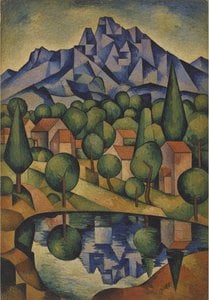
Verger

Paul Cézanne's 'Verger' captivates with its luminous depiction of an orchard bathed in sunlight. Explore Impressionism's legacy and Cézanne's groundbreaking style at the Honolulu Academy of Arts.

Explorez l'art révolutionnaire de Paul Cézanne (1839-1906), un maître du post-impressionnisme qui a relié l'impressionnisme et le cubisme. Découvrez ses formes géométriques, ses coups de pinceau uniques, ses natures mortes et son impact durable sur l'art moderne. #Cézanne #PostImpressionnisme

Giclées et impressions d'art

Impressions giclées ou sur toile de qualité musée, avec une production rapide et des finitions au choix. ( Acheter la peinture faite à la main Passer au format image numérique)

Corner sample of the P118B picture frame: polystyrène moulé, 5 cm wide and 3 cm thick
P118B €10
Corner sample of the P118H picture frame: polystyrène moulé, 5 cm wide and 3 cm thick
P118H €10
Corner sample of the P118W picture frame: polystyrène moulé, 5 cm wide and 3 cm thick
P118W €10
Corner sample of the P438Z picture frame: polystyrène moulé, 5.5 cm wide and 3.5 cm thick
P438Z €10
Corner sample of the P508JH picture frame: polystyrène moulé, 7 cm wide and 3.5 cm thick
P508JH €12
Corner sample of the P508YH picture frame: polystyrène moulé, 7 cm wide and 3.5 cm thick
P508YH €12
Corner sample of the P805H picture frame: polystyrène moulé, 5 cm wide and 3.5 cm thick
P805H €10
Corner sample of the P805Z picture frame: polystyrène moulé, 5 cm wide and 3.5 cm thick
P805Z €10
Corner sample of the P919BZ picture frame: polystyrène moulé, 7 cm wide and 3.5 cm thick
P919BZ €10
Corner sample of the P919G picture frame: polystyrène moulé, 7 cm wide and 3.5 cm thick
P919G €10
Corner sample of the P919XJ picture frame: polystyrène moulé, 7 cm wide and 3.5 cm thick
P919XJ €10
Corner sample of the P959ZH picture frame: polystyrène moulé, 5 cm wide and 3 cm thick
P959ZH €10
Corner sample of the P968JZ picture frame: polystyrène moulé, 6 cm wide and 4 cm thick
P968JZ €12
Corner sample of the W106C picture frame: bois massif, 5 cm wide and 3 cm thick
W106C €8
Corner sample of the W218G picture frame: bois massif, 5 cm wide and 3 cm thick
W218G €10
Corner sample of the W218JH picture frame: bois massif, 5 cm wide and 3 cm thick
W218JH €8
Corner sample of the W218Y picture frame: bois massif, 5 cm wide and 3 cm thick
W218Y €10
Corner sample of the W307PJ picture frame: bois massif, 6 cm wide and 3 cm thick
W307PJ €10
Corner sample of the W316G picture frame: bois massif, 6 cm wide and 3 cm thick
W316G €10
Corner sample of the W316PJ picture frame: bois massif, 6 cm wide and 3 cm thick
W316PJ €8
Corner sample of the W316Y picture frame: bois massif, 6 cm wide and 3 cm thick
W316Y €10
Corner sample of the W398PJ picture frame: bois massif, 5 cm wide and 3 cm thick
W398PJ €8
Corner sample of the W4111J picture frame: bois massif, 6.5 cm wide and 3.5 cm thick
W4111J €10
Corner sample of the W500HY picture frame: bois massif, 7 cm wide and 5 cm thick
W500HY €15
Corner sample of the W500JH picture frame: bois massif, 7 cm wide and 5 cm thick
W500JH €15
Corner sample of the W692G picture frame: bois massif, 8 cm wide and 4 cm thick
W692G €12
Corner sample of the W849H picture frame: bois massif, 5 cm wide and 3 cm thick
W849H €8
Corner sample of the W940BG picture frame: bois massif, 7.5 cm wide and 4.5 cm thick
W940BG €15
Corner sample of the W953PJ picture frame: bois massif, 6 cm wide and 3.5 cm thick
W953PJ €8

Format standard
personnalisé
CM
INCH

Choisissez parmi nos formats prédéfinis qui respectent les proportions originales de l’œuvre.

largeur
hauteur

Saisissez la largeur et la hauteur souhaitées pour qu'elles s'adaptent à votre cadre ou à votre mur. Une impression ne peut être que découpée, elle ne peut jamais être agrandie au-delà de l'image originale ; ainsi, un format de forme différente entraînera la perte d'une partie de l'image. Nous vous envoyons une maquette numérique pour approbation avant toute impression. L'image présentée sur cette page ne montre pas le recadrage réel — seule la maquette le permet.

Livraison dans le monde entier () en 2 semaines au lieu des 4/5 semaines habituelles. (23 octobre)

Livraison express gratuite dans le monde entier
Toile de lin de haute qualité
Assurance transport complète
Garantie de remboursement des droits de douane
Garantie de fidélité des couleurs
Garantie de retour de 100 jours (uniquement en cas de défaut)
Garantie de remboursement à 100%
Tarifs dégressifs sur quantité

Prix total

€ 60

Verger

Giclées et impressions d'art

Format de la reproduction

-

Prix total final

€ 60

L'essentiel de l'œuvre

  • Artist: Paul Cézanne
  • Subject or theme: Paysage agricole
  • Influences: Impressionnisme
  • Location: Honolulu Academy of Arts
  • Year: 1885

Quiz d'art

Chaque question ne comporte qu'une seule bonne réponse.

Question 1:
Quel mouvement artistique est associé à cette œuvre ?
Question 2:
Dans quelle région du monde peut-on trouver cet arbre ?
Question 3:
Quel matériau est utilisé pour peindre cette œuvre ?
Question 4:
Qui est l'artiste auteur de cette peinture ?
Question 5:
Cette œuvre représente une scène particulière : laquelle ?

Paul Cézanne: An Exploration of Nature's Essence

Paul Cézanne remains one of the most influential figures in late 19th-century art, his canvases capturing not merely what is seen but what feels like nature itself. His work transcends mere representation; it’s an invitation to contemplate the fundamental building blocks of existence—color, form, and texture—elements he relentlessly pursued with unwavering conviction. Cézanne's artistic vision wasn't simply about depicting landscapes accurately; it was about distilling them into their purest essence, a process that profoundly impacted subsequent generations of artists and cemented his place as a pioneer of modern art.

The Painting’s Details: Orchard Revisited

“Orchard,” painted in 1885, exemplifies Cézanne's distinctive approach to portraying the natural world. Executed on canvas with oil paints—a medium he favored for its ability to convey depth and richness—the artwork depicts a tranquil orchard scene bathed in sunlight. The composition is carefully constructed, featuring trees positioned at varying distances from the viewer, creating an illusion of perspective that defies traditional conventions. Lush green foliage dominates the canvas, conveying a palpable sense of serenity and vitality. Notably, two figures are subtly integrated into the landscape, adding a human element to this otherwise solitary tableau—a deliberate choice reflecting Cézanne’s fascination with capturing both natural beauty and human presence within a single artwork.

Artistic Style and Influence: Bridging Impressionism and Cubism

Cézanne's artistic style is undeniably rooted in Impressionism, yet he decisively moved beyond its fleeting effects of light and color. However, unlike his contemporaries who embraced Impressionism’s spontaneity, Cézanne meticulously analyzed and reconstructed visual information—a precursor to the geometric fragmentation characteristic of Cubism. Artists such as Camille Pissarro, a close collaborator and fellow Impressionist, recognized Cézanne's groundbreaking contribution, acknowledging his ability to capture not just appearances but underlying structures. This stylistic evolution established Cézanne as a pivotal figure in bridging the gap between Impressionism and Cubism, shaping the artistic landscape of the 20th century.

Relevance in Art History: A Legacy of Innovation

“Orchard” stands as a testament to Cézanne’s unwavering commitment to innovation—a refusal to compromise on his vision for representing nature. His pioneering use of color and form challenged established aesthetic norms, inspiring artists like Picasso and Matisse to explore new expressive possibilities. The painting's enduring appeal lies in its ability to evoke contemplation and wonder—a reminder that art can transcend mere visual perception, delving into the deeper realms of emotion and thought. Cézanne’s influence continues to resonate today, demonstrating the lasting power of artistic experimentation and the pursuit of authentic representation.

Exploring Cézanne Further: Reproductions Available

For those eager to immerse themselves in Cézanne's artistic universe, a high-quality reproduction of “Orchard” is available on WahooArt.com. Furthermore, the museum collection at The Oskar Reinhart Collection Winterthur, Switzerland offers a rich selection of artworks from various periods—a valuable resource for furthering one’s understanding of Cézanne’s broader oeuvre and its impact on art history. Visit WahooArt.com to discover more about Paul Cézanne and his enduring legacy.

Questions et réponses

Les couleurs de « Verger » paraissent-elles vives ou douces ?

Les couleurs de «Verger» de Paul Cézanne présentent une intensité Équilibré.

À quelle étape de la carrière de Paul Cézanne « Verger » appartient-elle ?

« Verger » représente la période Mature Period de Paul Cézanne.

Qu'est-ce qui explique le statut du droit d'auteur de «Verger» de Paul Cézanne ?

«Verger» de Paul Cézanne est dans le dans le domaine public - ses droits d'auteur ont expiré. Les droits d'auteur sont calculés à partir de l'année du décès de l'artiste, et Paul Cézanne est décédé en 1906.


Biographie de l'artiste

jeune vie et influences

paul cézanne, peintre français post-impressionniste, est né le 19 janvier 1839 à Aix-en-Provence, en France. Sa jeune vie a été marquée par un fort attachement à sa famille, dont l'entreprise bancaire lui assurait une sécurité financière. Cela lui a permis de se consacrer à ses aspirations artistiques sans être entravé par des soucis financiers. les nabis, néo-impressionnisme et symbolisme ont influencé le travail de Cézanne au début, qui se caractérisait par son accent sur les formes géométriques et une palette de couleurs limitée. Son intérêt pour les œuvres de paul gauguin et georges seurat a renforcé son style post-impressionniste.

style artistique et techniques

L'utilisation innovante de Cézanne des plans de couleurs et de petits coups de pinceau répétitifs a créé des champs complexes qui exprimaient son étude approfondie des sujets. Son approche souvent exploratoire de l'art a conduit au développement d'une nouvelle langue picturale, mettant l'accent sur la structure sous-jacente des objets dans une composition.

héritage et impact

Le travail pionnier de Cézanne en post-impressionnisme a ouvert la voie à divers mouvements avant-gardistes, notamment le cubisme, le fauvisme et le surréalisme. Son influence se retrouve dans les œuvres de pablo picasso, henri matisse et georges braque. L'héritage de Cézanne continue d’inspirer les artistes et les amateurs d’art, consolidant ainsi sa place en tant que figure centrale de l’histoire de l’art moderne.
Paul Cézanne

Paul Cézanne

1839 - 1906 , France

En bref

  • Artistes Influents:
    • Paul Gauguin
    • Georges Seurat
  • Date De Décès: 22 octobre 1906
  • Date De Naissance: 19 janvier 1839
  • Influences Artistiques:
    • Pablo Picasso
    • Henri Matisse
    • Georges Braque
  • Lieu De Naissance: Aix-en-Provence, France
  • Mouvement Artistique: Post-impressionnisme
  • Nationalité: Français
  • Nom Complet: Paul Cézanne
  • Œuvres Notables:
    • Le Plan d'eau à Jas de Bouffan
    • Portrait d’Émile Zola
    • Forêt
    • Mont Sainte-Victoire
Explorez des œuvres d'art classées par thèmes, styles et caractéristiques.