Aperçu en situation Aperçu en RA Passer au format impression Passer au format image numérique Partager
Détails Guide Ajouter aux favoris Télécharger Articles similaires Radiographie Voir le diaporama Statistiques

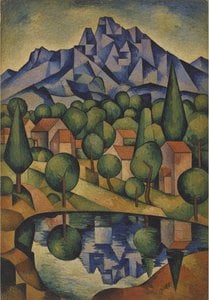
Pine Tree in the Arc Valley

Experience Paul Cézanne's "Pine Tree in the Arc Valley" (1885). This iconic watercolor captures Provençal beauty with innovative brushstrokes, bridging Impressionism and Cubism. A masterpiece of modern art.

Explorez l'art révolutionnaire de Paul Cézanne (1839-1906), un maître du post-impressionnisme qui a relié l'impressionnisme et le cubisme. Découvrez ses formes géométriques, ses coups de pinceau uniques, ses natures mortes et son impact durable sur l'art moderne. #Cézanne #PostImpressionnisme

Reproduction à l'huile faite à la main

Huile sur toile peinte à la main, avec cadre et dimensions personnalisés, réalisée sur commande par nos artistes. ( Passer au format impression Passer au format image numérique)

P118B $10
P118H $10
P118W $10
P438Z $10
P508JH $12
P508YH $12
P805H $10
P805Z $10
P919BZ $10
P919G $10
P919XJ $10
P959ZH $10
P968JZ $12
W106C $8
W218G $10
W218JH $8
W218Y $10
W307PJ $10
W316G $10
W316PJ $8
W316Y $10
W398PJ $8
W4111J $10
W500HY $15
W500JH $15
W692G $12
W849H $8
W940BG $15
W953PJ $8

Format standard
personnalisé
CM
INCH

Choisissez parmi nos formats prédéfinis qui respectent les proportions originales de l’œuvre.

largeur
hauteur

Vous pouvez saisir vos propres dimensions pour l'adapter à un cadre ou à un espace spécifique. Si la taille sélectionnée ne correspond pas aux proportions de l'image d'origine, nous recadrerons l'œuvre ou prolongerons la peinture avec des éléments peints à la main supplémentaires. Une maquette numérique vous sera envoyée pour approbation avant le début de la production.
Veuillez noter que l'aperçu à l'écran ne reflète pas le recadrage ou l'extension réels. Seule la maquette montrera fidèlement la composition finale.
Bien que des tailles personnalisées soient disponibles, nous vous recommandons de sélectionner une dimension dans la liste prédéfinie afin de préserver les proportions d'origine.

Exemples de personnalisation possibles : remplacer un visage par la photo du client ; ajouter un animal de compagnie (par exemple, remplacer un chat par un chien) ; inclure un message caché en arrière-plan ; modifier le paysage ou les éléments de l'arrière-plan.
Après la commande, l’équipe WahooArt.com contactera le client par e-mail pour recueillir ses instructions et lui fournira une maquette d’aperçu

Livraison dans le monde entier () en 3 à 4 semaines au lieu des 5 semaines habituelles. (24 septembre). Aucun compromis sur la qualité.

why_choose_icon
Livraison express gratuite dans le monde entier
why_choose_icon
Toile de lin de haute qualité
why_choose_icon
Assurance transport complète
why_choose_icon
Garantie de remboursement des droits de douane
why_choose_icon
Garantie de fidélité des couleurs
why_choose_icon
Garantie de retour de 100 jours (uniquement en cas de défaut)
why_choose_icon
Garantie de remboursement à 100%
why_choose_icon
Tarifs dégressifs sur quantité

Prix total

$ 272

reproduction

Pine Tree in the Arc Valley

Technique de reproduction

Format de la reproduction

-

Prix total final

$ 272

L'essentiel de l'œuvre

  • Location: Albertina, Vienna
  • Title: Pine Tree in the Arc Valley
  • Artist: Paul Cézanne
  • Influences: Cézanne
  • Artistic style: Landscapes
  • Notable elements: Loose brushstrokes
  • Subject or theme: Nature scene

Quiz d'art

Chaque question ne comporte qu'une seule bonne réponse.

Question 1:
What is the primary subject of Paul Cézanne’s "Pine Tree in the Arc Valley"?
Question 2:
In what year was "Pine Tree in the Arc Valley" painted?
Question 3:
The painting utilizes which technique to create a sense of depth and form?
Question 4:
The Arc Valley depicted in the painting is located in which region?
Question 5:
Considering Cézanne’s artistic development, what movement does "Pine Tree in the Arc Valley" most closely align with?

The Serene Majesty of “Pine Tree in the Arc Valley”

Paul Cézanne’s “Pine Tree in the Arc Valley,” painted around 1885, isn't merely a depiction of a landscape; it’s a profound meditation on perception and the very nature of seeing. This watercolor masterpiece, now housed within the Albertina Museum in Vienna, captures a pivotal moment in Cézanne’s artistic evolution – a shift away from the fleeting impressions of Impressionism towards a more structured, geometric approach that would profoundly influence the course of modern art. The scene unfolds in the Arc Valley of southwestern France, a region Cézanne frequently revisited and imbued with an almost obsessive fascination. It's a place he sought to distill into its essential forms, a challenge reflected in the painting’s deliberate simplification and layering of color. The composition isn’t about photographic realism; instead, it’s an exploration of how the eye *interprets* reality – a core tenet of Cézanne’s revolutionary vision.

A Revolutionary Technique: Breaking with Tradition

Cézanne's technique in “Pine Tree in the Arc Valley” is instantly recognizable and deliberately unconventional for its time. He abandons traditional perspective, flattening space and suggesting depth through the manipulation of color and form rather than linear recession. The tree itself isn’t rendered as a single, unified shape; it’s built up from countless small, overlapping brushstrokes – a technique he termed “alla prima,” meaning “at first go.” These strokes aren't blended smoothly; they retain their individual texture and direction, creating a vibrant, almost mosaic-like surface. The background landscape is treated similarly, with washes of color applied in broad, gestural strokes that evoke the atmosphere and light of the valley without attempting to accurately represent its contours. Notice how Cézanne uses complementary colors – blues and oranges, greens and reds – not to create harmonious blends, but to heighten contrast and intensify the visual impact of each element. This deliberate disruption of conventional painting methods was a radical statement, signaling a move away from mimicking nature and towards expressing an artist’s subjective experience of it.

Symbolism in the Natural World

Beyond its technical innovations, “Pine Tree in the Arc Valley” is rich with symbolic meaning. The pine tree itself has long been associated with resilience, longevity, and connection to the earth – qualities that resonate deeply within Cézanne's work. The valley, with its winding river and distant mountains, represents a sense of tranquility and timelessness. The subtle inclusion of a bridge in the background hints at human presence, but it’s dwarfed by the scale of nature, reinforcing the idea of humanity’s place within the larger natural order. Some art historians have interpreted the painting as an allegory for Cézanne's own artistic journey – a solitary figure striving to capture the essence of his subject matter and overcome the limitations of traditional representation. The distant mountains, bathed in hazy light, could symbolize the challenges and uncertainties that lie ahead on any creative path.

An Enduring Emotional Resonance

Despite its intellectual complexity, “Pine Tree in the Arc Valley” possesses a remarkable emotional resonance. There’s a quiet serenity to the scene – a sense of peace and contemplation that invites the viewer to slow down and simply *be* present with the image. The interplay of light and shadow, the vibrant colors, and the textured brushstrokes all contribute to this feeling of immersion. It's not a painting that shouts for attention; rather, it whispers its beauty with understated elegance. The work’s enduring appeal lies in its ability to evoke a sense of connection to nature – a reminder of the simple pleasures and profound truths that can be found in the world around us. Reproductions of this piece offer a window into Cézanne's unique vision, allowing viewers to experience firsthand the transformative power of his art. It’s a testament to the artist’s ability to capture not just what he saw, but *how* he felt about what he saw – a truly remarkable achievement that continues to inspire artists and captivate audiences today.

Biographie de l'artiste

jeune vie et influences

paul cézanne, peintre français post-impressionniste, est né le 19 janvier 1839 à Aix-en-Provence, en France. Sa jeune vie a été marquée par un fort attachement à sa famille, dont l'entreprise bancaire lui assurait une sécurité financière. Cela lui a permis de se consacrer à ses aspirations artistiques sans être entravé par des soucis financiers. les nabis, néo-impressionnisme et symbolisme ont influencé le travail de Cézanne au début, qui se caractérisait par son accent sur les formes géométriques et une palette de couleurs limitée. Son intérêt pour les œuvres de paul gauguin et georges seurat a renforcé son style post-impressionniste.

style artistique et techniques

L'utilisation innovante de Cézanne des plans de couleurs et de petits coups de pinceau répétitifs a créé des champs complexes qui exprimaient son étude approfondie des sujets. Son approche souvent exploratoire de l'art a conduit au développement d'une nouvelle langue picturale, mettant l'accent sur la structure sous-jacente des objets dans une composition.

héritage et impact

Le travail pionnier de Cézanne en post-impressionnisme a ouvert la voie à divers mouvements avant-gardistes, notamment le cubisme, le fauvisme et le surréalisme. Son influence se retrouve dans les œuvres de pablo picasso, henri matisse et georges braque. L'héritage de Cézanne continue d’inspirer les artistes et les amateurs d’art, consolidant ainsi sa place en tant que figure centrale de l’histoire de l’art moderne.
Paul Cézanne

Paul Cézanne

1839 - 1906 , France

En bref

  • Artistes Influents:
    • Paul Gauguin
    • Georges Seurat
  • Date De Décès: 22 octobre 1906
  • Date De Naissance: 19 janvier 1839
  • Influences Artistiques:
    • Pablo Picasso
    • Henri Matisse
    • Georges Braque
  • Lieu De Naissance: Aix-en-Provence, France
  • Mouvement Artistique: Post-impressionnisme
  • Nationalité: Français
  • Nom Complet: Paul Cézanne
  • Œuvres Notables:
    • Le Plan d'eau à Jas de Bouffan
    • Portrait d’Émile Zola
    • Forêt
    • Mont Sainte-Victoire
Explorez des œuvres d'art classées par thèmes, styles et caractéristiques.