CONSEIL EN ART GRATUIT

x
Commander la reproduction Commander la reproductionAcheter l'image haute résolution Acheter l'image haute résolution PartagerPartager
DétailsDétails Ajouter aux favoris Ajouter aux favoris TéléchargerTélécharger Articles similairesArticles similaires RadiographieRadiographie DiaporamaDiaporama

Landscape

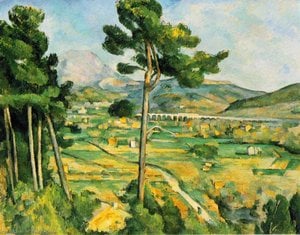
Experience Paul Cézanne's 'Landscape' (1867) – a serene depiction of a rural road, capturing the artist’s revolutionary approach to form and color. A must-have for art lovers!

Explorez l'art révolutionnaire de Paul Cézanne (1839-1906), un maître du post-impressionnisme qui a relié l'impressionnisme et le cubisme. Découvrez ses formes géométriques, ses coups de pinceau uniques, ses natures mortes et son impact durable sur l'art moderne. #Cézanne #PostImpressionnisme

Giclée / Impression d'art

Impression giclée ou sur toile de qualité musée, avec une production rapide et des finitions au choix.

P118B $10
P118H $10
P118W $10
P438Z $10
P508JH $12
P508YH $12
P805H $10
P805Z $10
P919BZ $10
P919G $10
P919XJ $10
P959ZH $10
P968JZ $12
W106C $8
W218G $10
W218JH $8
W218Y $10
W307PJ $10
W316G $10
W316PJ $8
W316Y $10
W398PJ $8
W4111J $10
W500HY $15
W500JH $15
W692G $12
W849H $8
W940BG $15
W953PJ $8

Standard
custom
CM
INCH

Choisissez parmi nos formats prédéfinis qui respectent les proportions originales de l’œuvre.

largeur
hauteur

Vous pouvez saisir vos propres dimensions pour vous adapter à un cadre ou à un espace spécifique. Si la taille sélectionnée ne correspond pas aux proportions de l'image originale, nous recadrerons l'œuvre ou étendrons l'image avec une bordure en miroir ou une couleur unie. Une maquette numérique vous sera envoyée pour approbation avant le début de la production.
Veuillez noter que l'aperçu à l'écran ne reflète pas le recadrage ou l'extension réelle. Seule la maquette montrera avec précision la composition finale.
Bien que des tailles personnalisées soient disponibles, nous vous recommandons de choisir une dimension dans la liste prédéfinie afin de préserver les proportions originales.

Livraison dans le monde entier () en 2 semaines au lieu des 4/5 semaines habituelles. (3 juillet)

why_choose_icon
Livraison express gratuite dans le monde entier

why_choose_icon
Toile de lin de haute qualité
why_choose_icon
Assurance transport complète
why_choose_icon
Garantie de remboursement des frais de douane
why_choose_icon
Garantie de fidélité des couleurs
why_choose_icon
Politique de retour de 60 jours (uniquement en cas de défaut)
why_choose_icon
Garantie de remboursement à 100%
why_choose_icon
Réduction sur les achats groupés

Prix total

-

reproduction

Landscape

Giclée / Impression d'art

Format de reproduction

-

Prix total final

-

En bref

  • Influences: Cézanne
  • Year: 1867
  • Subject or theme: Rural scene
  • Artistic style: Romanticism, Landscape
  • Location: Yale University Art Gallery
  • Notable elements or techniques: Loose brushwork
  • Title: Landscape

Quiz d'art

Chaque question ne comporte qu'une seule bonne réponse.

Question 1:
What artistic movement is Paul Cézanne most closely associated with?
Question 2:
The painting 'Landscape' primarily focuses on:
Question 3:
In 'Landscape', what is the significance of the figures walking along the road?
Question 4:
What year was the painting 'Landscape' created?
Question 5:
The brushstrokes in ‘Landscape’ are best described as:

Description de l'œuvre

Paul Cézanne’s “Landscape” – A Bridge Between Worlds

Painted in 1867 during a pivotal period of artistic transition, Paul Cézanne's "Landscape" isn’t merely a depiction of a rural scene; it’s a carefully constructed exploration of perception and the very nature of seeing. This work, housed within the Yale University Art Gallery, represents a crucial stepping stone in Cézanne’s evolution from the Impressionist palette to the nascent forms of Cubism, marking his deliberate departure from fleeting impressions towards a more structured, geometric representation of reality. The painting captures a dirt road winding through a verdant landscape – a familiar subject for Cézanne, who frequently returned to the views surrounding his home in Provence. However, it’s not the idyllic beauty of the scene that dominates; rather, it's the artist’s deliberate manipulation of space and color that commands attention.

Cézanne’s technique is immediately striking. He abandons the traditional Impressionist pursuit of capturing a momentary light effect, instead employing a more methodical approach. Thick, visible brushstrokes—a hallmark of his style—build up layers of paint to define form and volume. Notice how he doesn't simply *paint* the road; he sculpts it with color, creating an illusion of depth and solidity. The grass on either side isn’t rendered as a wash of green but rather as distinct planes of varying shades, suggesting texture and materiality. This deliberate layering is key to Cézanne’s revolutionary approach – he was less interested in replicating what the eye *sees* than in conveying how the mind *interprets* that visual information.

The Figures Within a Landscape

Scattered along the road are several figures, rendered with a remarkable degree of anonymity. They aren't portraits; they’re fragments of human presence within the broader landscape. Their placement is carefully considered – some closer to the viewer, others receding into the distance – creating a sense of spatial depth and inviting the observer to contemplate their relationship to the scene. The two dogs, one positioned centrally and another on the right, add an element of domesticity and perhaps even a hint of narrative, suggesting a quiet moment of rural life. The horse standing off to the left adds further context, hinting at agricultural activity or transport.

Interestingly, Cézanne’s use of perspective is deliberately ambiguous. He doesn't adhere strictly to linear perspective, creating an unsettling sense of spatial distortion. This wasn’t a conscious attempt to mislead the viewer but rather a reflection of his belief that reality itself is constructed within our minds. By fracturing traditional perspective, he forces us to actively engage with the painting and reconstruct its spatial relationships.

Symbolism and Emotional Resonance

While seemingly simple in composition, “Landscape” resonates with deeper symbolic meanings. The dirt road can be interpreted as a metaphor for life’s journey – a winding path through an uncertain future. The figures represent humanity's place within the natural world, highlighting our connection to both the tangible and the intangible. Cézanne himself described his work as "the thinking of things," suggesting that he sought to capture not just appearances but also the underlying essence of his subjects.

The painting’s overall mood is one of serene contemplation. Despite the somewhat unsettling spatial distortions, there's a palpable sense of peace and tranquility. Cézanne masterfully evokes a feeling of timelessness, inviting us to pause and reflect on the beauty and complexity of the natural world. It’s a testament to his ability to transform a commonplace landscape into a profound meditation on perception, form, and the human condition.

A Legacy of Innovation

“Landscape” is more than just a beautiful painting; it's a pivotal work in art history. Cézanne’s radical approach to representation paved the way for the development of Cubism and other avant-garde movements of the 20th century. His emphasis on structure, form, and color profoundly influenced generations of artists, shaping the course of modern art and leaving an enduring legacy that continues to inspire today.

Œuvres apparentées


Biographie de l'artiste

jeune vie et influences

paul cézanne, peintre français post-impressionniste, est né le 19 janvier 1839 à Aix-en-Provence, en France. Sa jeune vie a été marquée par un fort attachement à sa famille, dont l'entreprise bancaire lui assurait une sécurité financière. Cela lui a permis de se consacrer à ses aspirations artistiques sans être entravé par des soucis financiers. les nabis, néo-impressionnisme et symbolisme ont influencé le travail de Cézanne au début, qui se caractérisait par son accent sur les formes géométriques et une palette de couleurs limitée. Son intérêt pour les œuvres de paul gauguin et georges seurat a renforcé son style post-impressionniste.

style artistique et techniques

L'utilisation innovante de Cézanne des plans de couleurs et de petits coups de pinceau répétitifs a créé des champs complexes qui exprimaient son étude approfondie des sujets. Son approche souvent exploratoire de l'art a conduit au développement d'une nouvelle langue picturale, mettant l'accent sur la structure sous-jacente des objets dans une composition.

héritage et impact

Le travail pionnier de Cézanne en post-impressionnisme a ouvert la voie à divers mouvements avant-gardistes, notamment le cubisme, le fauvisme et le surréalisme. Son influence se retrouve dans les œuvres de pablo picasso, henri matisse et georges braque. L'héritage de Cézanne continue d’inspirer les artistes et les amateurs d’art, consolidant ainsi sa place en tant que figure centrale de l’histoire de l’art moderne.
Paul Cézanne

Paul Cézanne

1839 - 1906 , France

En bref

  • Artistes Influents:
    • Paul Gauguin
    • Georges Seurat
  • Date De Décès: 22 octobre 1906
  • Date De Naissance: 19 janvier 1839
  • Influences Artistiques:
    • Pablo Picasso
    • Henri Matisse
    • Georges Braque
  • Lieu De Naissance: Aix-en-Provence, France
  • Mouvement Artistique: Post-impressionnisme
  • Nationalité: Français
  • Nom Complet: Paul Cézanne
  • Œuvres Notables:
    • Le Plan d'eau à Jas de Bouffan
    • Portrait d’Émile Zola
    • Forêt
    • Mont Sainte-Victoire
Explorez des œuvres d'art classées par thèmes, styles et caractéristiques.