Aperçu en situation Visualiser en RA Commander la reproduction peinte à la main Passer au format numérique Envoyer
Détails de l'œuvre Guide Ajouter aux favoris Télécharger l'image Articles similaires Radiographie Diaporama Q&A Statistiques

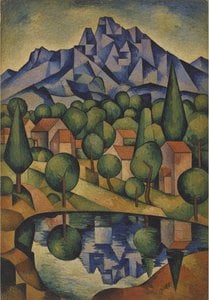
Courbure de la Route

Découvrez 'Courbure de la Route', un paysage captivant du Post-Impressionnisme par Paul Cézanne. Explorez des couleurs vibrantes, des formes géométriques et une touche picturale innovante. Une œuvre d'art intemporelle pour les amateurs et collectionneurs d'art.

Explorez l'art révolutionnaire de Paul Cézanne (1839-1906), un maître du post-impressionnisme qui a relié l'impressionnisme et le cubisme. Découvrez ses formes géométriques, ses coups de pinceau uniques, ses natures mortes et son impact durable sur l'art moderne. #Cézanne #PostImpressionnisme

Giclées et impressions d'art

Impressions giclées ou sur toile de qualité musée, avec une production rapide et des finitions au choix. ( Commander la reproduction peinte à la main Passer au format numérique)

Corner sample of the P118B picture frame: polystyrène moulé, 5 cm wide and 3 cm thick
P118B €10
Corner sample of the P118H picture frame: polystyrène moulé, 5 cm wide and 3 cm thick
P118H €10
Corner sample of the P118W picture frame: polystyrène moulé, 5 cm wide and 3 cm thick
P118W €10
Corner sample of the P438Z picture frame: polystyrène moulé, 5.5 cm wide and 3.5 cm thick
P438Z €10
Corner sample of the P508JH picture frame: polystyrène moulé, 7 cm wide and 3.5 cm thick
P508JH €12
Corner sample of the P508YH picture frame: polystyrène moulé, 7 cm wide and 3.5 cm thick
P508YH €12
Corner sample of the P805H picture frame: polystyrène moulé, 5 cm wide and 3.5 cm thick
P805H €10
Corner sample of the P805Z picture frame: polystyrène moulé, 5 cm wide and 3.5 cm thick
P805Z €10
Corner sample of the P919BZ picture frame: polystyrène moulé, 7 cm wide and 3.5 cm thick
P919BZ €10
Corner sample of the P919G picture frame: polystyrène moulé, 7 cm wide and 3.5 cm thick
P919G €10
Corner sample of the P919XJ picture frame: polystyrène moulé, 7 cm wide and 3.5 cm thick
P919XJ €10
Corner sample of the P959ZH picture frame: polystyrène moulé, 5 cm wide and 3 cm thick
P959ZH €10
Corner sample of the P968JZ picture frame: polystyrène moulé, 6 cm wide and 4 cm thick
P968JZ €12
Corner sample of the W106C picture frame: bois massif, 5 cm wide and 3 cm thick
W106C €8
Corner sample of the W218G picture frame: bois massif, 5 cm wide and 3 cm thick
W218G €10
Corner sample of the W218JH picture frame: bois massif, 5 cm wide and 3 cm thick
W218JH €8
Corner sample of the W218Y picture frame: bois massif, 5 cm wide and 3 cm thick
W218Y €10
Corner sample of the W307PJ picture frame: bois massif, 6 cm wide and 3 cm thick
W307PJ €10
Corner sample of the W316G picture frame: bois massif, 6 cm wide and 3 cm thick
W316G €10
Corner sample of the W316PJ picture frame: bois massif, 6 cm wide and 3 cm thick
W316PJ €8
Corner sample of the W316Y picture frame: bois massif, 6 cm wide and 3 cm thick
W316Y €10
Corner sample of the W398PJ picture frame: bois massif, 5 cm wide and 3 cm thick
W398PJ €8
Corner sample of the W4111J picture frame: bois massif, 6.5 cm wide and 3.5 cm thick
W4111J €10
Corner sample of the W500HY picture frame: bois massif, 7 cm wide and 5 cm thick
W500HY €15
Corner sample of the W500JH picture frame: bois massif, 7 cm wide and 5 cm thick
W500JH €15
Corner sample of the W692G picture frame: bois massif, 8 cm wide and 4 cm thick
W692G €12
Corner sample of the W849H picture frame: bois massif, 5 cm wide and 3 cm thick
W849H €8
Corner sample of the W940BG picture frame: bois massif, 7.5 cm wide and 4.5 cm thick
W940BG €15
Corner sample of the W953PJ picture frame: bois massif, 6 cm wide and 3.5 cm thick
W953PJ €8

Format standard
sur mesure
CM
INCH

Choisissez parmi nos formats prédéfinis qui respectent les proportions originales de l’œuvre.

largeur
hauteur

Saisissez la largeur et la hauteur souhaitées pour qu'elles s'adaptent à votre cadre ou à votre mur. Une impression peut être recadrée, mais jamais agrandie au-delà de l'image originale ; ainsi, un format de forme différente entraînera la perte d'une partie de l'image. Nous vous envoyons une maquette numérique pour approbation avant toute impression. L'image présentée sur cette page ne montre pas le recadrage réel — seule la maquette le permet.

Livraison dans le monde entier () en 2 semaines au lieu des 4/5 semaines habituelles. (31 octobre)

Livraison express gratuite dans le monde entier
Toile de lin de qualité supérieure
Assurance transport complète
Garantie de remboursement des droits de douane
Garantie de fidélité des couleurs
Politique de retour de 100 jours (uniquement en cas de défaut)
Garantie de remboursement à 100%
Offre de tarifs dégressifs

Prix total

€ 60

Courbure de la Route

Giclées et impressions d'art

Format de la reproduction

-

Prix total

€ 60

Informations clés

  • Subject or theme: Landscape
  • Movement: Post-Impressionism
  • Title: Bend in Road
  • Location: National Gallery of Art
  • Artist: Paul Cézanne

A Pathway to Modernity: Unveiling Cézanne’s *Bend in the Road*

Paul Cézanne's *Bend in the Road*, completed in 1906 during his final year, is far more than a simple landscape. It represents a pivotal moment in art history – a bold step away from representational painting and towards the abstract foundations of modernism. This work isn’t about depicting a road; it's about *how* we see a road, and by extension, how we perceive the world around us. Cézanne sought to capture not just what he saw but also the essence of his experience, pushing beyond Impressionistic fleeting impressions toward a deeper understanding of form and color.

Deconstructing Form: Style & Technique

The painting is a quintessential example of Cézanne’s mature Post-Impressionist style. He deliberately moves beyond Impressionism's emphasis on momentary effects, instead focusing on underlying structure and form. The road isn’t rendered realistically; it’s constructed from intersecting planes of color – blues, greens, and ochres – that subtly shift and interact with one another. This fragmentation anticipates the Cubist revolution soon to follow. Cézanne employed a distinctive impasto technique, applying paint in small, deliberate dashes and patches. This wasn’t merely decorative; it added physicality to the canvas, emphasizing the materiality of the paint itself. Color is used not just descriptively but structurally, defining planes and creating a sense of depth and volume. The layering allows light to play across the surface, animating the scene with subtle tonal variations. Geometric simplification – cones, cylinders, spheres – reveals Cézanne’s intellectual approach to painting.

Historical Context: Bridging Eras

Painted a year before his death, *Bend in the Road* encapsulates decades of artistic evolution. Initially influenced by Impressionism, Cézanne ultimately rejected its preoccupation with capturing fleeting sensations. He sought solidity, permanence, and intellectual rigor in his work. This pursuit coincided with a period of rapid change in the art world. Post-Impressionism emerged as a reaction against what some perceived as the limitations of Impressionism, prioritizing emotional expression and formal structure. Cézanne, often hailed as the “father of modern art,” profoundly influenced artists like Picasso and Braque, laying the groundwork for Cubism and subsequent movements. He was considered to be one of the most important painters of his time.

Symbolism & Emotional Resonance

While not overtly symbolic in a traditional sense, *Bend in the Road* evokes a powerful sense of quiet contemplation and the enduring presence of nature. The winding road can be interpreted as a metaphor for life’s journey – a path filled with unexpected turns and hidden possibilities. Cézanne's masterful use of color—particularly the harmonious blend of blues and greens—creates an atmosphere of serenity and tranquility. The distant mountains suggest vastness and timelessness, while the scattered houses hint at human existence within this expansive landscape. *The painting’s emotional impact is subtle yet profound.* It doesn’t overwhelm with dramatic gestures; instead, it invites quiet observation and reflection.

A Timeless Addition to Contemporary Spaces

*Bend in the Road* transcends its historical context, remaining remarkably relevant today. Its sophisticated use of color and form makes it a compelling focal point for any interior. Whether displayed in a minimalist loft or a classically designed home, this masterpiece will inspire conversation and appreciation for Cézanne’s enduring legacy. A high-quality reproduction allows you to experience the serenity and innovative spirit of this iconic painting within your own environment. Consider framing it with simple wooden borders to enhance its natural beauty and preserve its timeless appeal.

Questions et réponses

Où puis-je trouver un guide pour « Courbure de la Route » ?

La page Fiche pédagogique de «Courbure de la Route» de Paul Cézanne propose une fiche pédagogique imprimable en deux volets : l'œuvre accompagnée de sa fiche d'identité, une frise chronologique la situant dans la vie de l'artiste, d'autres œuvres de l'artiste, la palette de couleurs mesurée, ainsi que des citations prêtes à être copiées en quatre styles différents.

Quelle technique et quel style caractérisent «Courbure de la Route» de Paul Cézanne ?

Dans « Courbure de la Route », la technique du Huile sur toile rencontre le mouvement Post-Impressionnisme.

Puis-je commander une reproduction à l'huile de « Courbure de la Route » ?

«Courbure de la Route» est disponible en tant que une reproduction à l'huile peinte à la main sur toile de lin. Vous pouvez passer commande sur sa page Reproduction peinte à la main, avec un choix de formats disponibles.


Biographie de l'artiste

jeune vie et influences

paul cézanne, peintre français post-impressionniste, est né le 19 janvier 1839 à Aix-en-Provence, en France. Sa jeune vie a été marquée par un fort attachement à sa famille, dont l'entreprise bancaire lui assurait une sécurité financière. Cela lui a permis de se consacrer à ses aspirations artistiques sans être entravé par des soucis financiers. les nabis, néo-impressionnisme et symbolisme ont influencé le travail de Cézanne au début, qui se caractérisait par son accent sur les formes géométriques et une palette de couleurs limitée. Son intérêt pour les œuvres de paul gauguin et georges seurat a renforcé son style post-impressionniste.

style artistique et techniques

L'utilisation innovante de Cézanne des plans de couleurs et de petits coups de pinceau répétitifs a créé des champs complexes qui exprimaient son étude approfondie des sujets. Son approche souvent exploratoire de l'art a conduit au développement d'une nouvelle langue picturale, mettant l'accent sur la structure sous-jacente des objets dans une composition.

héritage et impact

Le travail pionnier de Cézanne en post-impressionnisme a ouvert la voie à divers mouvements avant-gardistes, notamment le cubisme, le fauvisme et le surréalisme. Son influence se retrouve dans les œuvres de pablo picasso, henri matisse et georges braque. L'héritage de Cézanne continue d’inspirer les artistes et les amateurs d’art, consolidant ainsi sa place en tant que figure centrale de l’histoire de l’art moderne.
Paul Cézanne

Paul Cézanne

1839 - 1906 , France

L'essentiel de l'artiste

  • Artistes Influents:
    • Paul Gauguin
    • Georges Seurat
  • Date De Décès: 22 octobre 1906
  • Date De Naissance: 19 janvier 1839
  • Influences Artistiques:
    • Pablo Picasso
    • Henri Matisse
    • Georges Braque
  • Lieu De Naissance: Aix-en-Provence, France
  • Mouvement Artistique: Post-impressionnisme
  • Nationalité: Français
  • Nom Complet: Paul Cézanne
  • Œuvres Notables:
    • Le Plan d'eau à Jas de Bouffan
    • Portrait d’Émile Zola
    • Forêt
    • Mont Sainte-Victoire
Explorez des œuvres d'art classées par thèmes, styles et caractéristiques.