A Venetian Masterpiece: Honor et Virtus Post Mortem Floret
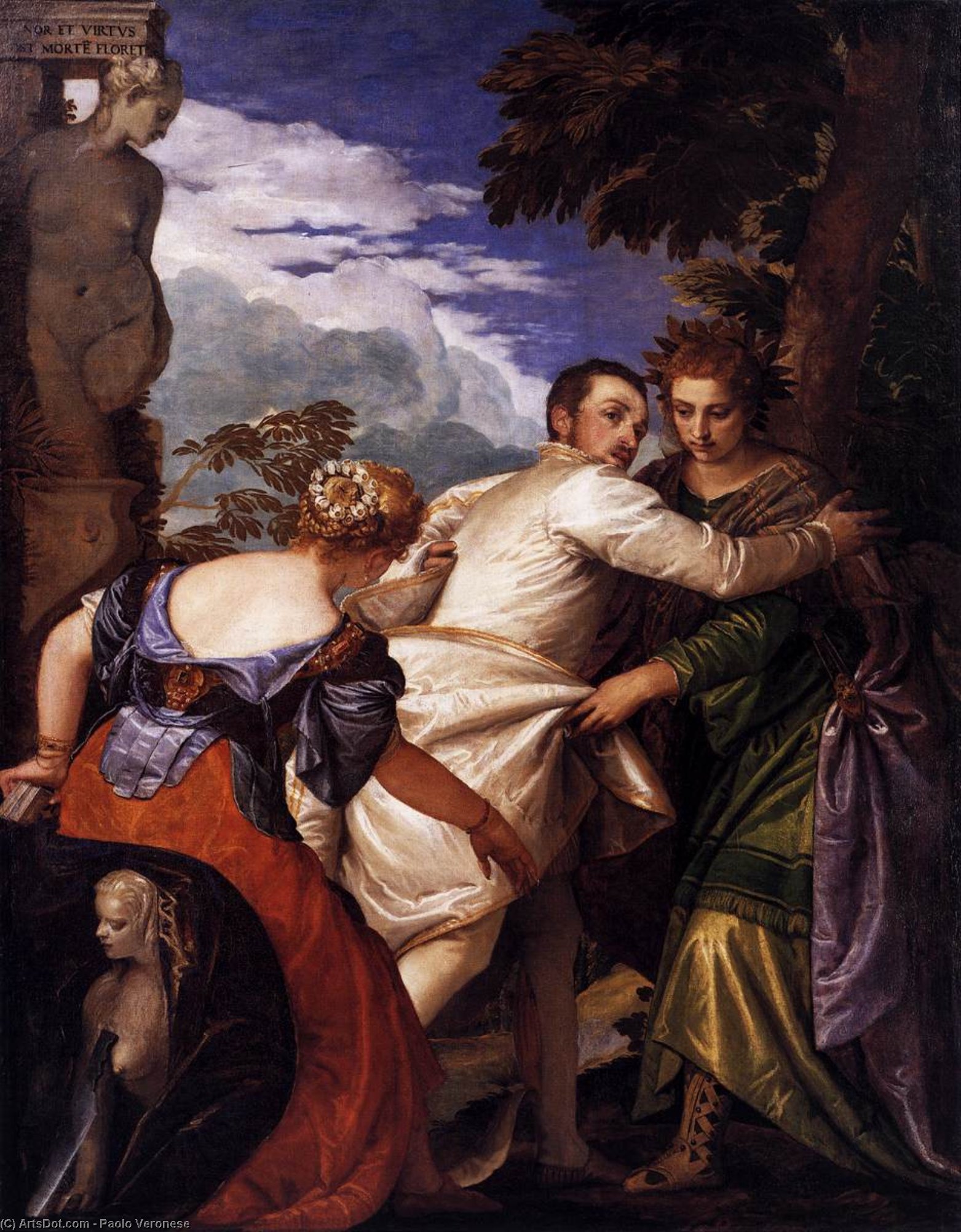
Paolo Veronese’s “Honor et Virtus post mortem floret,” painted in 1567, is more than just a visually stunning depiction of an embrace; it's a profound allegory exploring the eternal struggle between virtue and vice. Originating from the vibrant heart of Venice during the High Renaissance, this oil on canvas masterpiece transcends its historical context to resonate with viewers today through its timeless themes of moral choice and the pursuit of honor. Veronese, a master of color, composition, and opulent spectacle, elevates the scene beyond a simple portrait, transforming it into a dynamic visual narrative that speaks volumes about human nature.
The painting immediately captivates with its scale – measuring 219 x 170 cm – and its lavish detail. Veronese, known for his dramatic use of light and shadow, employs a masterful chiaroscuro technique to sculpt the figures and create a sense of depth within the richly textured garden setting. The background is a meticulously rendered Venetian landscape, complete with architectural elements and lush foliage, providing a vibrant counterpoint to the central drama unfolding before us. Notice the subtle variations in color – the deep greens of the plants, the warm hues of the stone, and the rich reds and golds adorning the figures’ clothing – all contributing to the painting's overall sense of opulence and grandeur.
The Allegorical Core: Virtue Versus Vice
At the heart of “Honor et Virtus post mortem floret” lies a complex allegory rooted in classical philosophy. The central figure, identified as Hercules by some scholars, is presented in a moment of profound indecision. He stands poised between two women – one embodying Virtue and the other representing Vice. This isn’t a simple depiction of good versus evil; rather, it's a nuanced exploration of temptation and moral fortitude. The inscription at the top of the painting, “Honor et Virtus post mortem floret” (Honor and Virtue flourish after death), serves as a potent reminder of the lasting consequences of our choices.
Virtue, crowned with a laurel wreath – a symbol of victory and achievement – extends her hand towards Hercules, offering him guidance and righteousness. Conversely, Vice, cloaked in shadows and adorned with symbols of pleasure and indulgence (a dagger and a sphinx statue), attempts to lure him into a world of fleeting gratification. The visual tension between these two figures is palpable, creating a dramatic interplay that draws the viewer’s eye and invites contemplation about the choices we face in our own lives.
Historical Context & Veronese's Venetian Style
To fully appreciate “Honor et Virtus post mortem floret,” it’s crucial to understand its historical context. Venice, during the 16th century, was a thriving center of art and commerce, boasting a unique blend of classical influences and Renaissance innovation. Veronese, born in Verona but firmly established in Venice, expertly absorbed these diverse artistic traditions, creating a style that is both deeply rooted in Venetian heritage and distinctly his own. His works are characterized by their scale, lavish detail, and masterful use of color – qualities that earned him the admiration of patrons like Emperor Rudolph II and Queen Christina of Sweden.
This particular painting reflects Veronese’s shift towards allegorical subjects, a departure from his earlier historical and biblical scenes. It showcases his growing interest in philosophical themes and his willingness to experiment with new compositional techniques. The influence of Titian, particularly his mastery of color and atmospheric perspective, is evident throughout the work, yet Veronese maintains a unique artistic voice that distinguishes him as one of Venice’s greatest masters.
Emotional Resonance & Lasting Impact
“Honor et Virtus post mortem floret” continues to resonate with viewers centuries after its creation. Its depiction of moral struggle and the allure of temptation speaks to universal human experiences, prompting us to reflect on our own values and choices. The painting’s dramatic composition, vibrant colors, and intricate details create a powerful emotional impact, drawing us into the scene and inviting us to contemplate the eternal conflict between virtue and vice. It's a testament to Veronese’s artistic genius – a masterpiece that transcends its historical context to offer timeless insights into the complexities of human nature.


 Aperçu en situation
 Commander la reproduction peinte à la main
 Envoyer
 Partager
 Détails de l'œuvre

 Télécharger
 Articles similaires
 Radiographie
 Diaporama
 Statistiques


 Lire la suite






































 L'option verre n'est disponible que pour les dimensions inférieures à 110 cm.


