CONSEIL EN ART GRATUIT

x
Commander l'impression Commander l'impressionAcheter l'image haute résolution Acheter l'image haute résolution PartagerPartager
DetailsDetails Ajouter aux favoris Ajouter aux favoris TéléchargerTélécharger Articles similairesArticles similaires X-RayX-Ray DiaporamaDiaporama

L'ombre

Explore « La ombre », une œuvre emblématique de Pablo Picasso réalisée en 1953 au Surrealisme. Découvrez les détails et l'interprétation artistique de cette peinture fascinante.

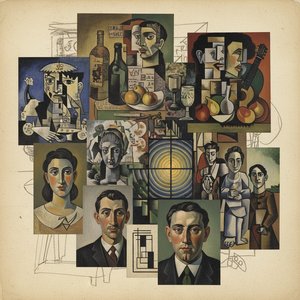
Explorez l'art révolutionnaire de Pablo Picasso ! Découvrez le Cubisme, les périodes Bleue et Rose, Guernica et son impact durable sur l'art moderne du 20e siècle. #Picasso #Cubisme

Reproduction à l'huile faite à la main

Huile sur toile peinte à la main, avec cadre et dimensions personnalisés, réalisée sur commande par nos artistes.

Standard
custom
CM
INCH

Choisissez parmi nos formats prédéfinis qui respectent les proportions originales de l’œuvre.

largeur
hauteur

Vous pouvez saisir vos propres dimensions pour l'adapter à un cadre ou à un espace spécifique. Si la taille sélectionnée ne correspond pas aux proportions de l'image d'origine, nous recadrerons l'œuvre ou prolongerons la peinture avec des éléments peints à la main supplémentaires. Une maquette numérique vous sera envoyée pour approbation avant le début de la production.
Veuillez noter que l'aperçu à l'écran ne reflète pas le recadrage ou l'extension réels. Seule la maquette montrera fidèlement la composition finale.
Bien que des tailles personnalisées soient disponibles, nous vous recommandons de sélectionner une dimension dans la liste prédéfinie afin de préserver les proportions d'origine.

Exemples de personnalisation : remplacer un visage par la photo du client ; ajouter un animal de compagnie (par exemple, remplacer un chat par un chien) ; inclure un message caché en arrière-plan ; modifier le paysage ou les éléments de l'arrière-plan.
Après la commande, l’équipe WahooArt.com contactera le client par e-mail pour obtenir ses instructions et lui fournira une maquette d’aperçu.

Livraison dans le monde entier () en 3 à 4 semaines au lieu des 5 semaines habituelles. (1 juillet). Aucune concession sur la qualité.

why_choose_icon
Livraison express gratuite dans le monde entier
why_choose_icon
Toile de lin de haute qualité
why_choose_icon
Assurance transport complète
why_choose_icon
Garantie de remboursement des frais de douane
why_choose_icon
Garantie de fidélité des couleurs
why_choose_icon
Politique de retour de 60 jours (uniquement en cas de défaut)
why_choose_icon
Garantie de remboursement à 100%
why_choose_icon
Réduction sur les achats groupés

Prix total

-

reproduction

L'ombre

Technique de reproduction

Format de reproduction

-

Prix total final

-

En bref

  • Notable elements or techniques: Gestural brushstrokes; Symbolism
  • Year: 1953
  • Medium: Charcoal & Oil
  • Subject or theme: Human figure; Femininity
  • Influences: Guernica
  • Artistic style: Abstract Expressionism
  • Artist: Pablo Picasso

Quiz d'art

Chaque question ne comporte qu'une seule bonne réponse.

Question 1:
What artistic movement is Pablo Picasso’s ‘The Shadow’ primarily associated with?
Question 2:
In what year was ‘The Shadow’ created by Pablo Picasso?
Question 3:
What medium did Picasso use to create ‘The Shadow’?
Question 4:
The painting depicts a woman’s body with outstretched arms, symbolizing what?
Question 5:
‘The Shadow’ was created in response to which significant historical event?

Description de l'œuvre

Pablo Picasso: The Shadow

The painting “The Shadow” by Pablo Picasso is a captivating example of surrealist art, created in 1953. This charcoal piece measures 130 x 97 cm and showcases the artist’s unique ability to blend reality with the subconscious. It's considered one of Picasso’s most poignant explorations into themes of vulnerability and isolation—a testament to his masterful command of expressive gesture and tonal gradation.

The Composition

At the center of the painting is a woman’s body, depicted in a state of outstretched arms, as if reaching for something or someone. Her breasts are exposed, adding an element of vulnerability to her pose. The artist skillfully employs a pyramidal structure to convey stability amidst emotional turmoil—a deliberate choice reflecting Picasso's fascination with geometric forms and their ability to communicate profound psychological states. The background is filled with other figures and objects that add depth and interest to the scene. There is a person standing near the left side of the painting, another figure in the middle, and two more people on the right side. Additionally, three birds are scattered throughout the image, introducing an element of nature—symbolic representations of freedom and transcendence—that contrasts with the woman’s enclosed posture.

Surrealistic Elements

The overall atmosphere of “The Shadow” is surreal, with the woman's body taking center stage as she appears to defy gravity or reality. Picasso deliberately eschewed traditional color palettes, opting for monochrome charcoal tones that heighten the painting’s emotional intensity and underscore its dreamlike quality. This stylistic decision aligns perfectly with Surrealism’s core tenets—the juxtaposition of incongruous elements designed to provoke contemplation and challenge conventional perceptions. The artist's meticulous attention to detail—particularly in rendering the woman’s skin texture and musculature—further enhances the painting’s realism while simultaneously maintaining its unsettling aura.

Context within Surrealism

Surrealism, a cultural movement that began in the early 1920s, aimed to resolve the previously contradictory conditions of dream and reality into an absolute reality or super-reality. Picasso's embrace of Surrealist principles reflects his broader artistic ambition—to transcend representational conventions and delve into the realm of psychological exploration. “The Shadow” stands as a cornerstone of Surrealist art history, demonstrating the movement’s capacity to convey complex emotions through simplified forms and evocative imagery. Its enduring appeal lies in its ability to resonate with viewers on an intuitive level—eliciting feelings of melancholy, longing, and contemplation.

Relevance at WahooArt

At WahooArt, we offer handmade oil painting reproductions of famous artworks, including those by Pablo Picasso. Our collection includes other notable surrealist pieces such as “Buste de Francoise” and “Lying female nude,” which showcase the artist’s versatility in exploring different themes and styles. For those interested in delving deeper into Surrealism's artistic legacy, WahooArt provides an exceptional platform to acquire stunning reproductions of these iconic masterpieces. Discover the world of surrealist art at WahooArt and experience the magic of handmade oil painting reproductions.
Photo Description: The image is a black and white photograph of a painting by Pablo Picasso titled “The Shadow.” The painting features a woman’s body with her arms outstretched, as if she is reaching for something or someone. She appears to be naked, with her breasts exposed. In the background, there are several other figures and objects that add depth and interest to the scene. There is a person standing near the left side of the painting, another figure in the middle, and two more people on the right side. Additionally, there are three birds scattered throughout the image, adding an element of nature to the composition. The overall atmosphere of the painting seems to be surreal, with the woman’s body taking center stage as she appears to defy gravity or reality. The combination of the naked figure and the other elements in the background creates a sense of mystery and intrigue that draws the viewer into the artwork.

Œuvres apparentées


Biographie de l'artiste

Pablo Picasso: Un Artiste Révolutionnaire

La Jeunesse et la Formation (1881-1904)

  • Né le 25 octobre 1881 à Málaga, en Espagne, Pablo Ruiz y Picasso a démontré un talent artistique dès son plus jeune âge.
  • Son père, José Ruiz y Blasco, était professeur d'art et lui a fourni une formation précoce. On raconte que les premiers mots de Picasso étaient “piz, piz” – tentant de dire ‘crayola’.
  • Picasso a rapidement dépassé les capacités de son père, montrant un talent remarquable pour des représentations naturalistes.
  • La famille a déménagé à A Coruña et plus tard à Barcelone après la tragique mort de sa sœur.
  • À Barcelone, il a fréquenté l’École des Beaux-Arts mais s'est souvent heurté aux instructions académiques traditionnelles. Il a brièvement étudié à l’Académie Royale des Beaux-Arts de Saint-Ferdinand à Madrid, trouvant cela étouffant et préférant étudier les maîtres comme Velázquez et Goya indépendamment.

La Période Bleue et Rose (1901-1906)

  • La Période Bleue (environ 1901-1904) se caractérise par des peintures sombres dominées par des teintes de bleu et turquoise.
  • Ces œuvres dépeignent souvent des figures marginalisées – mendiants, aveugles, prostituées – reflétant la mélancolie et le commentaire social. Des exemples clés incluent La Vie (1903) et Le Vieux Guitariste (1903-1904).
  • Après cela, la Période Rose (1904-1906) a émergé avec des tons plus chauds – roses, oranges et rouges.
  • Cette période reflète une vision plus optimiste, représentant souvent des artistes de cirque, des harlequins et des acrobates. La Famille de Saltimbanques (1905) en est un exemple.

Les Années Révolutionnaires : Cubisme et au-delà (1907-1919)

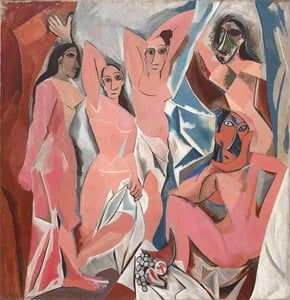
  • 1907 a marqué un moment décisif avec Les Demoiselles d'Avignon, influencé par la sculpture ibérique et les masques africains. Ce tableau a brisé la perspective traditionnelle, ouvrant la voie au Cubisme.
  • Travaillant en étroite collaboration avec Georges Braque, Picasso a cofondé le Cubisme, modifiant fondamentalement la façon dont les artistes représentaient la réalité.
  • Cubisme Analytique (1909-1912) présentait des formes fragmentées, des couleurs atténuées et une dissection des objets en formes géométriques.
  • Cubisme Synthétique (1912-1919) incorporait des éléments de collage – clippings de journaux, chutes de tissu – pour créer des surfaces texturées et de nouvelles couches visuelles.

Néo-classicisme et Surréalisme (Années 1920 - Années 1930)

  • Les années 1920 ont vu Picasso explorer des styles néoclassiques avec des figures monumentales soulignant les formes classiques.
  • Il a également été impliqué dans le mouvement surréaliste, sans pour autant s'aligner pleinement sur ses principes. Son œuvre mélangeait des styles antérieurs à des images surréalistes et des perspectives déformées.

Années de la Fin et Héritage (1940-1973)

  • Pendant la Seconde Guerre mondiale, Picasso est resté en France, produisant des déclarations anti-guerre puissantes comme Guernica (1937), une réponse viscérale au bombardement de Guernica pendant la guerre civile espagnole.
  • Guernica est devenu un symbole durable des horreurs de la guerre et reste l'une de ses œuvres les plus célébrées.
  • Tout au long des années 1950 et 1960, Picasso a continué à expérimenter avec divers médiums – céramique, sculpture, gravure – démontrant une versatilité remarquable.
  • Il s'est marié à Jacqueline Roque en 1961. Il est décédé le 8 avril 1973 à Mougins, en France.

Influences et Importance Historique

  • Le développement artistique de Picasso a été façonné par les maîtres espagnols comme Velázquez et Goya, la sculpture ibérique, l'art africain et Henri Matisse.
  • Son impact sur l’art du XXe siècle est immeasurable. Il a cofondé le Cubisme, a pionnier le collage et la sculpture construite, et a constamment remis en question les conventions artistiques.
  • L’expérimentation incessante de Picasso a redéfini l'art moderne et continue d'inspirer les artistes aujourd'hui.
  • Sa production abondante – estimée à plus de 50 000 œuvres – consolide sa position en tant que l'un des artistes les plus importants et les plus influents de l’histoire.
Pablo Picasso

Pablo Picasso

1881 - 1973 , Espagne

En bref

  • Artistes Influents:
    • Velázquez
    • Goya
    • Henri Matisse
  • Date De Décès: 8 avril 1973
  • Date De Naissance: 25 octobre 1881
  • Influences Artistiques:
    • Cubisme
    • Surréalisme
  • Lieu De Naissance: Málaga, Espagne
  • Nationalité: Espagnole
  • Nom Complet: Pablo Ruiz y Picasso
  • Oeuvres Notables:
    • Les Demoiselles d'Avignon
    • Guernica
    • La Vie
    • Le Vieux Guitariste
    • Famille de Saltimbanques
  • Style Artistique: Cubisme, Surréalisme
Explorez des œuvres d'art classées par thèmes, styles et caractéristiques.