Acquérez une image numérique haute résolution et optimisée, d'une qualité bien supérieure à l'aperçu en ligne.
Chaque fichier est méticuleusement préparé par nos spécialistes internes à l'aide d'outils avancés et d'une retouche manuelle experte. Nous garantissons que chaque image possède une clarté exceptionnelle, une précision des couleurs irréprochable et un niveau de détail fin.
Le fichier final est livré par e-mail sous 72 heures, optimisé pour une utilisation immédiate dans des contextes professionnels, éditoriaux et d'impression. Il offre la même qualité de confiance que celle utilisée par les plus grands studios de création, éditeurs et galeries.
Téléchargez un fichier haute résolution pour votre usage personnel, l'impression et vos projets créatifs. ( Commander l'impression Commander la reproduction peinte à la main)
En choisissant WahooArt.com, vous n'obtenez pas seulement une simple image : vous recevez une œuvre numérique sublimée avec professionnalisme, conçue avec précision et accompagnée d'une garantie de satisfaction. Voici tout ce qui accompagne automatiquement votre commande :

Votre fichier d'image numérique haute résolution vous sera envoyé par e-mail sous 72 heures après votre commande — prêt à un usage immédiat.

Votre œuvre d'art bénéficie d'une optimisation professionnelle grâce à des outils d'IA avancés et une retouche manuelle, garantissant un niveau maximal de détail, de clarté et de fidélité chromatique.

Vous avez accidentellement supprimé ou perdu votre fichier ? Pas d'inquiétude — nous vous le renverrons gratuitement, quand vous le souhaitez.

Profitez de votre œuvre d'art instantanément sans frais de douane ni de livraison — les téléchargements numériques sont toujours exonérés de taxes.

Nous garantissons que votre image numérique reproduit les couleurs de l'original aussi fidèlement que possible grâce à des outils professionnels et une gestion rigoureuse des couleurs.

Si vous n'êtes pas satisfait de votre image numérique, nous la retoucherons ou vous rembourserons 100% sous 100 jours - sans poser de questions.

Pas satisfait ? Obtenez un remboursement intégral dans les 100 jours suivant la réception de votre fichier numérique - sans poser de questions.

Achetez 3 images, économisez 10% - Achetez 5, économisez 15% - Achetez 10+, économisez 20%. Idéal pour les projets créatifs, les galeries et les agences.

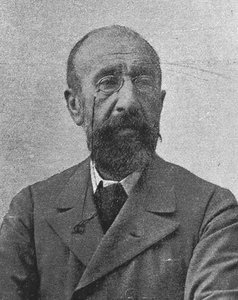
In the grand tapestry of late Ottoman history, few figures loom as large or as multifaceted as Osman Hamdi Bey. Born on December 30, 1842, into the upper echelons of Istanbul’s aristocracy—the eldest son of the Grand Vizier Ibrahim Edhem Pasha—Hamdi Bey was destined for a life of profound influence. His journey, however, was not merely one of inherited status but of self-forged intellectual mastery. While his early years were shaped by the political shifts of the Ottoman Empire, it was his immersion in the vibrant, academic atmosphere of Paris that would forever alter the course of Turkish art. Sent to France in 1860 to study law, the allure of the Seine and the burgeoning Impressionist movement redirected his destiny from the courtroom to the canvas, allowing him to absorb the rigorous techniques of Western academic realism.
Under the tutelage of masters such as Jean-Léon Gérôme and Gustave Boulanger, Hamdi Bey developed a meticulous command over light, texture, and form. Yet, he did not merely mimic the European style; instead, he performed a brilliant act of cultural synthesis. He utilized the tools of Western Orientalism to re-examine his own heritage through a lens of scholarly dignity and profound introspection. His work moved away from the exoticized, often superficial depictions of the East common in European studios, opting instead for a deeply nuanced portrayal of Ottoman life, intellect, and spirituality. Through his brush, the East was not an object of curiosity, but a subject of complex, lived reality.
To gaze upon a masterpiece by Osman Hamdi Bey is to enter a space of quiet contemplation and historical depth. His paintings are often characterized by a sense of stillness, where every object—a tile, a manuscript, or a flickering lamp—carries the weight of symbolic significance. In his most celebrated work, The Tortoise Trainer (1906), we see the pinnacle of this meditative approach. The painting, which many believe serves as a self-portrait, depicts an elderly man in the dignified robes of a dervish, engaged in the seemingly impossible task of training slow-moving tortoises. Here, the artist employs a sophisticated use of impasto and light to create a palpable sense of atmosphere, using the scene as a profound metaphor for the patience required for social reform and the slow, arduous progress of civilization.
His technical prowess extended into portraiture and genre painting, where he captured the essence of his subjects with startling realism. In works like Kokona Despina, the viewer is confronted with a weathered visage rendered with such precision that the very texture of time feels etched into the canvas. His ability to manipulate light—often casting soft, defining shadows that grant his figures a sculptural three-dimensionality—allows him to breathe life into the historical settings he depicts. Whether portraying the scholarly gravity of The Scholar or the intimate grace of Portrait of Naile Hanım, Bey’s work remains anchored in a deep respect for the human condition and the architectural splendor of his era.
Beyond the confines of the studio, Osman Hamdi Bey was a titan of institutional progress. He recognized that for a nation to move forward, it must first understand its foundations. As a pioneering archaeologist and administrator, he played an instrumental role in establishing the scientific study of the past within the Ottoman Empire. His tireless efforts led to the creation of the Istanbul Archaeology Museums, providing a sanctuary for the empire's vast and precious antiquities. By implementing legislation to regulate archaeological finds, he protected the cultural heritage of Anatolia from being lost to the tides of unregulated excavation.
His contributions to education were equally transformative. As the founder of the Istanbul Academy of Fine Arts (now known as Mimar Sinan Fine Arts University), he laid the groundwork for formal art education in Turkey, ensuring that future generations would have access to the same rigorous training that had shaped him. His legacy is thus twofold: he was both a creator of beauty and a protector of history. Through his dual roles as a painter and a museologist, Osman Hamdi Bey bridged the gap between the traditions of the East and the academic rigor of the West, leaving behind an indelible mark on the cultural identity of a modernizing nation.

 Aperçu en situation
 Envoyer
 Partager
 Détails de l'œuvre

 Télécharger
 Articles similaires
 Radiographie
 Diaporama
 Lire la suite