


Huile sur toile peinte à la main, avec cadre et dimensions personnalisés, réalisée sur commande par nos artistes. ( Commander l'impression Acheter l'image haute résolution)





























Choisissez parmi nos formats prédéfinis qui respectent les proportions originales de l’œuvre.

Vous pouvez saisir vos propres dimensions pour l'adapter à un cadre ou à un espace spécifique. Si la taille sélectionnée ne correspond pas aux proportions de l'image d'origine, nous recadrerons l'œuvre ou prolongerons la peinture avec des éléments peints à la main supplémentaires. Une maquette numérique vous sera envoyée pour approbation avant le début de la production.
Veuillez noter que l'aperçu à l'écran ne reflète pas le recadrage ou l'extension réels. Seule la maquette montrera fidèlement la composition finale.
Bien que des tailles personnalisées soient disponibles, nous vous recommandons de sélectionner une dimension dans la liste prédéfinie afin de préserver les proportions d'origine.
Livraison dans le monde entier () en 3 à 4 semaines au lieu des 5 semaines habituelles. (7 septembre). Aucun compromis sur la qualité.


Autruche
Format de la reproduction
To stand before Nicasius Bernaerts’s depiction of an ostrich is to encounter a moment suspended between the wild and the meticulously observed. This painting transcends a mere portrait of fauna; it is a profound meditation on naturalism rendered through the sophisticated lens of Northern Renaissance artistry. The central figure, the magnificent ostrich, dominates the composition with an undeniable presence. Bernaerts has captured not just the bird’s form, but its very essence—the proud carriage, the texture of its plumage, and the quiet dignity it exudes against a vast, receding landscape. It invites the viewer into a world where scientific accuracy meets artistic reverence.
The technical brilliance evident in this work is breathtaking. Bernaerts employed oil paints with an almost obsessive attention to detail, allowing for subtle gradations of tone that give life to every feather. Observe the interplay between the deep blacks, creamy whites, and muted grays composing the bird’s body; these variations create a palpable sense of depth and texture. The background complements this foreground drama with its own subtlety. Soft ochres, gentle yellows, and receding greens utilize atmospheric perspective, drawing the eye deep into the painted distance toward hazy mountains. This masterful handling of light—soft, diffused, yet directional enough to catch a highlight on the bird’s chest—speaks to an artist deeply versed in the mechanics of vision.
In the context of 17th-century Flemish art, such animal studies were more than decorative; they were cultural statements. Bernaerts, trained under masters like Frans Snyders, specialized in capturing the exotic and the powerful. The ostrich itself carried weight in the artistic lexicon—it symbolized not only natural beauty but also associations with wealth, distant lands, and the grandeur of the East. Owning or displaying such a piece connects the modern admirer to the collecting tastes and intellectual curiosity of the Renaissance elite who valued both scientific documentation and opulent display.
For the contemporary collector or designer, this reproduction offers an unparalleled opportunity to integrate historical grandeur into modern living spaces. The muted, earthy palette—the rich browns, soft grays, and warm ochres—ensures that the artwork possesses a timeless quality, complementing both opulent antique furnishings and sleek contemporary decor alike. It serves as a focal point of quiet drama, bringing the perceived majesty of an untamed landscape indoors. To reproduce Bernaerts’s skill is to acquire not just paint on canvas, but a carefully preserved narrative of observation, artistry, and enduring natural splendor.


1620 - 1678 , Pays-Bas
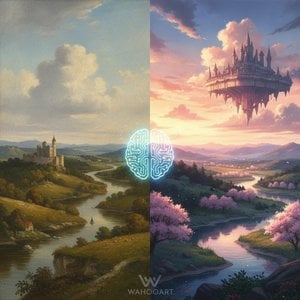
Transform your photos into high-octane action anime masterpieces with WahooArt. Our expert artists blend AI innovation with traditional oil painting to create premium, hand-painted pop culture legacies for your home. Experience museum-quality craftsmanship and a 100% satisfaction guarantee.

Step into the spotlight with WahooArt's AI-driven transformation. Turn your photos into stunning, hand-painted anime oil masterpieces. Experience the perfect fusion of cutting-edge technology and museum-grade craftsmanship to create a timeless pop-culture legacy for your home.

Explore the exquisite precision of Flemish painting. From Jan van Eyck to Robert Campin, discover the revolutionary oil techniques and rich symbolism that defined the Northern Renaissance and continue to inspire fine art collectors today.

Embark on a journey through the exquisite precision of Flemish Art. Discover the pioneering oil techniques, profound symbolism, and luminous realism that define the Northern Renaissance masters in this expert guide for art enthusiasts.

 Aperçu en situation
 Envoyer
 Partager
 Détails de l'œuvre

 Télécharger
 Articles similaires
 Radiographie
 Diaporama


 Lire la suite







 L'option verre n'est disponible que pour les dimensions inférieures à 110 cm.


