Aperçu en situation Aperçu en RA Acheter la peinture faite à la main Passer au format image numérique Partager
Détails Guide imprimable Ajouter aux favoris Télécharger Articles similaires Radiographie Voir le diaporama Statistiques

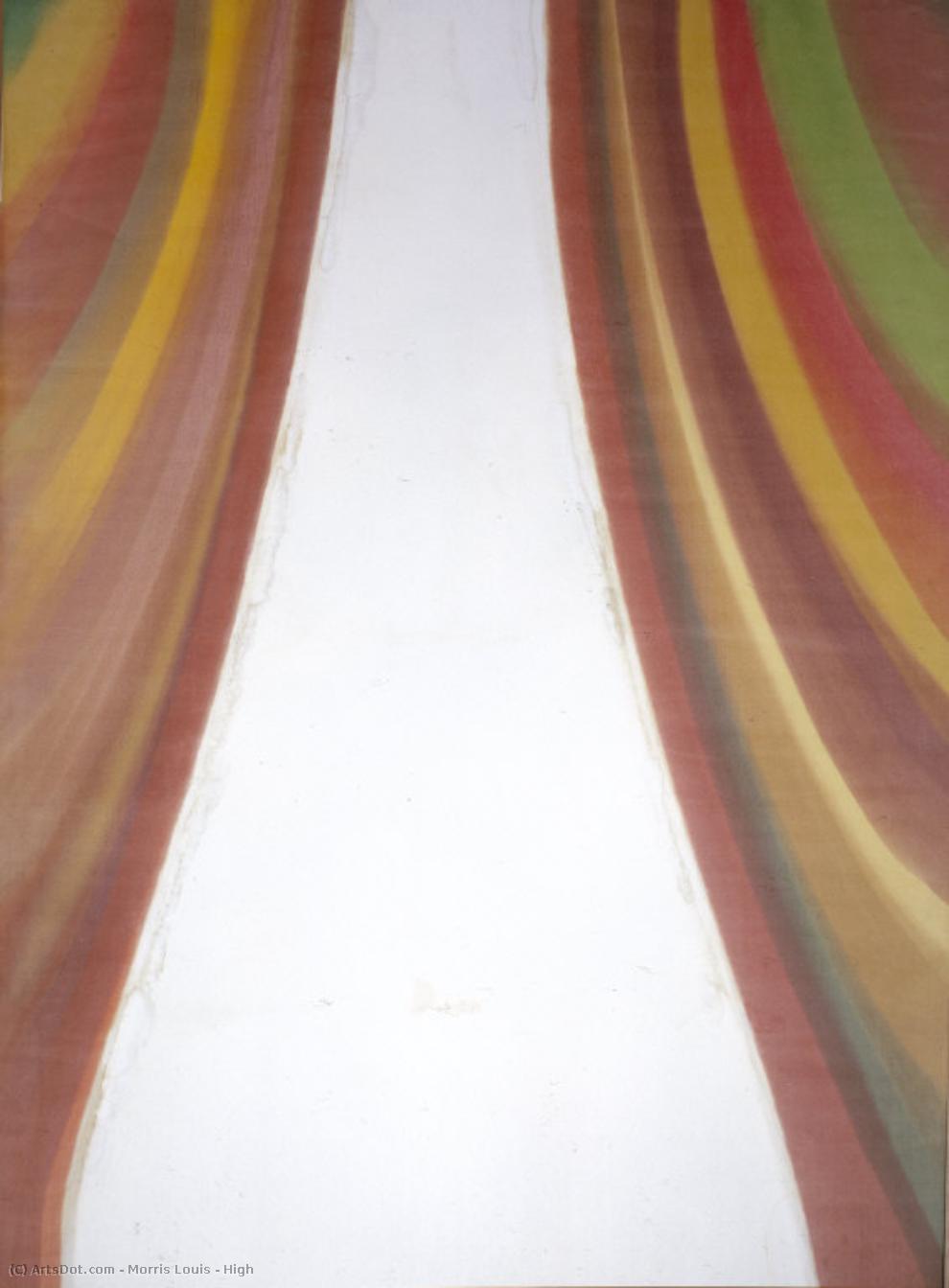
High

Own a stunning High by Morris Louis! This iconic 1959 Color Field painting offers vibrant hues & flowing lines. Hand-painted reproduction – elevate your art collection today.

Découvrez Morris Louis (1912-1962), pionnier du Color Field ! Ses véles de couleurs, ses innovations & son impact durable sur l'art abstrait.

L’œuvre d'art présentée sur cette page est protégée par le droit d'auteur, ce qui signifie que nous ne pouvons légalement créer ou vendre de reproduction identique. Cette protection est appliquée en vertu d'accords internationaux tels que la Convention de Berne et par les lois nationales, notamment celles énoncées par le Loi américaine sur le droit d'auteur - Titre 17.

Cette méthode est pleinement conforme aux réglementations sur le droit d'auteur car elle ne repose pas sur la copie ou la duplication de l'œuvre protégée. Il s'agit plutôt d'une réinterprétation créative — une nouvelle peinture qui s'inspire de l'original sans pour autant lui être identique.

Giclées et impressions d'art

Impressions giclées ou sur toile de qualité musée, avec une production rapide et des finitions au choix. ( Acheter la peinture faite à la main Passer au format image numérique)

Corner sample of the P118B picture frame: moulded polystyrene, 5 cm wide and 3 cm thick
P118B €10
Corner sample of the P118H picture frame: moulded polystyrene, 5 cm wide and 3 cm thick
P118H €10
Corner sample of the P118W picture frame: moulded polystyrene, 5 cm wide and 3 cm thick
P118W €10
Corner sample of the P438Z picture frame: moulded polystyrene, 5.5 cm wide and 3.5 cm thick
P438Z €10
Corner sample of the P508JH picture frame: moulded polystyrene, 7 cm wide and 3.5 cm thick
P508JH €12
Corner sample of the P508YH picture frame: moulded polystyrene, 7 cm wide and 3.5 cm thick
P508YH €12
Corner sample of the P805H picture frame: moulded polystyrene, 5 cm wide and 3.5 cm thick
P805H €10
Corner sample of the P805Z picture frame: moulded polystyrene, 5 cm wide and 3.5 cm thick
P805Z €10
Corner sample of the P919BZ picture frame: moulded polystyrene, 7 cm wide and 3.5 cm thick
P919BZ €10
Corner sample of the P919G picture frame: moulded polystyrene, 7 cm wide and 3.5 cm thick
P919G €10
Corner sample of the P919XJ picture frame: moulded polystyrene, 7 cm wide and 3.5 cm thick
P919XJ €10
Corner sample of the P959ZH picture frame: moulded polystyrene, 5 cm wide and 3 cm thick
P959ZH €10
Corner sample of the P968JZ picture frame: moulded polystyrene, 6 cm wide and 4 cm thick
P968JZ €12
Corner sample of the W106C picture frame: solid wood, 5 cm wide and 3 cm thick
W106C €8
Corner sample of the W218G picture frame: solid wood, 5 cm wide and 3 cm thick
W218G €10
Corner sample of the W218JH picture frame: solid wood, 5 cm wide and 3 cm thick
W218JH €8
Corner sample of the W218Y picture frame: solid wood, 5 cm wide and 3 cm thick
W218Y €10
Corner sample of the W307PJ picture frame: solid wood, 6 cm wide and 3 cm thick
W307PJ €10
Corner sample of the W316G picture frame: solid wood, 6 cm wide and 3 cm thick
W316G €10
Corner sample of the W316PJ picture frame: solid wood, 6 cm wide and 3 cm thick
W316PJ €8
Corner sample of the W316Y picture frame: solid wood, 6 cm wide and 3 cm thick
W316Y €10
Corner sample of the W398PJ picture frame: solid wood, 5 cm wide and 3 cm thick
W398PJ €8
Corner sample of the W4111J picture frame: solid wood, 6.5 cm wide and 3.5 cm thick
W4111J €10
Corner sample of the W500HY picture frame: solid wood, 7 cm wide and 5 cm thick
W500HY €15
Corner sample of the W500JH picture frame: solid wood, 7 cm wide and 5 cm thick
W500JH €15
Corner sample of the W692G picture frame: solid wood, 8 cm wide and 4 cm thick
W692G €12
Corner sample of the W849H picture frame: solid wood, 5 cm wide and 3 cm thick
W849H €8
Corner sample of the W940BG picture frame: solid wood, 7.5 cm wide and 4.5 cm thick
W940BG €15
Corner sample of the W953PJ picture frame: solid wood, 6 cm wide and 3.5 cm thick
W953PJ €8

Format standard
personnalisé
CM
INCH

Choisissez parmi nos formats prédéfinis qui respectent les proportions originales de l’œuvre.

largeur
hauteur

Vous pouvez saisir vos propres dimensions pour vous adapter à un cadre ou à un espace spécifique. Si la taille sélectionnée ne correspond pas aux proportions de l'image originale, nous recadrerons l'œuvre ou étendrons l'image avec une bordure en miroir ou une couleur unie. Une maquette numérique vous sera envoyée pour approbation avant le début de la production.
Veuillez noter que l'aperçu à l'écran ne reflète pas le recadrage ou l'extension réelle. Seule la maquette montrera avec précision la composition finale.
Bien que des tailles personnalisées soient disponibles, nous vous recommandons de choisir une dimension dans la liste prédéfinie afin de préserver les proportions originales.

Livraison dans le monde entier () en 2 semaines au lieu des 4/5 semaines habituelles. (10 octobre)

Livraison express gratuite dans le monde entier

Toile de lin de haute qualité
Assurance transport complète
Garantie de remboursement des droits de douane
Garantie de fidélité des couleurs
Garantie de retour de 100 jours (uniquement en cas de défaut)
Garantie de remboursement à 100%
Tarifs dégressifs sur quantité

Prix total

€ 59

High

Giclées et impressions d'art

Format de la reproduction

-

Prix total final

€ 59

L'essentiel de l'œuvre

  • Medium: Acrylic on canvas
  • Location: Dallas Museum of Art
  • Influences:
    • Cézanne
    • Speicher
  • Artistic style: Abstract Expressionism
  • Title: High
  • Notable elements: Staining technique
  • Artist: Morris Louis

Quiz d'art

Chaque question ne comporte qu'une seule bonne réponse.

Question 1:
What is the primary style of painting exemplified by ‘High’ by Morris Louis?
Question 2:
The white space in 'High' is most likely intended to:
Question 3:
What technique did Morris Louis primarily use to create his paintings, as described in the text?
Question 4:
In what year was ‘High’ created by Morris Louis?
Question 5:
Morris Louis's work is often associated with which broader artistic movement?

Morris Louis’s “High”: A Cascade of Color and Quiet Intensity

Morris Louis’s “High,” painted in 1959, isn't merely a canvas splashed with color; it’s an invitation to contemplate the very nature of perception and emotion. This pivotal work from the Washington Color School movement embodies Louis’s groundbreaking approach to Abstract Expressionism, moving beyond traditional brushstrokes and sculptural forms to create a dynamic field of layered hues that seem to both dissolve and intensify before your eyes. The painting immediately draws you in with its verticality – two distinct channels of white space act as anchors, framing washes of vibrant yellow, green, pink, and brown that bleed into one another with an almost liquid grace.

Louis’s technique was revolutionary for its time. He eschewed the conventional methods of painting, opting instead to pour diluted acrylic paint directly onto unprimed canvas. This “staining” process allowed the colors to permeate the fabric itself, creating a sense of depth and luminosity that is rarely achieved with traditional layering techniques. The resulting surface isn’t smooth or polished; it possesses a subtle texture – a testament to the way the pigment soaked into the raw linen, lending an organic quality to the composition. This deliberate roughness contrasts beautifully with the fluidity of the color fields, generating a captivating tension between solidity and transparency.

Decoding the Language of Color

The palette of “High” is deceptively simple yet profoundly rich. Louis wasn’t interested in creating representational images; instead, he sought to evoke feelings through pure color relationships. The yellows are not bright or assertive but rather muted, almost melancholic, while the greens possess a subtle depth and complexity. The pinks range from delicate blush tones to warmer, more saturated hues, contributing to an overall sense of harmony and movement. Importantly, Louis avoided sharp edges or defined shapes, allowing the colors to flow into one another seamlessly. This deliberate ambiguity invites viewers to project their own emotions and interpretations onto the canvas.

The central white space within “High” is particularly significant. It’s not merely a void but rather an active element—a pathway, a breath of air, or perhaps even a reflection of the viewer's own inner landscape. The surrounding colors seem to radiate outwards from this core, creating a sense of expansion and release. This interplay between color and space is central to Louis’s artistic vision, suggesting that art can be experienced not just as an object but as a dynamic process of perception.

A Reflection of the Era

“High” was created during a period of profound social and cultural change in America. The post-war era witnessed a growing interest in psychology, spirituality, and alternative ways of experiencing reality. Abstract Expressionism, with its emphasis on subjective experience and emotional expression, provided a powerful outlet for these emerging sensibilities. Louis’s Color Field paintings—characterized by their large scale and focus on color alone—were particularly attuned to this cultural shift, offering viewers a chance to engage in a meditative and deeply personal encounter with art.

The painting's creation coincided with Louis's discovery of Magna paint, a revolutionary acrylic medium developed for him by Leo Sebak. This new material allowed for unprecedented control over color saturation and transparency, enabling Louis to achieve the delicate layering and luminous effects that define his work. The use of Magna paint was crucial to his ability to create the fluid, staining textures that characterize “High” and other paintings from this period.

Beyond Representation: An Invitation to Feeling

Ultimately, "High" is a testament to Louis’s belief that color could speak directly to the soul. It's not about depicting a specific scene or object; it’s about conveying an emotional state—a sense of openness, release, and quiet intensity. The painting invites viewers to step into its world of pure color and experience art as a source of profound personal resonance. It remains a powerful example of how abstraction can transcend representation and tap directly into the human heart.

Questions et réponses

En quelle année «High» de Morris Louis a-t-il été créé ?

«High» date de 1959. Cette date inscrit l'œuvre dans la carrière de Morris Louis ainsi que dans son époque.

Qui a créé « High » et dans quel style s'inscrit cette œuvre ?

Morris Louis a créé « High » au sein du mouvement Color Field Painting.

Quel âge avait Morris Louis lors de la création de « High » en 1959 ?

Morris Louis avait 47 ans lors de la création de « High » en 1959. L'âge est calculé à partir de l'année de naissance de l'artiste, 1912.

Les couleurs de «High» de Morris Louis sont-elles saturées ou atténuées ?

«High» de Morris Louis est présenté avec une saturation de Subtle Color.

Quelle palette de couleurs utilise "High" ?

«High» de Morris Louis utilise une palette de couleurs Neutrals. Cette palette résume le caractère chromatique global de l'œuvre.

L'œuvre «High» de Morris Louis est-elle conservée dans le pays d'origine de l'artiste ?

Oui - l'œuvre est conservée dans le pays d'origine de l'artiste. L'artiste est né en États-Unis d'Amérique ; l'œuvre originale se trouve en États-Unis d'Amérique.

Qui est l'artiste derrière « High » ?

« High » est attribué à Morris Louis.


Biographie de l'artiste

Premières années et éducation

  • Né : Morris Louis Bernstein, le 28 novembre 1912, à Baltimore, Maryland
  • Parents : Louis Bernstein (vendeur de meubles) et Cecelia Luckman Bernstein.
  • Éducation : A fréquenté les écoles publiques de Baltimore ; Institut d'art et des arts appliqués du Maryland (aujourd’hui MICA), 1929-1932. N’a pas obtenu de diplôme.
  • Premières influences incluant Eugene Speicher et Paul Cézanne.
  • A montré un intérêt précoce pour l'art, encouragé par sa famille malgré les opportunités limitées à Baltimore.

Développement en tant qu’artiste et influences clés

  • Années 1930 : A travaillé à divers emplois occasionnels pour se soutenir tout en peignant (épluchage de légumes, blanchisserie, recherche Gallup Poll).
  • 1934-1936 : A participé au projet de fresque du Projet d'art public des travaux progressistes sous la direction de Sam Swerdloff.
  • 1936-1937 : Déménagé à New York ; a expérimenté des techniques à l’atelier de Siqueiros.
  • Découverte de la peinture Magna (1948) : Un moment décisif – Louis a été un pionnier dans l'utilisation de la peinture acrylique à base d'huile Magna, nouvellement développée pour lui par Leonard Bocour et Sam Golden. Cela a permis une plus grande fluidité et transparence dans son travail.
  • Influence de Helen Frankenthaler : En 1953, Louis et Kenneth Noland ont visité l’atelier de Frankenthaler et ont été profondément impressionnés par ses peintures à la technique du déversement (en particulier « Mountains and Sea »). Cela a inspiré leur expérimentation avec les techniques de versement et de teinture.

Les peintures Véles et innovations du champ de couleur

  • Peintures Véles matures (1954) : Caractérisées par des couches superposées, transparentes de couleurs versées et teintées dans une toile tendue ou non.
  • Technique : De la peinture extrêmement diluée était appliquée sur une toile non apprêtée, non tendue, permettant à celle-ci de s’écouler sur la surface inclinée, créant des voiles de couleur translucides. Cela éliminait les coups de pinceau et mettait l'accent sur la platitude.
  • Peinture du champ de couleur : Louis est devenu une figure centrale de la peinture du champ de couleur, simplifiant l’espace pictural et mettant l’accent sur les plans plats de couleurs intenses. Il faisait partie du mouvement de Washington Color School.
  • Séries et styles : Au-delà des peintures Véles, il a exploré des séries telles que les floraux, les colonnes (1960), les unfurleds (1960-61) – présentant des ruisseaux de couleurs opaques – et les peintures à rayures (1961-62).

Réalisations majeures et signification historique

  • Pionnier de la peinture du champ de couleur : Louis est reconnu comme un innovateur clé dans la peinture du champ de couleur, aux côtés d’artistes tels que Kenneth Noland et Helen Frankenthaler.
  • Influence sur l'expressionnisme abstrait : Son travail a élargi les frontières de l'expressionnisme abstrait en se concentrant sur la couleur et la platitude plutôt que sur le geste ou la composition.
  • Washington Color School : Un contributeur important à ce mouvement influent, qui mettait l’accent sur une approche réductrice de la peinture.
  • Destruction d'œuvres : Notamment, Louis a détruit de nombreuses de ses peintures entre 1955 et 1957, reflétant une auto-évaluation critique de son travail.
  • Héritage : Son insistance sur la couleur, la platitude et la matérialité de la peinture continue d’influencer les artistes contemporains.

Dernières années et décès

  • Louis a continué à peindre avec acharnement jusqu'à son décès.
  • Décès : Décédé le 7 septembre 1962, à Washington, D.C., à l’âge de 49 ans.
  • Exposition commémorative (1963) : Une exposition importante a été organisée au Solomon R. Guggenheim Museum peu après sa mort.
  • Expositions rétrospectives : De grandes rétrospectives ont suivi au Museum of Fine Arts, Boston (1967), et à la National Gallery of Art, Washington, D.C. (1976).
Morris Louis

Morris Louis

1912 - 1962 , États-Unis d'Amérique

En bref

  • Artistes Influents:
    • Helen Frankenthaler
    • Cézanne
  • Date De Décès: 7 septembre 1962
  • Date De Naissance: 28 novembre 1912
  • Influences Artistiques:
    • Kenneth Noland
    • Washington Color School
  • Lieu De Naissance: Baltimore, États-Unis
  • Mouvement Artistique: Color Field painting
  • Nationalité: Américain
  • Nom Complet: Morris Louis Bernstein
  • Oeuvres Notables:
    • High
    • Number 1-36
    • Where
    • Number 1-68
    • Gamma Tau
Explorez des œuvres d'art classées par thèmes, styles et caractéristiques.