CONSEIL EN ART GRATUIT

x
Commander l'impression Commander l'impressionAcheter l'image haute résolution Acheter l'image haute résolution PartagerPartager
Détails de l'œuvreDétails de l'œuvre Ajouter aux favoris Ajouter aux favoris TéléchargerTélécharger Articles similairesArticles similaires RadiographieRadiographie DiaporamaDiaporama

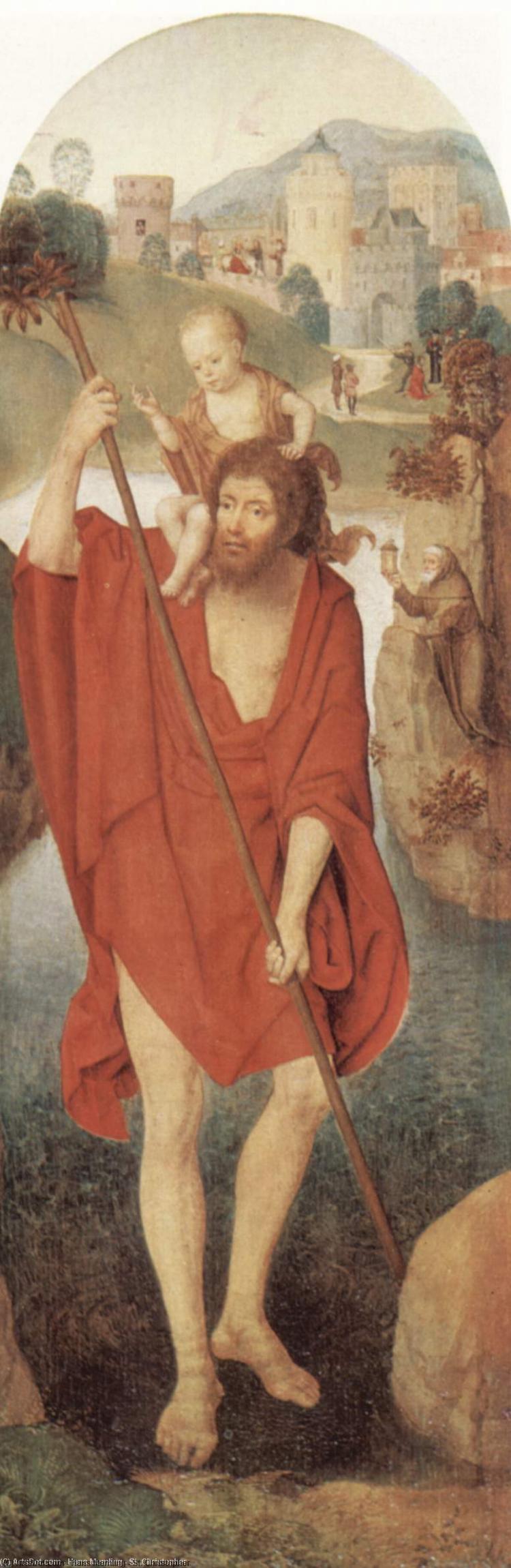
St. Christopher

A striking portrait of St. Christopher carrying children through a detailed landscape by Early Netherlandish master Hans Memling, offering a profound glimpse into 15th-century devotion for your private collection.

Découvrez les œuvres magnifiques de Hans Memling ! Maître flamand du XVe siècle, admiré pour sa précision et son esthétique raffinée au musée Memling à Bruges.

Reproduction à l'huile faite à la main

Huile sur toile peinte à la main, avec cadre et dimensions personnalisés, réalisée sur commande par nos artistes.

P118B $10
P118H $10
P118W $10
P438Z $10
P508JH $12
P508YH $12
P805H $10
P805Z $10
P919BZ $10
P919G $10
P919XJ $10
P959ZH $10
P968JZ $12
W106C $8
W218G $10
W218JH $8
W218Y $10
W307PJ $10
W316G $10
W316PJ $8
W316Y $10
W398PJ $8
W4111J $10
W500HY $15
W500JH $15
W692G $12
W849H $8
W940BG $15
W953PJ $8

Standard
custom
CM
INCH

Choisissez parmi nos formats prédéfinis qui respectent les proportions originales de l’œuvre.

largeur
hauteur

Vous pouvez saisir vos propres dimensions pour l'adapter à un cadre ou à un espace spécifique. Si la taille sélectionnée ne correspond pas aux proportions de l'image d'origine, nous recadrerons l'œuvre ou prolongerons la peinture avec des éléments peints à la main supplémentaires. Une maquette numérique vous sera envoyée pour approbation avant le début de la production.
Veuillez noter que l'aperçu à l'écran ne reflète pas le recadrage ou l'extension réels. Seule la maquette montrera fidèlement la composition finale.
Bien que des tailles personnalisées soient disponibles, nous vous recommandons de sélectionner une dimension dans la liste prédéfinie afin de préserver les proportions d'origine.

Exemples de personnalisation : remplacer un visage par la photo du client ; ajouter un animal de compagnie (par exemple, remplacer un chat par un chien) ; inclure un message caché en arrière-plan ; modifier le paysage ou les éléments de l'arrière-plan.
Après la commande, l’équipe WahooArt.com contactera le client par e-mail pour obtenir ses instructions et lui fournira une maquette d’aperçu.

Livraison dans le monde entier () en 3 à 4 semaines au lieu des 5 semaines habituelles. (23 juillet). Aucune concession sur la qualité.

why_choose_icon
Livraison express gratuite dans le monde entier

why_choose_icon
Toile de lin de haute qualité
why_choose_icon
Assurance transport complète
why_choose_icon
Garantie de remboursement des frais de douane
why_choose_icon
Garantie de fidélité des couleurs
why_choose_icon
Politique de retour de 60 jours (uniquement en cas de défaut)
why_choose_icon
Garantie de remboursement à 100%
why_choose_icon
Réduction sur les achats groupés

Prix total

-

reproduction

St. Christopher

Technique de reproduction

Format de reproduction

-

Prix total final

-

En bref

  • Notable elements: Two children, staff, birds, intricate detail
  • Subject or theme: Religious portrait of St. Christopher
  • Title: St. Christopher
  • Dimensions: 48 x 17 cm
  • Year: 1480
  • Artistic style: Flemish Primitive realism

Description de l'œuvre

A Vision of Devotion: Hans Memling’s St. Christopher

In the quiet, luminous realm of Early Netherlandish painting, few figures command the screen with as much gentle strength as the St. Christopher rendered by the master Hans Memling. This exquisite work, dating back to approximately 1480, serves as a profound window into the spiritual and artistic zenith of Bruges. The composition centers on the monumental figure of the saint, draped in vibrant red clothing that pulses with life against the intricate backdrop of his surroundings. As he carries the weight of two children upon his shoulders, Memling captures not just a physical feat of endurance, but a moment of divine encounter. The saint’s steady gaze and the careful placement of his staff suggest a narrative of protection and pilgrimage, inviting the viewer to contemplate the heavy burdens we carry and the grace that sustains us.

The technical mastery displayed in this piece is a testament to Memling's lineage under the great Rogier van der Weyden. Every brushstroke serves the purpose of meticulous realism, a hallmark of the Flemish Primitive style. The artist employs a delicate layering of oil glazes to achieve a depth of color and a soft, skin-like luminosity that makes the figures appear almost tactile. Beyond the central protagonists, the scene is alive with subtle movement; secondary figures emerge from the periphery, while the inclusion of birds—one perched near the upper corner and another nestled toward the bottom—adds a layer of naturalistic detail that connects the sacred event to the earthly world. This attention to minute detail creates an immersive atmosphere where every element, no matter how small, contributes to the overarching sense of cosmic order.

For the discerning collector or interior designer, this reproduction offers more than mere decoration; it provides a focal point of historical gravity and emotional resonance. The painting’s intimate scale—measuring 48 x 17 cm in its original form—suggests a piece designed for close, personal contemplation, making it an ideal addition to a curated gallery wall or a sophisticated study. The rich palette of crimson and earth tones, balanced by the soft light characteristic of the 15th-century Burgundian style, allows the artwork to integrate seamlessly into both classical and contemporary settings. Owning a piece that evokes the craftsmanship of the Bruges Master is an opportunity to bring the timeless elegance of the Northern Renaissance into the modern home, fostering an environment of reflection, beauty, and enduring tradition.


Biographie de l'artiste

Hans Memling: The Bruges Master of Detail and Patronage

Hans Memling (c. 1430 – August 11, 1494), born in Seligenstadt, Germany, stands as a pivotal figure in Early Netherlandish painting—a movement characterized by exquisite realism, meticulous observation of nature, and profound spiritual contemplation. Though his formative years were spent primarily within the Rhineland’s artistic milieu, Memling's trajectory ultimately led him to Bruges, Belgium, where he established himself as one of the foremost artists of his time and cultivated a prolific workshop that disseminated his distinctive style across Europe. Early Life & Apprenticeship: Precise biographical details surrounding Memling’s birth remain elusive, yet scholarly consensus suggests he emerged from Mainz around 1430. His artistic education commenced under the tutelage of Rogier van der Weyden, a titan of Flemish painting whose mastery of oil paint and sculptural modeling profoundly shaped Memling's technique. This apprenticeship instilled in him an unwavering dedication to detail—a hallmark that would define his oeuvre. Van der Weyden’s influence is palpable in Memling’s early works, particularly the use of luminous color palettes and the careful rendering of drapery folds—elements that underscore the importance of observation and technical virtuosity in achieving artistic excellence. Bruges & The Workshop: By 1465, Memling secured citizenship in Bruges, a burgeoning commercial hub and artistic epicenter. Recognizing the potential for collaborative creativity, he founded a workshop staffed by numerous assistants, fostering an environment of innovation and stylistic consistency. This workshop became renowned for producing stunning reproductions of masterpieces—a testament to Memling’s skill as both artist and pedagogue. The workshop's success stemmed from its ability to attract wealthy patrons eager to adorn their homes with exquisite artworks—further propelling Memling’s reputation and establishing Bruges as a beacon of artistic achievement during the Renaissance. A Style Defined by Precision & Patronage: Memling’s artistic style is instantly recognizable: characterized by luminous color palettes, delicately rendered drapery folds, and an astonishing level of anatomical accuracy. He meticulously studied human anatomy—drawing inspiration from classical sculpture—to achieve unparalleled realism in his portraits and religious scenes alike. Unlike many contemporaries who favored expressive brushstrokes, Memling prioritized meticulous observation and painstaking execution, resulting in images imbued with serene beauty and profound spiritual depth. His approach mirrored the humanist ideals prevalent during the Renaissance, reflecting a belief in the power of reason and empirical knowledge to illuminate the human condition. Religious Commissions & Portraiture: Memling’s reputation soared thanks to lucrative commissions from wealthy patrons—primarily clergymen and aristocratic families—who sought depictions of saints and biblical narratives that resonated with piety and prestige. Notable examples include “The Last Judgment” at St John's Hospital in Bruges, a monumental fresco showcasing Memling’s masterful compositional skills and dramatic use of color. This ambitious undertaking exemplifies Memling’s ability to convey complex theological concepts through visual imagery—a testament to his artistic vision and intellectual curiosity. Simultaneously, Memling excelled as a portraitist, capturing the likenesses of prominent figures with remarkable sensitivity and psychological insight. His portraits—such as “Portrait of a Man with an Arrow”—demonstrate his skill in conveying character through subtle gestures and facial expressions—a technique that cemented his place among the greatest artists of his era. Influence & Legacy: Memling’s artistic legacy extends far beyond his own lifetime. His workshop produced a vast array of paintings—many bearing stylistic similarities to his original works—that propagated Memling's distinctive aesthetic across Flanders and beyond. Furthermore, Memling’s meticulous technique served as an inspiration for subsequent generations of artists—particularly Quentin Massys, who established the Antwerp School—solidifying Memling’s position as a cornerstone of Flemish Renaissance art. His enduring influence can be seen in the continued fascination with his works and the ongoing appreciation for his contribution to artistic history. Memling remains a symbol of artistic excellence and unwavering dedication to craft—a testament to the transformative power of observation, intellect, and artistic virtuosity.
Hans Memling

Hans Memling

Allemagne

En bref

  • Artistic Movement Or Style: Peinture flamande précoce
  • Artists Or Movements Influenced By This Artist: ["École d'Anvers"]
  • Artists Who Influenced This Artist: ['Rogier van der Weyden']
  • Date Of Birth: c. 1430
  • Date Of Death: August 11, 1494
  • Full Name: Hans Memling
  • Nationality: Allemand-Flamand
  • Notable Artworks:
    • Saint Jean Autel
    • Les Jugements Derniers
    • Scènes de la Passion
  • Place Of Birth: Seligenstadt, Germany
Explorez des œuvres d'art classées par thèmes, styles et caractéristiques.