CONSEIL EN ART GRATUIT

x
Commander la reproduction Commander la reproductionAcheter l'image haute résolution Acheter l'image haute résolution PartagerPartager
DétailsDétails Ajouter aux favoris Ajouter aux favoris TéléchargerTélécharger Articles similairesArticles similaires RadiographieRadiographie DiaporamaDiaporama

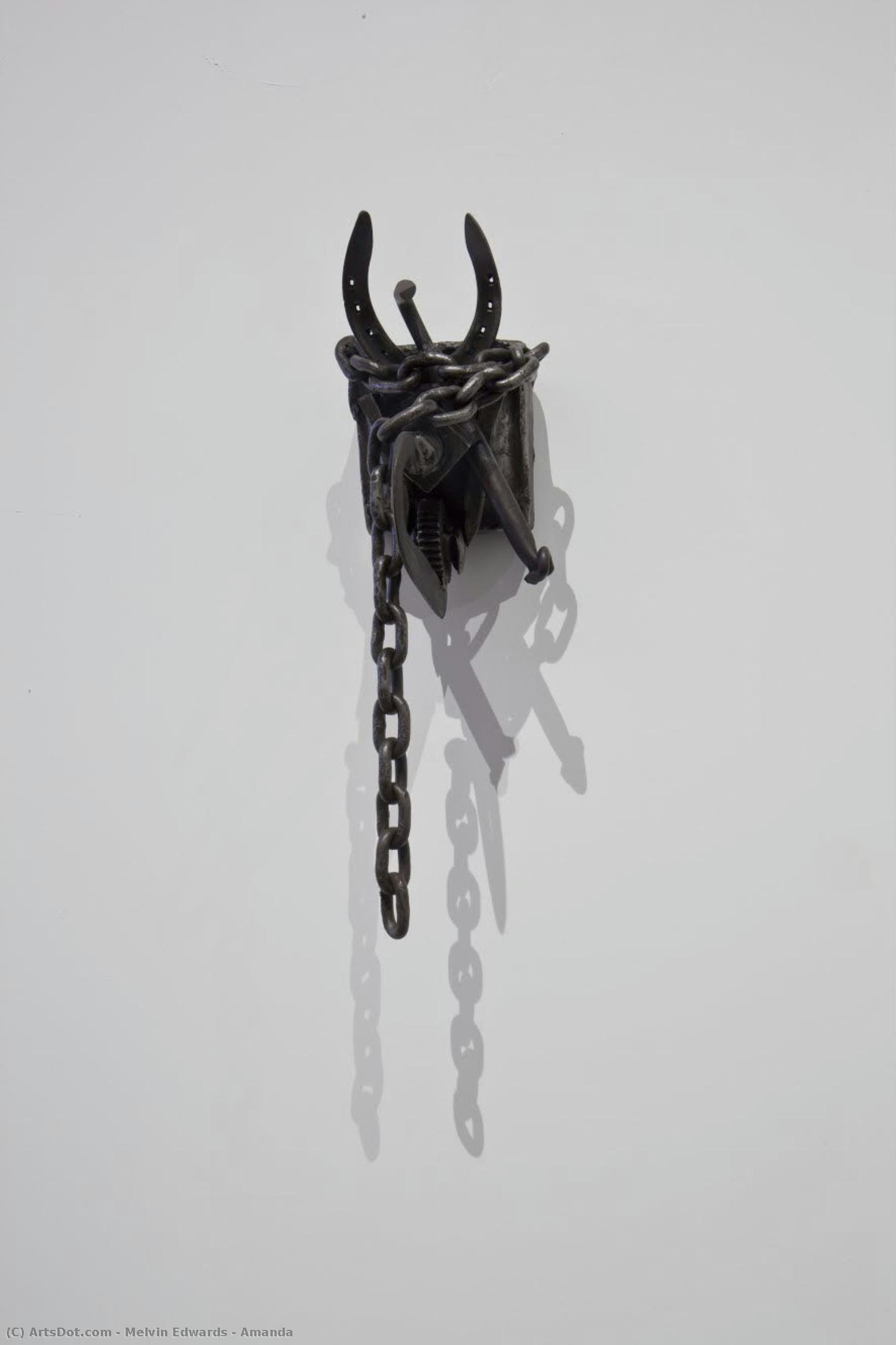
Amanda

A powerful abstract steel relief by Melvin Edwards captures themes of resilience through fragmented forms and industrial textures, offering a profound piece for collectors to explore the depths of contemporary sculpture.

Explorez les sculptures abstraites innovantes de Melvin Edwards ! Reconnu pour ses œuvres emblématiques comme 'Lynch Fragments', explorant l'histoire afro-américaine et les thèmes politiques. Une voix essentielle dans l'art contemporain.

Giclée / Impression d'art

Impression giclée ou sur toile de qualité musée, avec une production rapide et des finitions au choix.

Standard
custom
CM
INCH

Choisissez parmi nos formats prédéfinis qui respectent les proportions originales de l’œuvre.

largeur
hauteur

Vous pouvez saisir vos propres dimensions pour vous adapter à un cadre ou à un espace spécifique. Si la taille sélectionnée ne correspond pas aux proportions de l'image originale, nous recadrerons l'œuvre ou étendrons l'image avec une bordure en miroir ou une couleur unie. Une maquette numérique vous sera envoyée pour approbation avant le début de la production.
Veuillez noter que l'aperçu à l'écran ne reflète pas le recadrage ou l'extension réelle. Seule la maquette montrera avec précision la composition finale.
Bien que des tailles personnalisées soient disponibles, nous vous recommandons de choisir une dimension dans la liste prédéfinie afin de préserver les proportions originales.

Livraison dans le monde entier () en 2 semaines au lieu des 4/5 semaines habituelles. (2 juillet)

why_choose_icon
Livraison express gratuite dans le monde entier

why_choose_icon
Toile de lin de haute qualité
why_choose_icon
Assurance transport complète
why_choose_icon
Garantie de remboursement des frais de douane
why_choose_icon
Garantie de fidélité des couleurs
why_choose_icon
Politique de retour de 60 jours (uniquement en cas de défaut)
why_choose_icon
Garantie de remboursement à 100%
why_choose_icon
Réduction sur les achats groupés

Prix total

-

reproduction

Amanda

Giclée / Impression d'art

Format de reproduction

-

Prix total final

-

En bref

  • Year: 1981
  • Location: Stephen Friedman Gallery
  • Movement: Abstract Expressionism
  • Medium: Welded Steel
  • Subject or theme: African American History
  • Artistic style: Formal Simplicity
  • Title: Amanda

Quiz d'art

Chaque question ne comporte qu'une seule bonne réponse.

Question 1:
What is Melvin Edwards known for?
Question 2:
What material is 'Amanda' primarily constructed from?
Question 3:
Which artistic movement does Melvin Edwards’ work exemplify?
Question 4:
What is a prominent theme explored in Edwards' sculptures, reflecting his interest in social justice?
Question 5:
Edwards taught at several prestigious art programs. Where was he primarily based during his teaching career?

Description de l'œuvre

Melvin Edwards: Sculpting Memory and Resilience

Melvin Edwards (born May 4, 1937) stands as a pivotal figure in contemporary American sculpture, recognized for his distinctive approach to abstraction and his unwavering engagement with themes of African-American history and the legacy of slavery. He is celebrated not merely for his mastery of form but also for his profound ability to imbue his work with emotional resonance—a testament to his understanding that art possesses the power to confront difficult truths and inspire contemplation about human experience. Raised amidst the segregated landscapes of Texas and later embraced by an integrated community in Ohio, Edwards’ formative experiences instilled within him a deep empathy for marginalized voices and fueled his artistic explorations toward confronting injustice. He relocated to California in 1955, initiating his professional art career during his undergraduate studies at UCLA, where he honed foundational skills in painting before transitioning to sculpture and welding techniques in the early 1960s. This decisive shift cemented his commitment to materiality as a conduit for conveying complex narratives—a strategy that would define his artistic trajectory throughout his illustrious career. Edwards’ sculptural journey culminated in a move to New York City in 1967, establishing himself within the vibrant crucible of postwar American art and forging connections with fellow innovators who challenged conventional aesthetic boundaries. His early explorations centered on welding steel, responding to the raw physicality of industrial materials and mirroring the ruggedness he perceived as emblematic of the African American struggle for dignity and equality. These initial works—often characterized by angular forms and asymmetrical compositions—served as a springboard for his subsequent investigations into more expansive conceptual frameworks. The resulting sculptures are not simply objects; they are embodiments of memory, grappling with historical trauma while simultaneously asserting resilience—a duality that underscores Edwards’ artistic vision. The centerpiece of Edwards' oeuvre is undoubtedly the series “Lynch Fragments,” begun in 1963 and continuing to evolve throughout his lifetime. These small, meticulously crafted steel assemblages—often referred to as “spike sculptures”—represent a radical departure from traditional sculptural conventions. Each piece consists of welded metal objects—spikes, scissors, chains, and fragments of industrial scrap—arranged into wall reliefs that defy easy categorization. Edwards himself described these works as metaphors for the experiences of African Americans confronting violence and oppression, referencing the lynching trials of Emmett Till and other pivotal moments in Black history. The deliberate fragmentation of form mirrors the fractured realities faced by individuals navigating systemic discrimination, while the incorporation of industrial materials speaks to the enduring influence of labor—particularly Black labor—within American society. Beyond their symbolic significance, Edwards’ sculptures possess a remarkable aesthetic quality rooted in formal simplicity and uncompromising materiality. He eschews elaborate ornamentation or decorative embellishments, prioritizing instead the inherent qualities of steel—its texture, its weight, its capacity for conveying both strength and vulnerability. The welding process itself is integral to the sculpture's expressive power, transforming raw metal into contorted shapes that appear to have been molded by forces beyond human control. This technique imbues each piece with a palpable sense of dynamism—a suggestion of movement and transformation—reflecting Edwards’ belief that art should engage viewers on an emotional level. The resulting sculptures are striking yet unpretentious, inviting contemplation about the relationship between form and content, materiality and meaning. Edwards' influence extends beyond his own artistic output; he has served as a mentor to generations of aspiring sculptors, fostering a tradition of experimentation and intellectual rigor within American art education. His unwavering dedication to exploring themes of social justice—coupled with his masterful command of sculptural technique—solidifies his position as one of the most important artists of our time. He continues to create monumental outdoor sculptures that engage audiences on a grand scale, furthering his commitment to using art as a tool for dialogue and reflection.

Œuvres apparentées


Biographie de l'artiste

Melvin Edwards: Sculpting Memory and Resilience

Melvin Edwards (born May 4, 1937) stands as a monumental figure in contemporary American sculpture, recognized for his singular artistic vision—a fusion of abstraction and unwavering dedication to exploring the profound narratives embedded within African-American history and the indelible mark left by slavery. His upbringing amidst the stark realities of segregated Texas instilled within him an acute awareness of social justice, shaping his artistic trajectory and propelling him toward explorations that transcend mere visual representation. Embracing a more inclusive environment in Ohio solidified these formative experiences, fostering a deep empathy for marginalized communities—a sentiment that would permeate his entire creative output. He embarked on his artistic journey in 1955 with enrollment at UCLA, where he diligently cultivated foundational skills in painting before decisively pivoting to sculpture and welding techniques during the early 1960s. This pivotal decision wasn’t simply a stylistic preference; it represented a fundamental commitment to materiality—to steel, metal, and assemblage—as instruments for conveying complex emotional and intellectual dimensions. Edwards understood that form itself could communicate narratives of trauma, resilience, and resistance, mirroring the experiences of African Americans throughout history. Edwards' artistic breakthrough arrived in 1967 with his groundbreaking creation of ‘Lynch Fragments,’ a series of diminutive yet powerfully evocative steel assemblage sculptures. These reliefs—composed of meticulously welded metal objects like spikes, scissors, chains, and other unassuming components—immediately garnered critical acclaim and captivated collectors worldwide. The sculptures’ geometric precision and deliberate asymmetry served as a direct response to the fractured realities faced by African Americans during the Civil Rights Movement, reflecting the scars of oppression while simultaneously proclaiming an unwavering spirit of defiance. Each piece embodies Edwards' belief that art possesses the capacity to confront uncomfortable truths and inspire transformative change. His artistic sensibilities were profoundly influenced by luminaries such as Piet Mondrian—whose reductive abstraction championed clarity and geometric harmony—and Marcel Duchamp—who challenged conventional sculptural norms through conceptual interventions. These figures encouraged Edwards to question established artistic conventions, prompting him to embrace experimentation and explore new avenues of expression. Furthermore, he drew inspiration from the rich tapestry of African American art history, referencing artists like Jacob Lawrence and Romare Bearden as sources of intellectual stimulation and aesthetic guidance. Their work underscored the importance of confronting social injustices head-on—a principle that resonated deeply within Edwards’ artistic ethos. Edwards' prolific career has yielded over forty solo exhibitions at internationally recognized museums, including the Whitney Museum of American Art in New York City, LACMA in Los Angeles, and NJ State Museum in Trenton. These presentations showcased his remarkable sculptural oeuvre to a global audience, establishing him as one of America’s foremost sculptors of our time. His enduring legacy rests not only on his artistic achievements but also on his unwavering commitment to fostering dialogue within the art world—a testament to the transformative power of art as a vehicle for social commentary and personal reflection.
Melvin Edwards

Melvin Edwards

1937 - , États-Unis

En bref

  • Artistic Movement Or Style: Sculpture abstraite
  • Artists Or Movements Influenced By This Artist:
    • Piet Mondrian
    • Marcel Duchamp
  • Date Of Birth: 4 mai 1937
  • Full Name: Melvin Edwards
  • Nationality: Américain
  • Notable Artworks:
    • Lynch Fragments
    • Pensée travaillée
  • Place Of Birth: Houston, États-Unis
Explorez des œuvres d'art classées par thèmes, styles et caractéristiques.