Aperçu en situation Visualiser en RA Commander la reproduction peinte à la main Passer au format numérique Envoyer
Détails de l'œuvre Guide Ajouter aux favoris Télécharger l'image Articles similaires Radiographie Diaporama Questions et réponses Télécharger la présentation Statistiques

Turk Playing a Harp

Dimensions
245.0 x 163.0 cm

Explore Melchior Lorck’s ‘Turk Playing a Harp’ (1576). A stunning Mannerist engraving showcasing intricate detail, dramatic foreshortening & Eastern influence. Discover Renaissance art.

Melchior Lorck (1526/27-1583) : Peintre & graveur de la Renaissance, célèbre pour son témoignage visuel unique sur la vie ottomane au XVIe siècle. Artiste danois pionnier !

Giclées et impressions d'art

Impressions giclées ou sur toile de qualité musée, avec une production rapide et des finitions au choix. ( Commander la reproduction peinte à la main Passer au format numérique)

Corner sample of the P118B picture frame: polystyrène moulé, 5 cm wide and 3 cm thick
P118B €10
Corner sample of the P118H picture frame: polystyrène moulé, 5 cm wide and 3 cm thick
P118H €10
Corner sample of the P118W picture frame: polystyrène moulé, 5 cm wide and 3 cm thick
P118W €10
Corner sample of the P438Z picture frame: polystyrène moulé, 5.5 cm wide and 3.5 cm thick
P438Z €10
Corner sample of the P508JH picture frame: polystyrène moulé, 7 cm wide and 3.5 cm thick
P508JH €12
Corner sample of the P508YH picture frame: polystyrène moulé, 7 cm wide and 3.5 cm thick
P508YH €12
Corner sample of the P805H picture frame: polystyrène moulé, 5 cm wide and 3.5 cm thick
P805H €10
Corner sample of the P805Z picture frame: polystyrène moulé, 5 cm wide and 3.5 cm thick
P805Z €10
Corner sample of the P919BZ picture frame: polystyrène moulé, 7 cm wide and 3.5 cm thick
P919BZ €10
Corner sample of the P919G picture frame: polystyrène moulé, 7 cm wide and 3.5 cm thick
P919G €10
Corner sample of the P919XJ picture frame: polystyrène moulé, 7 cm wide and 3.5 cm thick
P919XJ €10
Corner sample of the P959ZH picture frame: polystyrène moulé, 5 cm wide and 3 cm thick
P959ZH €10
Corner sample of the P968JZ picture frame: polystyrène moulé, 6 cm wide and 4 cm thick
P968JZ €12
Corner sample of the W106C picture frame: bois massif, 5 cm wide and 3 cm thick
W106C €8
Corner sample of the W218G picture frame: bois massif, 5 cm wide and 3 cm thick
W218G €10
Corner sample of the W218JH picture frame: bois massif, 5 cm wide and 3 cm thick
W218JH €8
Corner sample of the W218Y picture frame: bois massif, 5 cm wide and 3 cm thick
W218Y €10
Corner sample of the W307PJ picture frame: bois massif, 6 cm wide and 3 cm thick
W307PJ €10
Corner sample of the W316G picture frame: bois massif, 6 cm wide and 3 cm thick
W316G €10
Corner sample of the W316PJ picture frame: bois massif, 6 cm wide and 3 cm thick
W316PJ €8
Corner sample of the W316Y picture frame: bois massif, 6 cm wide and 3 cm thick
W316Y €10
Corner sample of the W398PJ picture frame: bois massif, 5 cm wide and 3 cm thick
W398PJ €8
Corner sample of the W4111J picture frame: bois massif, 6.5 cm wide and 3.5 cm thick
W4111J €10
Corner sample of the W500HY picture frame: bois massif, 7 cm wide and 5 cm thick
W500HY €15
Corner sample of the W500JH picture frame: bois massif, 7 cm wide and 5 cm thick
W500JH €15
Corner sample of the W692G picture frame: bois massif, 8 cm wide and 4 cm thick
W692G €12
Corner sample of the W849H picture frame: bois massif, 5 cm wide and 3 cm thick
W849H €8
Corner sample of the W940BG picture frame: bois massif, 7.5 cm wide and 4.5 cm thick
W940BG €15
Corner sample of the W953PJ picture frame: bois massif, 6 cm wide and 3.5 cm thick
W953PJ €8

Format standard
sur mesure
CM
INCH

Choisissez parmi nos formats prédéfinis qui respectent les proportions originales de l’œuvre.

largeur
hauteur

Saisissez la largeur et la hauteur souhaitées pour qu'elles s'adaptent à votre cadre ou à votre mur. Une impression peut être recadrée, mais jamais agrandie au-delà de l'image originale ; ainsi, un format de forme différente entraînera la perte d'une partie de l'image. Nous vous envoyons une maquette numérique pour approbation avant toute impression. L'image présentée sur cette page ne montre pas le recadrage réel — seule la maquette le permet.

Livraison dans le monde entier () en 2 semaines au lieu des 4/5 semaines habituelles. (8 novembre)

Livraison express gratuite dans le monde entier
Toile de lin de qualité supérieure
Assurance transport complète
Garantie de remboursement des droits de douane
Garantie de fidélité des couleurs
Politique de retour de 100 jours (uniquement en cas de défaut)
Garantie de remboursement à 100%
Offre de tarifs dégressifs

Prix total

€ 62

Turk Playing a Harp

Giclées et impressions d'art

Format de la reproduction

-

Prix total

€ 62

Informations clés

  • Artist: Melchior Lorck
  • Influences:
    • Heinrich Aldegrever
    • Albrecht Dürer
  • Artistic style: Dramatic
  • Subject or theme: Music
  • Medium: Engraving
  • Movement: Mannerism

Quiz d'art

Chaque question ne comporte qu'une seule bonne réponse.

Question 1:
What artistic style is predominantly evident in Melchior Lorck’s ‘Turk Playing a Harp’?
Question 2:
The engraving utilizes a technique known for creating tonal variations and depth. What is this technique?
Question 3:
What symbolic significance does the harp hold within the artwork?
Question 4:
Lorck’s journey to Constantinople was part of an embassy aimed at furthering diplomatic relations between Denmark and the Ottoman Empire. What was a primary goal of this mission?
Question 5:
Lorck’s engravings are notable for their meticulous detail. Which artistic medium is particularly suited to achieving this level of realism?

A Window into Ottoman Splendor: Melchior Lorck’s ‘Turk Playing a Harp’

Melchior Lorck's “Turk Playing a Harp” (1576) stands as an exceptional testament to Renaissance artistic innovation intertwined with the burgeoning fascination for the Ottoman Empire. More than just a depiction of musical performance, this Mannerist engraving offers a meticulously crafted visual narrative that captures the spirit of its time—a period marked by diplomatic missions and scholarly exploration into distant cultures. Produced during Lorck’s formative years as a Danish artist venturing beyond Northern Europe, it exemplifies his mastery of printmaking technique and his unwavering commitment to capturing detail with remarkable accuracy.

Style and Technique: Mannerist Drama

Lorck's stylistic choices firmly situate “Turk Playing a Harp” within the Mannerist movement—a reaction against the idealized beauty of High Renaissance art. Characterized by elongated figures, exaggerated poses, and dramatic foreshortening, the engraving prioritizes expressive gesture over anatomical precision. The artist employs a masterful use of hatching and crosshatching to achieve tonal variations that imbue the image with depth and luminosity despite its monochrome palette. These techniques skillfully convey texture—the velvety drape of the curtain, the intricate surface of the harp’s ornamentation, and the polished sheen of the vase—creating an illusion of realism that transcends the limitations of engraving. The artist's meticulous attention to perspective subtly enhances the dramatic impact of the scene.

Historical Context: Embassies and Eastern Observation

The engraving emerged from a pivotal moment in European history: the Imperial embassy led by Ogier Gheselin Busbecq to Constantinople (modern Istanbul) under Sultan Suleiman the Magnificent. This diplomatic expedition aimed to foster relations between Christendom and Islam, yet it also fueled an unprecedented influx of knowledge about Ottoman culture and customs into Europe. Lorck’s artistic endeavors were profoundly influenced by this context; he sought to document the grandeur and complexity of the Ottoman court with unflinching realism. The harp itself serves as a potent symbol—representing music, artistry, and perhaps a longing for exotic lands—reflecting the broader intellectual currents of the era.

Symbolism: Harmony and Contemplation

Beyond its technical brilliance and historical significance, “Turk Playing a Harp” resonates with deeper symbolic meanings. The solitary figure of the Turk embodies contemplation and dedication to his craft, mirroring the humanist ideals prevalent during Lorck’s time. The harp's intricate design speaks to the pursuit of beauty and artistic excellence—a core concern of Mannerist artists who rejected simplistic representations in favor of emotionally charged compositions. Furthermore, the dark curtain serves as a visual barrier, emphasizing the subject’s isolation and inviting viewers to contemplate the profound stillness of the scene.

Emotional Impact: A Moment Frozen in Time

Lorck's engraving transcends mere representation; it evokes a palpable sense of solemnity and wonder. The artist skillfully captures the psychological state of his subject—a man absorbed in his musical performance—creating an image that invites viewers to pause and consider the beauty of artistic expression amidst the grandeur of Ottoman culture. “Turk Playing a Harp” remains a captivating masterpiece, offering a glimpse into a bygone era and demonstrating Lorck’s unparalleled ability to translate observation into enduring visual art.

Questions et réponses

Un téléchargement en haute résolution de « Turk Playing a Harp » est-il disponible ?

« Turk Playing a Harp » est disponible en tant que téléchargement d'une image numérique haute résolution, à acheter directement sur sa page Image numérique haute résolution.

Quand et avec quels matériaux Turk Playing a Harp a-t-il été réalisé ?

«Turk Playing a Harp» a été réalisé en 1576, en Acrylic On Canvas.

Qui a créé « Turk Playing a Harp » et dans quel style s'inscrit cette œuvre ?

Melchior Lorck a créé « Turk Playing a Harp » au sein du mouvement Mannerism.


Biographie de l'artiste

Melchior Lorck : Une Vie Entre Art de la Renaissance et Rencontres avec l'Empire Ottoman

  • Né: Flensburg, Allemagne (1526/27)
  • Décédé: Copenhague, Danemark (1583)
  • Nationalité: Dano-Allemand
  • Connu pour: Peintre, dessinateur et graveur de la Renaissance ; témoignage visuel détaillé de la Turquie du XVIe siècle.

Jeunesse et Formation

  • Né à Flensburg, Schleswig (Allemagne actuelle), Lorck venait d'une famille liée au mouvement de la Réforme.
  • Vers 1549, il a reçu une bourse de voyage quadriennale du roi Christian III de Danemark, lui permettant d’étudier l’art dans toute l’Europe.
  • Sa formation initiale impliquait probablement un apprentissage chez un orfèvre à Lübeck.
  • Au cours de ses voyages, Lorck a démontré des compétences artistiques précoces, produisant des gravures influencées par des artistes tels que Heinrich Aldegrever et rendant hommage à Albrecht Dürer.

L'Expérience Ottomane : Un Témoignage Visuel Unique

  • En 1555, Lorck a rejoint l’ambassade impériale dirigée par Ogier Gheselin Busbecq vers la cour du sultan Soliman le Magnifique à Constantinople (Istanbul).
  • Cette expérience cruciale a façonné sa carrière et son héritage. Il y a passé environ un an et demi au sein de la capitale ottomane.
  • Lorck a méticuleusement documenté la vie turque, les coutumes, l’architecture, les pratiques militaires et les portraits de figures clés telles que le sultan Soliman et Isma'il, l’envoyé perse.
  • Ses dessins et gravures fournissent un témoignage visuel sans précédent de la société ottomane du XVIe siècle, une source unique pour les historiens et les spécialistes de l’art.
  • Parmi ses œuvres notables de cette période figurent le monumental « Prospect of Constantinople », une vue panoramique détaillée de la ville, et la série de gravures connue sous le nom de « La Publication Turque ».

Style Artistique et Influences

  • Le style de Lorck reflète l’influence de la Renaissance du Nord, en particulier des maîtres allemands comme Dürer.
  • Son travail démontre une habileté observationnelle aiguisée et une attention aux détails, évidente dans ses rendus précis de l’architecture, des costumes et des portraits.
  • Il a utilisé avec compétence les techniques de gravure, créant des estampes complexes et expressives.
  • Les dessins topographiques de Lorck, tels que le « Prospect of Constantinople », ont préfiguré les développements ultérieurs dans l’art du paysage et la cartographie.

Carrière Ultérieure et Héritage

  • Après son retour en Europe en 1559, Lorck a travaillé à Vienne, produisant des gravures de monuments antiques et des portraits.
  • Il a brièvement servi de cartographe pour le conseil municipal d’Hambourg, créant une carte à grande échelle de l'Elbe.
  • La « Publication Turque » de Lorck, bien que non publiée de son vivant, a finalement été publiée en 1626, présentant sa documentation exhaustive de la vie ottomane.
  • Il est considéré comme le premier artiste danois avec une biographie substantielle et un corpus d'œuvres importantes qui lui sont attribuables.
  • Son témoignage visuel détaillé de la Turquie reste inestimable pour comprendre la culture ottomane du XVIe siècle et représente une contribution significative à l’art de la Renaissance et à la cartographie. Il est reconnu comme un précurseur des artistes et reporters visuels en voyage ultérieurs.
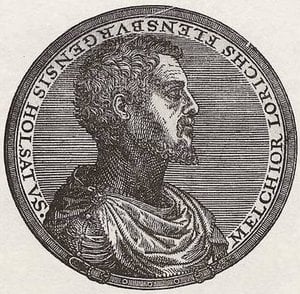
Melchior Lorck

Melchior Lorck

1527 - 1564 , Allemagne

L'essentiel de l'artiste

  • Artistic Movement Or Style: Renaissance
  • Artists Or Movements Influenced By This Artist:
    • Wenzel Hollar
    • Cornelis de Bruijn
  • Artists Who Influenced This Artist:
    • Heinrich Aldegrever
    • Albrecht Dürer
  • Date De Décès: 1583
  • Date De Naissance: 1526/27
  • Full Name: Melchior Lorck
  • Lieu De Naissance: Flensburg, Allemagne
  • Nationalité: Dano-allemande
  • Notable Artworks:
    • Prospect de Constantinople
    • La Publication Turque