CONSEIL EN ART GRATUIT

x
Commander l'impression Commander l'impressionAcheter l'image haute résolution Acheter l'image haute résolution PartagerPartager
DétailsDétails Ajouter aux favoris Ajouter aux favoris TéléchargerTélécharger Articles similairesArticles similaires RadiographieRadiographie DiaporamaDiaporama

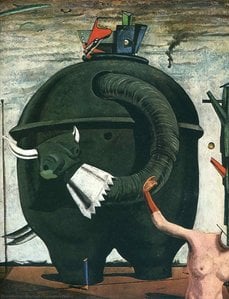
untitled (8170)

Max Ernst's surreal 'untitled (8170)' features haunting faces – a human and a dog-bird hybrid – set against a striking blue backdrop. Explore the artist’s Dada & Surrealist legacy through this iconic work.

Explorez le monde surréaliste de Max Ernst (1891-1976), pionnier du Dadaïsme et du Surréalisme ! Découvrez ses techniques innovantes de frottage, ses collages et ses peintures oniriques mettant en scène des oiseaux, des paysages et des thèmes psychologiques. #MaxErnst #Surréalisme #Dada

Reproduction à l'huile faite à la main

Huile sur toile peinte à la main, avec cadre et dimensions personnalisés, réalisée sur commande par nos artistes.

P118B $10
P118H $10
P118W $10
P438Z $10
P508JH $12
P508YH $12
P805H $10
P805Z $10
P919BZ $10
P919G $10
P919XJ $10
P959ZH $10
P968JZ $12
W106C $8
W218G $10
W218JH $8
W218Y $10
W307PJ $10
W316G $10
W316PJ $8
W316Y $10
W398PJ $8
W4111J $10
W500HY $15
W500JH $15
W692G $12
W849H $8
W940BG $15
W953PJ $8

Standard
custom
CM
INCH

Choisissez parmi nos formats prédéfinis qui respectent les proportions originales de l’œuvre.

largeur
hauteur

Vous pouvez saisir vos propres dimensions pour l'adapter à un cadre ou à un espace spécifique. Si la taille sélectionnée ne correspond pas aux proportions de l'image d'origine, nous recadrerons l'œuvre ou prolongerons la peinture avec des éléments peints à la main supplémentaires. Une maquette numérique vous sera envoyée pour approbation avant le début de la production.
Veuillez noter que l'aperçu à l'écran ne reflète pas le recadrage ou l'extension réels. Seule la maquette montrera fidèlement la composition finale.
Bien que des tailles personnalisées soient disponibles, nous vous recommandons de sélectionner une dimension dans la liste prédéfinie afin de préserver les proportions d'origine.

Exemples de personnalisation : remplacer un visage par la photo du client ; ajouter un animal de compagnie (par exemple, remplacer un chat par un chien) ; inclure un message caché en arrière-plan ; modifier le paysage ou les éléments de l'arrière-plan.
Après la commande, l’équipe WahooArt.com contactera le client par e-mail pour obtenir ses instructions et lui fournira une maquette d’aperçu.

Livraison dans le monde entier () en 3 à 4 semaines au lieu des 5 semaines habituelles. (3 juillet). Aucune concession sur la qualité.

why_choose_icon
Livraison express gratuite dans le monde entier
why_choose_icon
Toile de lin de haute qualité
why_choose_icon
Assurance transport complète
why_choose_icon
Garantie de remboursement des frais de douane
why_choose_icon
Garantie de fidélité des couleurs
why_choose_icon
Politique de retour de 60 jours (uniquement en cas de défaut)
why_choose_icon
Garantie de remboursement à 100%
why_choose_icon
Réduction sur les achats groupés

Prix total

-

reproduction

untitled (8170)

Technique de reproduction

Format de reproduction

-

Prix total final

-

En bref

  • Location: WahooArt.com
  • Style: Dreamlike, Symbolic
  • Movement: Surrealism, Dada
  • Notable elements: Faces, mask, dog head
  • Subject: Psychological themes
  • Title: untitled (8170)

Quiz d'art

Chaque question ne comporte qu'une seule bonne réponse.

Question 1:
What is the primary surrealist technique prominently featured in Max Ernst’s ‘untitled (8170)’?
Question 2:
The painting depicts two distinct faces. What is the most striking difference between them?
Question 3:
Considering Max Ernst’s biography, which of the following best describes his artistic approach?
Question 4:
The blue background in ‘untitled (8170)’ likely contributes to the artwork’s overall effect by:
Question 5:
Max Ernst’s involvement with Dadaism is most closely associated with:

Description de l'œuvre

A Dreamscape of Masks and Beasts: Unpacking Max Ernst’s “Untitled (8170)”

Max Ernst's "Untitled (8170)" isn’t merely a painting; it’s an immersion into the fractured logic of the subconscious. Completed in the crucible of post-war Europe, this surrealist masterpiece—a haunting blend of human and animal forms set against a stark blue backdrop—demands contemplation long after initial viewing. It's a visual echo of the anxieties and psychological explorations that defined Ernst’s entire career, reflecting his profound engagement with Dadaism, Freudian psychology, and the unsettling realities of a world irrevocably altered by conflict.

The painting immediately arrests the eye with its dual faces. One, undeniably human, is rendered in a mask-like state, suggesting concealment, perhaps even a deliberate attempt to shield identity from an unseen force. This figure’s gaze is averted, inviting us into a realm of private thought and unspoken anxieties. Juxtaposed against it is the startling visage of a dog—a creature often associated with instinct, loyalty, and primal urges—but here transformed by the addition of a bird's head. This hybrid form speaks to a potent symbolism: the animalistic instincts overlaid with the desire for flight, freedom, and perhaps even transcendence. The blue background isn’t simply decorative; it acts as an oppressive void, amplifying the sense of isolation and unease that permeates the scene.

The Techniques of Disruption: Ernst's Pioneering Methods

Ernst was a master of unconventional techniques, constantly pushing the boundaries of traditional painting. “Untitled (8170)” exemplifies his innovative approach, particularly through the use of frottage and grattage. These methods—developed during his time in Cologne—involved rubbing pencil over textured surfaces to create unexpected patterns and images, then scraping away the excess paint to reveal these hidden forms. This process deliberately disrupted the surface, mirroring the disruption within the subconscious mind that Ernst sought to capture. The deliberate roughness of the paint application, combined with the sharp contrasts between light and shadow, contributes significantly to the painting’s unsettling atmosphere.

Furthermore, the collage elements—likely incorporated through techniques similar to those he pioneered – subtly suggest a layering of memories and experiences. The fragmented nature of the composition mirrors the fractured state of consciousness often associated with dreams and trauma. The meticulous attention to detail in rendering each element, despite the overall sense of chaos, speaks to Ernst’s rigorous artistic process—a careful balancing act between control and surrender to the unpredictable.

Symbolism and the Shadow of War

The imagery within “Untitled (8170)” resonates with themes prevalent in Ernst's work following World War I. The mask, the animalistic hybrid, and the desolate blue background all evoke a sense of loss, disillusionment, and the psychological scars left by conflict. Ernst’s own experiences as a soldier—a period he famously described as “dying and being resurrected”—clearly informed his artistic vision. The bird's head on the dog suggests a yearning for escape from the horrors of war, a desire to transcend earthly limitations. It also hints at a critique of humanity’s destructive tendencies, symbolized by the animalistic form.

The painting can be interpreted as an exploration of identity—the struggle to maintain a coherent self in the face of overwhelming external forces and internal turmoil. It's a powerful reminder that beneath the surface of rational thought lies a complex and often unsettling landscape of primal instincts, repressed desires, and unresolved traumas. “Untitled (8170)” is not simply a beautiful image; it’s a profound meditation on the human condition.

  • Artist: Max Ernst
  • Date of Creation: Unknown
  • Medium: Oil on Canvas (Likely incorporating Frottage and Grattage Techniques)

Biographie de l'artiste

Max Ernst : Une Vie au Sein du Surréalisme

Jeunesse et Éducation

  • Né le: 1er avril 1891 à Brühl, en Allemagne.
  • Le père d'Ernst, Philipp Ernst, était enseignant des sourds et peintre amateur, encourageant ainsi l'intérêt précoce de Max pour l'art.
  • Il a étudié la philosophie, l'histoire de l'art, la littérature, la psychologie et la psychiatrie à l'Université de Bonn de 1909.
  • Ce parcours académique diversifié a profondément influencé ses explorations artistiques ultérieures.

Développement Artistique & Influences

  • Un moment décisif fut l'exposition Sonderbund à Cologne (1912), où il a découvert des œuvres de Pablo Picasso, Vincent van Gogh, et Paul Gauguin.
  • En 1914, il a rencontré Hans Arp, débutant une amitié qui a durablement façonné son parcours artistique.
  • La Première Guerre mondiale a profondément marqué Ernst ; ses expériences de soldat ont conduit à la déception et à une vision critique de la société.
  • Il s'est inspiré des écrits de Sigmund Freud, explorant les thèmes de l'inconscient dans son art.

Dadisme & Surréalisme

  • Ernst est devenu une figure clé du groupe Dadiste de Cologne après la Première Guerre mondiale, rejetant les conventions artistiques traditionnelles.
  • Il a pionné des techniques innovantes telles que frottage (frotter un crayon sur des surfaces texturées) et grattage (gratter la peinture pour révéler les couches sous-jacentes).
  • Dans les années 1920, il a rejoint le mouvement surréaliste à Paris, collaborant avec des artistes tels que Paul Éluard.
  • Son œuvre de cette période explorait des images oniriques et des thèmes psychologiques.

Œuvres Majeures & Techniques

  • Frottage : Une technique utilisée pour créer des textures et des images inattendues, exemplifiée dans de nombreuses œuvres.
  • Collage : Ernst a fréquemment utilisé le collage, combinant des éléments disparates pour créer des compositions surréalistes.
  • Œuvres Notables :
    • La Ville Entière
    • Euclides
    • De Ceci, Personne Ne Devrait Savoir
    • Forêt et Colombe
  • Ses peintures présentent souvent des images symboliques, notamment les oiseaux (en particulier son alter ego Loplop), les paysages et des juxtapositions troublantes.

Vie Tardive & Héritage

  • Ernst s'est installé aux États-Unis pendant la Seconde Guerre mondiale, continuant à peindre et à expérimenter de nouvelles techniques.
  • Il est revenu en France après la guerre et est resté actif jusqu'à sa mort le 1er avril 1976 à Paris.
  • Signification Historique : Les contributions d'Ernst au Dadisme et au Surréalisme ont été révolutionnaires. Il a défié les normes artistiques, exploré l’esprit inconscient et inventé des techniques innovantes qui continuent d’inspirer les artistes aujourd’hui.
  • Il reste l'un des figures les plus importantes et influentes de l'art du 20e siècle.
Max Ernst

Max Ernst

1891 - 1976 , Allemagne

En bref

  • Artistes Influents:
    • Pablo Picasso
    • Vincent van Gogh
    • Paul Gauguin
  • Date De Décès: 1er avril 1976
  • Date De Naissance: 1er avril 1891
  • Lieu De Naissance: Brühl, Allemagne
  • Mouvement Artistique: Dadaïsme et Surréalisme
  • Nationalité: Allemand/Américain/Français
  • Nom Complet: Max Ernst
  • Œuvres Notables:
    • La Ville Entière
    • Euclides
    • Forêt et Colombe
Explorez des œuvres d'art classées par thèmes, styles et caractéristiques.