CONSEIL EN ART GRATUIT

x
Commander la reproduction Commander la reproductionAcheter l'image haute résolution Acheter l'image haute résolution PartagerPartager
DétailsDétails Ajouter aux favoris Ajouter aux favoris TéléchargerTélécharger Articles similairesArticles similaires RadiographieRadiographie DiaporamaDiaporama

untitled (3741)

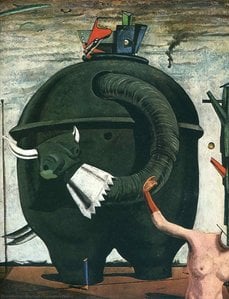
Max Ernst’s surreal ‘Untitled (3741)’ presents a dreamlike landscape with a horse and birds, embodying the artist's exploration of the unconscious mind during the Surrealist period. Discover this captivating artwork and bring its enigmatic beauty into your space.

Explorez le monde surréaliste de Max Ernst (1891-1976), pionnier du Dadaïsme et du Surréalisme ! Découvrez ses techniques innovantes de frottage, ses collages et ses peintures oniriques mettant en scène des oiseaux, des paysages et des thèmes psychologiques. #MaxErnst #Surréalisme #Dada

Giclée / Impression d'art

Impression giclée ou sur toile de qualité musée, avec une production rapide et des finitions au choix.

P118B $10
P118H $10
P118W $10
P438Z $10
P508JH $12
P508YH $12
P805H $10
P805Z $10
P919BZ $10
P919G $10
P919XJ $10
P959ZH $10
P968JZ $12
W106C $8
W218G $10
W218JH $8
W218Y $10
W307PJ $10
W316G $10
W316PJ $8
W316Y $10
W398PJ $8
W4111J $10
W500HY $15
W500JH $15
W692G $12
W849H $8
W940BG $15
W953PJ $8

Standard
custom
CM
INCH

Choisissez parmi nos formats prédéfinis qui respectent les proportions originales de l’œuvre.

largeur
hauteur

Vous pouvez saisir vos propres dimensions pour vous adapter à un cadre ou à un espace spécifique. Si la taille sélectionnée ne correspond pas aux proportions de l'image originale, nous recadrerons l'œuvre ou étendrons l'image avec une bordure en miroir ou une couleur unie. Une maquette numérique vous sera envoyée pour approbation avant le début de la production.
Veuillez noter que l'aperçu à l'écran ne reflète pas le recadrage ou l'extension réelle. Seule la maquette montrera avec précision la composition finale.
Bien que des tailles personnalisées soient disponibles, nous vous recommandons de choisir une dimension dans la liste prédéfinie afin de préserver les proportions originales.

Livraison dans le monde entier () en 2 semaines au lieu des 4/5 semaines habituelles. (2 juillet)

why_choose_icon
Livraison express gratuite dans le monde entier

why_choose_icon
Toile de lin de haute qualité
why_choose_icon
Assurance transport complète
why_choose_icon
Garantie de remboursement des frais de douane
why_choose_icon
Garantie de fidélité des couleurs
why_choose_icon
Politique de retour de 60 jours (uniquement en cas de défaut)
why_choose_icon
Garantie de remboursement à 100%
why_choose_icon
Réduction sur les achats groupés

Prix total

-

reproduction

untitled (3741)

Giclée / Impression d'art

Format de reproduction

-

Prix total final

-

En bref

  • Artistic style: Experimental
  • Influences: Dada
  • Notable elements or techniques: Frottage, Grattage
  • Location: Private Collection
  • Movement: Surrealism
  • Subject or theme: Fantasy Landscape

Description de l'œuvre

A Surreal Encounter: Decoding Max Ernst’s “Untitled (3741)”

The painting "Untitled (3740)" by Max Ernst, a cornerstone of surrealist art, transcends mere visual representation; it's an invitation into a dreamscape populated with unsettling juxtapositions and imbued with profound psychological resonance. Executed sometime between 1968 and 1969, this artwork exemplifies Ernst’s signature approach – a deliberate rejection of rational thought in favor of subconscious impulses and associative imagery. It’s a piece that demands contemplation, prompting viewers to grapple with themes of metamorphosis, primal instinct, and the elusive nature of perception.

Subject Matter and Composition: An Organic Landscape

At first glance, “Untitled (3740)” presents an arresting tableau: a solitary horse dominates the upper portion of the canvas, its elongated neck reaching upwards into an ethereal sky. Beneath it sprawls a textured landscape reminiscent of arid terrain—a stark contrast to the celestial realm above. However, what truly captivates is the presence of two birds – one perched atop the horse’s neck and another soaring in flight – creating a dynamic interplay between terrestrial and aerial realms. A human figure stands on the right side of the composition, gazing upwards with an expression of quiet observation. This deliberate positioning reinforces the painting's central idea: humanity confronted by the immensity of nature and the mysteries of the unconscious mind.

Technique and Materiality: Embracing Chance and Texture

Ernst’s masterful technique is characterized by his pioneering use of frottage—a method he developed in collaboration with André Breton. This process involves rubbing a textured surface (such as bark or stone) onto canvas, transferring its patterns and irregularities onto the painted surface. The resulting image isn't meticulously planned but rather emerges from serendipitous interactions between artist and material. Ernst layered paint over the frottage impressions, creating a rich tapestry of color and texture that contributes significantly to the artwork’s emotive impact. Grattage—a similar technique involving scraping away layers of paint—further enhances this textural dimension, revealing underlying surfaces and amplifying the sense of disorientation inherent in surrealist aesthetics.

Historical Context: Surrealism's Rebellion Against Reason

“Untitled (3740)” arose during the height of Surrealism’s influence on European art and thought. Born in Brühl, Germany, Ernst joined Dada in Zurich shortly after World War I, rejecting bourgeois values and embracing nihilistic experimentation as a response to the horrors of the conflict. Surrealists sought to liberate creativity from the constraints of logic and reason, tapping into the realm of dreams and fantasies to explore repressed desires and anxieties. Ernst’s work aligns perfectly with this intellectual movement's core tenets—a refusal to accept conventional artistic conventions and an unwavering commitment to portraying the subconscious mind as a source of inspiration and truth.

Symbolism: The Horse, Bird, and Observer – Representations of Instinct and Transformation

The horse itself symbolizes strength, resilience, and primal instinct—qualities Ernst frequently explored in his art. Its upward gaze represents aspiration and transcendence, mirroring the birds’ flight towards the heavens. The human figure serves as a conduit for contemplation, inviting viewers to consider their own relationship with nature and the unconscious. Collectively, these elements suggest a journey of transformation – from the familiar landscape of earthly existence into the boundless expanse of imagination. Ernst's intention wasn't merely to depict what he saw but to evoke feelings and ideas beyond rational comprehension.

Emotional Impact: A Landscape of Disquieting Beauty

Ultimately, “Untitled (3740)” achieves its profound emotional impact through its unsettling beauty. The juxtaposition of harsh textures—the arid landscape contrasted with the smooth sky—creates a palpable tension that mirrors the anxieties underlying the surrealist project. Ernst’s masterful manipulation of color and light contributes to an atmosphere of dreamlike disorientation, prompting viewers to confront uncomfortable truths about themselves and the world around them. It's a painting that lingers in the mind long after viewing, reminding us that art can transcend mere representation and communicate directly with our deepest emotions.

Biographie de l'artiste

Max Ernst : Une Vie au Sein du Surréalisme

Jeunesse et Éducation

  • Né le: 1er avril 1891 à Brühl, en Allemagne.
  • Le père d'Ernst, Philipp Ernst, était enseignant des sourds et peintre amateur, encourageant ainsi l'intérêt précoce de Max pour l'art.
  • Il a étudié la philosophie, l'histoire de l'art, la littérature, la psychologie et la psychiatrie à l'Université de Bonn de 1909.
  • Ce parcours académique diversifié a profondément influencé ses explorations artistiques ultérieures.

Développement Artistique & Influences

  • Un moment décisif fut l'exposition Sonderbund à Cologne (1912), où il a découvert des œuvres de Pablo Picasso, Vincent van Gogh, et Paul Gauguin.
  • En 1914, il a rencontré Hans Arp, débutant une amitié qui a durablement façonné son parcours artistique.
  • La Première Guerre mondiale a profondément marqué Ernst ; ses expériences de soldat ont conduit à la déception et à une vision critique de la société.
  • Il s'est inspiré des écrits de Sigmund Freud, explorant les thèmes de l'inconscient dans son art.

Dadisme & Surréalisme

  • Ernst est devenu une figure clé du groupe Dadiste de Cologne après la Première Guerre mondiale, rejetant les conventions artistiques traditionnelles.
  • Il a pionné des techniques innovantes telles que frottage (frotter un crayon sur des surfaces texturées) et grattage (gratter la peinture pour révéler les couches sous-jacentes).
  • Dans les années 1920, il a rejoint le mouvement surréaliste à Paris, collaborant avec des artistes tels que Paul Éluard.
  • Son œuvre de cette période explorait des images oniriques et des thèmes psychologiques.

Œuvres Majeures & Techniques

  • Frottage : Une technique utilisée pour créer des textures et des images inattendues, exemplifiée dans de nombreuses œuvres.
  • Collage : Ernst a fréquemment utilisé le collage, combinant des éléments disparates pour créer des compositions surréalistes.
  • Œuvres Notables :
    • La Ville Entière
    • Euclides
    • De Ceci, Personne Ne Devrait Savoir
    • Forêt et Colombe
  • Ses peintures présentent souvent des images symboliques, notamment les oiseaux (en particulier son alter ego Loplop), les paysages et des juxtapositions troublantes.

Vie Tardive & Héritage

  • Ernst s'est installé aux États-Unis pendant la Seconde Guerre mondiale, continuant à peindre et à expérimenter de nouvelles techniques.
  • Il est revenu en France après la guerre et est resté actif jusqu'à sa mort le 1er avril 1976 à Paris.
  • Signification Historique : Les contributions d'Ernst au Dadisme et au Surréalisme ont été révolutionnaires. Il a défié les normes artistiques, exploré l’esprit inconscient et inventé des techniques innovantes qui continuent d’inspirer les artistes aujourd’hui.
  • Il reste l'un des figures les plus importantes et influentes de l'art du 20e siècle.
Max Ernst

Max Ernst

1891 - 1976 , Allemagne

En bref

  • Artistes Influents:
    • Pablo Picasso
    • Vincent van Gogh
    • Paul Gauguin
  • Date De Décès: 1er avril 1976
  • Date De Naissance: 1er avril 1891
  • Lieu De Naissance: Brühl, Allemagne
  • Mouvement Artistique: Dadaïsme et Surréalisme
  • Nationalité: Allemand/Américain/Français
  • Nom Complet: Max Ernst
  • Œuvres Notables:
    • La Ville Entière
    • Euclides
    • Forêt et Colombe
Explorez des œuvres d'art classées par thèmes, styles et caractéristiques.