Aperçu en situationAperçu en situation Visualiser en RAVisualiser en RA Passer au format impression Passer au format impressionCommander la reproduction peinte à la main Commander la reproduction peinte à la main EnvoyerEnvoyer
Détails de l'œuvreDétails de l'œuvre Ajouter aux favoris Ajouter aux favoris TéléchargerTélécharger Articles similairesArticles similaires RadiographieRadiographie DiaporamaDiaporama StatistiquesStatistiques

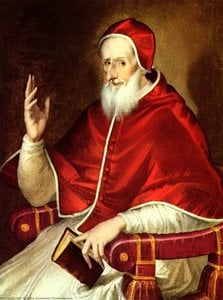
St Ambrose

Experience Matthias Stom’s dramatic Baroque masterpiece, ‘St Ambrose,’ showcasing masterful chiaroscuro and a visceral portrayal of religious fervor. A shadowy figure from the 17th century, discover this captivating artwork.

Matthias Stom (c.1600-après 1650) : peintre néerlandais influencé par Caravaggesque et Ribera, connu pour ses tableaux religieux dramatiques et son utilisation magistrale du clair-obscur, notamment l'Adoration des Mages.

Acquérez une image numérique haute résolution et optimisée, d'une qualité bien supérieure à l'aperçu en ligne.

Chaque fichier est méticuleusement préparé par nos spécialistes internes à l'aide d'outils avancés et d'une retouche manuelle experte. Nous garantissons que chaque image possède une clarté exceptionnelle, une précision des couleurs irréprochable et un niveau de détail fin.

Le fichier final est livré par e-mail sous 72 heures, optimisé pour une utilisation immédiate dans des contextes professionnels, éditoriaux et d'impression. Il offre la même qualité de confiance que celle utilisée par les plus grands studios de création, éditeurs et galeries.

Image numérique

Téléchargez un fichier haute résolution pour votre usage personnel, l'impression et vos projets créatifs. (Passer au format impression Passer au format impressionCommander la reproduction peinte à la main Commander la reproduction peinte à la main)

Prix total

$ 24,90

Inclus avec chaque commande d'image numérique

Livraison numérique experte, garantie.

En choisissant WahooArt.com, vous n'obtenez pas seulement une simple image : vous recevez une œuvre numérique sublimée avec professionnalisme, conçue avec précision et accompagnée d'une garantie de satisfaction. Voici tout ce qui accompagne automatiquement votre commande :

shipping_icon
Envoi rapide par e-mail

Votre fichier d'image numérique haute résolution vous sera envoyé par e-mail sous 72 heures après votre commande — prêt à un usage immédiat.

canvas_icon
Fichier numérique optimisé par l'IA

Votre œuvre d'art bénéficie d'une optimisation professionnelle grâce à des outils d'IA avancés et une retouche manuelle, garantissant un niveau maximal de détail, de clarté et de fidélité chromatique.

insurance_icon
Réexpédition gratuite à vie

Vous avez accidentellement supprimé ou perdu votre fichier ? Pas d'inquiétude — nous vous le renverrons gratuitement, quand vous le souhaitez.

tax_icon
Aucuns frais de douane — À jamais

Profitez de votre œuvre d'art instantanément sans frais de douane ni de livraison — les téléchargements numériques sont toujours exonérés de taxes.

color_icon
Garantie de fidélité des couleurs

Nous garantissons que votre image numérique reproduit les couleurs de l'original aussi fidèlement que possible grâce à des outils professionnels et une gestion rigoureuse des couleurs.

return_icon
Garantie de satisfaction 100 jours

Si vous n'êtes pas satisfait de votre image numérique, nous la retoucherons ou vous rembourserons 100% sous 100 jours - sans poser de questions.

guarantee_icon
Garantie de remboursement à 100%

Pas satisfait ? Obtenez un remboursement intégral dans les 100 jours suivant la réception de votre fichier numérique - sans poser de questions.

discount_icon
Réductions sur les commandes groupées

Achetez 3 images, économisez 10% - Achetez 5, économisez 15% - Achetez 10+, économisez 20%. Idéal pour les projets créatifs, les galeries et les agences.

Informations clés

  • Notable elements or techniques: Dramatic chiaroscuro; Detailed drapery
  • Influences: Caravaggio
  • Movement: Baroque
  • Medium: Oil on Canvas
  • Artistic style: Realistic
  • Title: St Ambrose

Quiz d'art

Chaque question ne comporte qu'une seule bonne réponse.

Question 1:
What artistic movement is Matthias Stom associated with?
Question 2:
The painting utilizes dramatic lighting techniques characteristic of Baroque art. What is this technique called?
Question 3:
What prominent artist influenced Matthias Stom's style?
Question 4:
The robe worn by St Ambrose in the painting is typically associated with what symbol?
Question 5:
What does the book held by St Ambrose represent in this artwork?

A Shadowy Master of the Baroque: Unveiling Matthias Stom

Matthias Stom remains an artist whose legacy is etched in the annals of Baroque art, yet obscured by the fog of historical obscurity. Unlike many contemporaries who flourished within the Dutch Republic’s artistic powerhouse, Stom found his creative voice primarily in Italy – a deliberate choice that speaks volumes about his ambitions and artistic sensibilities. Born around 1600, likely in Amersfoort near Utrecht, he emerged from a milieu steeped in Flemish influences, yet swiftly embraced the dramatic fervor of Caravaggism, establishing himself as a significant contributor to this revolutionary movement. Despite the paucity of biographical details – scholarly debate continues regarding potential connections to Flemish artistic circles – stylistic analysis and comparative studies illuminate Stom’s distinctive path and unwavering dedication to capturing the essence of Baroque aesthetics.

The Canvas of Dramatic Light

Stom's paintings are instantly recognizable for their masterful manipulation of chiaroscuro—the interplay between light and shadow—a technique perfected by Caravaggio himself. This stylistic hallmark isn’t merely a visual flourish; it embodies the Baroque preoccupation with conveying emotion and spiritual intensity. Observe how Stom utilizes stark contrasts to sculpt form, highlighting musculature and drapery while plunging areas into darkness, creating an atmosphere of palpable drama. The artist's meticulous attention to detail extends beyond mere representation—it strives to evoke a visceral response in the viewer, mirroring the profound religious fervor that characterized the period.

A Venetian Echo: Influences and Artistic Development

Stom’s formative years were spent absorbing the artistic currents circulating within Venice – a city renowned for its patronage of artists and its embrace of Caravaggism's expressive style. Venetian painters like Giovanni Battista Gaulli and Artemisia Gentileschi championed similar approaches to illumination and realism, fostering an environment conducive to Stom’s burgeoning talent. This Venetian influence is evident in his compositions, which often depict biblical narratives with a palpable sense of immediacy and psychological depth—a departure from the more idealized depictions prevalent in earlier artistic traditions.

Symbolism Embedded Within Form

Beyond mere visual spectacle, Stom's paintings resonate with symbolic significance rooted in Christian iconography. Consider the depiction of Saint Ambrose – frequently portrayed in ecclesiastical art – whose serene countenance contrasts sharply with the turbulent darkness surrounding him. The bishop’s mitre, a prominent feature of his attire, symbolizes authority and spiritual leadership, while the book he holds represents wisdom and divine knowledge—themes central to Augustine's theological framework, which profoundly impacted Baroque thought. Stom skillfully integrates these symbols into his canvases, enriching their narrative power and inviting contemplation on matters of faith and morality.

Emotional Resonance: Capturing Sacred Presence

Ultimately, Matthias Stom’s art transcends mere technical prowess; it succeeds in conveying a profound emotional resonance. His paintings are not simply representations of saints or biblical scenes—they aspire to capture the very essence of sacred presence. The artist achieves this feat through his masterful use of color palettes – often muted reds and golds – which imbue the canvases with warmth and solemnity. Furthermore, Stom’s meticulous rendering of textures—the folds of drapery, the smoothness of skin—creates a tactile experience for the viewer, drawing them into the depicted world and fostering a connection to its spiritual significance.
  • St. Laurentiuskerk
  • Explore this stunning Romanesque church & historical site featuring religious art & architecture by Theodoor Verhaegen.

Biographie de l'artiste

A Shadowy Master of the Baroque: Unveiling Matthias Stom

The name Matthias Stom, or Stomer as he was sometimes known, resonates with a captivating mystery within the annals of 17th-century painting. A Dutch artist whose life remains shrouded in ambiguity, Stom carved a distinctive niche for himself not in his homeland, but amidst the vibrant artistic landscape of Italy. Born around 1600, likely in Amersfoort near Utrecht, he emerged as a compelling figure within the orbit of Caravaggism—a movement defined by its dramatic use of light and shadow, and an unflinching commitment to realism. While definitive biographical details are scarce, piecing together fragmented records and stylistic analysis reveals a journey marked by artistic exploration and a profound engagement with the prevailing Baroque sensibilities. The very uncertainty surrounding his origins – some scholars suggest possible Flemish roots – adds to the enigmatic allure that surrounds his oeuvre.

From Utrecht Influences to Italian Immersion

Stom’s early training remains largely speculative, though it is widely believed he absorbed influences from prominent Utrecht Caravaggists like Gerard van Honthorst, Hendrick ter Brugghen, Paulus Moreelse and Abraham Bloemaert. These artists had embraced the revolutionary style of Michelangelo Merisi da Caravaggio, bringing its tenebrism—the stark contrast between light and dark—and emotionally charged realism to Dutch art. However, Stom’s artistic trajectory diverged from many of his contemporaries who favored genre scenes or allegorical compositions. He gravitated towards biblical narratives, imbuing them with a psychological depth and dramatic intensity that set him apart. Around 1630, he arrived in Rome, documented as living alongside the French painter Nicolas Provost. This marked a pivotal moment in his development, exposing him directly to the source of Caravaggio’s inspiration and allowing him to refine his technique within the heart of the Italian Baroque. His early Roman period culminated in the altarpiece of the Assumption of Mary with three saints, showcasing his burgeoning mastery of chiaroscuro and narrative power.

Naples, Sicily, and a Distinctive Artistic Voice

The subsequent chapters of Stom’s artistic life unfolded across the Italian peninsula. From approximately 1635 to 1640, he resided in Naples, a city teeming with artistic energy and under the strong influence of the Spanish painter Jusepe de Ribera. This exposure further honed his dramatic style, adding a heightened sense of realism and emotional intensity to his work. It was during this period that Stom began creating pieces for Capuchin churches, solidifying his reputation as a skilled religious painter. Around 1640, he moved to Sicily, where he would spend the most significant portion of his career. Here, he received commissions for churches in Caccamo, Messina, and Monreale, producing some of his most celebrated works. *The Miracle of Saint Isidore the Labourer* (1641) stands as his only securely dated painting, a testament to his ability to capture both the spiritual fervor and human drama of religious events. Other notable Sicilian creations include *Saint Dominic* in Monreale and, tragically lost during the 1908 Messina earthquake, *The Martyrdom of Saint Cecilia*. Stom’s distinctive “claylike” treatment of flesh tones, coupled with his masterful use of light and shadow, became hallmarks of his style.

Key Characteristics of Stom's Work

  • Dramatic Chiaroscuro: A hallmark of his style, employing strong contrasts between light and dark to create a sense of drama and focus attention.
  • Realistic Depiction: An unflinching commitment to portraying figures and scenes with anatomical accuracy and emotional honesty.
  • Biblical Narratives: Primarily focused on religious subjects, particularly stories from the Bible, imbued with psychological depth.
  • “Claylike” Flesh Tones: A distinctive technique characterized by a warm, earthy palette used to render skin tones.
  • Influence of Caravaggio and Ribera: Demonstrates a clear understanding and adaptation of the styles of these Baroque masters.

Rediscovery and Lasting Legacy

Despite his prolific output during his lifetime, Matthias Stom fell into relative obscurity for centuries after his death, which occurred sometime after 1652, likely in Northern Italy. Many of his works were misattributed to other artists, particularly Gerard van Honthorst, obscuring his individual contribution to the Baroque movement. It wasn’t until the early 20th century that dedicated scholarship began to unravel the mystery surrounding Stom, establishing him as a significant figure within the Utrecht Caravaggist school. His rediscovery revealed an artist of remarkable skill and sensitivity, capable of conveying profound emotional depth through his dramatic compositions. Stom's legacy lies in his ability to synthesize Italian Baroque influences with Northern European sensibilities, creating a unique artistic voice that continues to captivate viewers today. He demonstrated the powerful adaptability of Caravaggio’s style, proving its resonance beyond Italy and inspiring generations of artists with his masterful use of light, shadow, and realistic portrayal of religious subjects.

Matthias Stomer

Matthias Stomer

1590 - 1670 , Pays-Bas

En bref

  • Artistic Movement Or Style: Utrecht Caravaggisme
  • Artists Or Movements Influenced By This Artist: ['Baroque tardive']
  • Artists Who Influenced This Artist:
    • Caravaggio
    • Ribera
  • Date Of Birth: c. 1600
  • Date Of Death: après 1652
  • Full Name: Matthias Stom
  • Nationality: Néerlandais
  • Notable Artworks:
    • Assomption Marie
    • Miracle Isidore
    • Saint Dominique
  • Place Of Birth: Amersfoort, Pays-Bas