CONSEIL EN ART GRATUIT

x
Commander la reproduction Commander la reproductionAcheter l'image haute résolution Acheter l'image haute résolution PartagerPartager
Détails de l'œuvreDétails de l'œuvre Ajouter aux favoris Ajouter aux favoris TéléchargerTélécharger Articles similairesArticles similaires RadiographieRadiographie DiaporamaDiaporama

Untitled [recto] 1

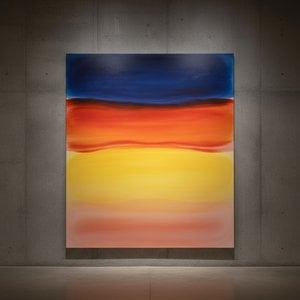
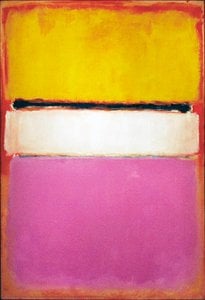
This expansive Rothko Chapel showcases fourteen canvases bathed in shades of black and crimson, reflecting Mark Rothko's profound exploration of spirituality and emotion. Inspired by the chapel’s geometric design and its contemplative atmosphere, Rothko created these monumental paintings as a testament to universal human experience.

Explorez la vie et l'œuvre de Mark Rothko (1903-1970), un peintre essentiel de l'Expressionnisme Abstrait. Découvrez ses icônes peintures à champs de couleurs, sa profondeur émotionnelle et son impact durable sur l'art moderne. #ExpressionnismeAbstrait #PeintureChampDeCouleurs #Rothko #HistoiredeLArt

Giclée / Impression d'art

Impression giclée ou sur toile de qualité musée, avec une production rapide et des finitions au choix.

P118B $10
P118H $10
P118W $10
P438Z $10
P508JH $12
P508YH $12
P805H $10
P805Z $10
P919BZ $10
P919G $10
P919XJ $10
P959ZH $10
P968JZ $12
W106C $8
W218G $10
W218JH $8
W218Y $10
W307PJ $10
W316G $10
W316PJ $8
W316Y $10
W398PJ $8
W4111J $10
W500HY $15
W500JH $15
W692G $12
W849H $8
W940BG $15
W953PJ $8

Standard
custom
CM
INCH

Choisissez parmi nos formats prédéfinis qui respectent les proportions originales de l’œuvre.

largeur
hauteur

Vous pouvez saisir vos propres dimensions pour vous adapter à un cadre ou à un espace spécifique. Si la taille sélectionnée ne correspond pas aux proportions de l'image originale, nous recadrerons l'œuvre ou étendrons l'image avec une bordure en miroir ou une couleur unie. Une maquette numérique vous sera envoyée pour approbation avant le début de la production.
Veuillez noter que l'aperçu à l'écran ne reflète pas le recadrage ou l'extension réelle. Seule la maquette montrera avec précision la composition finale.
Bien que des tailles personnalisées soient disponibles, nous vous recommandons de choisir une dimension dans la liste prédéfinie afin de préserver les proportions originales.

Livraison dans le monde entier () en 2 semaines au lieu des 4/5 semaines habituelles. (5 juillet)

why_choose_icon
Livraison express gratuite dans le monde entier
why_choose_icon
Toile de lin de haute qualité
why_choose_icon
Assurance transport complète
why_choose_icon
Garantie de remboursement des frais de douane
why_choose_icon
Garantie de fidélité des couleurs
why_choose_icon
Politique de retour de 60 jours (uniquement en cas de défaut)
why_choose_icon
Garantie de remboursement à 100%
why_choose_icon
Réduction sur les achats groupés

Prix total

-

reproduction

Untitled [recto] 1

Giclée / Impression d'art

Format de reproduction

-

Prix total final

-

En bref

  • Movement: Color Field Painting
  • Location: Rothko Chapel
  • Year: 1970
  • Subject or theme: Existential contemplation
  • Medium: Oil on Canvas
  • Notable elements or techniques: Layered rectangles of color

Quiz d'art

Chaque question ne comporte qu'une seule bonne réponse.

Question 1:
What is the dominant color scheme of this painting?
Question 2:
The painting prominently features musical instruments. Which instrument is depicted on the left side?
Question 3:
What architectural style influenced the design of the Rothko Chapel where this artwork is displayed?
Question 4:
Mark Rothko was born in what country?
Question 5:
The artist’s early life experiences instilled a deep sensitivity to human suffering. What historical event contributed to this formative influence?

Description de l'œuvre

A Symphony in Color: Exploring Mark Rothko’s Untitled No. 1

The Rothko Chapel stands as an enduring testament to artistic vision and spiritual contemplation—a space deliberately designed to foster introspection amidst the grandeur of modern art. At its heart resides fourteen canvases by Mark Rothko, arguably his most iconic works, collectively known as “Black on Maroon” and “Black on Black.” These paintings are not merely decorative objects; they represent a profound engagement with existential questions concerning life, death, and the human condition.
  • Subject Matter: Rothko’s approach eschews traditional representation. Instead of depicting recognizable figures or landscapes, he presents amorphous blocks of color—primarily shades of black, maroon, and yellow—that seem to bleed into one another. This deliberate abstraction prioritizes emotional resonance over visual accuracy.
  • Style: The paintings embody Rothko’s signature style – Color Field Painting. Developed in the mid-1940s and 50s, this technique involves applying large areas of pigment to canvas without discernible brushstrokes or contours. This method aims to bypass conscious perception and tap into primal feelings.

Technique: Layers of Color and Subtle Texture

Rothko’s meticulous process involved layering thin washes of color onto the canvas, building up tonal variations that create a mesmerizing interplay of light and shadow. He utilized mineral pigments—specifically hematite and manganese dioxide—to achieve the deep maroon hues characteristic of “Black on Maroon.” These pigments were carefully mixed to produce subtle textural nuances – almost imperceptible ridges—that contribute to the overall visual experience. The artist’s insistence on achieving maximum luminosity was paramount; he painstakingly adjusted the varnish to maximize reflectivity, ensuring that each painting radiated an ethereal glow.
  • Pigment Selection: Hematite and manganese dioxide were chosen for their ability to produce rich, saturated colors while maintaining a velvety surface texture.
  • Varnish Application: Rothko applied multiple coats of varnish—specifically nitrocellulose—to enhance the luminosity and reflectivity of the pigment layers.

Historical Context: The Postwar Landscape of Emotion

Rothko’s work emerged from the aftermath of World War II, a period marked by disillusionment and uncertainty. Artists like Rothko sought to express profound psychological states—fear, grief, ecstasy—rather than documenting historical events. He drew inspiration from Eastern Orthodox spirituality, particularly the contemplative rituals of monastic life, which emphasized silence and inward focus. The Chapel itself was conceived as a space for spiritual pilgrimage, mirroring the artist’s desire to create art that transcends rational thought and connects directly with the viewer's subconscious.

Symbolism: Blocks of Color as Vessels of Emotion

The seemingly simple blocks of color in Rothko’s paintings are laden with symbolic significance. Scholars have interpreted them as representations of the divine—the infinite expanse of God’s presence—and as metaphors for human consciousness—the fragmented yet interconnected nature of our inner lives. The horizontal format of the canvases reinforces this sense of stillness and contemplation, inviting viewers to surrender to the emotional power of the artwork.

Emotional Impact: A Journey Into Inner Space

Ultimately, Rothko’s “Untitled No. 1” transcends mere visual perception; it compels us to confront fundamental questions about existence. The painting's hypnotic color palette and subtle textural variations induce a state of meditative calm—a willingness to accept the ambiguities of life without seeking definitive answers. Viewing this masterpiece is akin to embarking on an inner voyage, prompting reflection on themes of mortality, beauty, and the enduring quest for spiritual understanding.

Biographie de l'artiste

enfance et influences

Mark Rothko (Marcus Rothkowitz), un artiste américain renommé, est né le 25 septembre 1903 à Dvinsk, Lettonie. Sa famille a immigré aux États-Unis lorsqu'il n’avait que dix ans. Ce changement culturel aura influencé plus tard son style artistique.

évolution artistique

Le travail précoce de Rothko était caractérisé par l’expressionnisme abstrait, un style qui mettait l’accent sur le processus de création d'une œuvre d'art plutôt que sur le produit final. Ses peintures, telles que No. 18 (1948) et Untitled (1948), mettaient en valeur son approche unique de la couleur et de la forme.
  • Champ de couleurs : L'utilisation par Rothko de champs de couleurs audacieux et rectangulaires, souvent en contraste saisissant les uns avec les autres, créait une sensation de profondeur et d’émotion.
  • Structure organique : Ses peintures semblaient respirer la vie, comme si les couleurs étaient des entités vivantes.

œuvres notables et expositions

  • No. 10 (1950), une peinture qui marquait un tournant significatif dans le style de Rothko, est maintenant au sein de la collection du Museum of Modern Art.
  • Les Seagram Murals, une série de peintures commandées pour le restaurant Four Seasons, mettait en valeur la capacité de Rothko à adapter son style à différents environnements.
  • No. 3 (1950), une peinture qui exemplifie l'utilisation par Rothko de champs de couleurs audacieux et rectangulaires.

vie tardive et héritage

La vie de Rothko a été marquée par des luttes contre la santé mentale et un mariage tumultueux. Il est décédé le 25 février 1970, à l'âge de 66 ans. Malgré ses difficultés, Rothko a laissé une marque indélébile sur le monde de l’art. Ochre et rouge sur rouge (champ de couleurs), une peinture qui met en valeur l'approche unique de Rothko à la couleur, peut être trouvée dans la collection WahooArt.com. La page Wikipédia de Mark Rothko fournit des informations supplémentaires sur sa vie et son style artistique.
Mark Rothko

Mark Rothko

1903 - 1970 , Lettonie

En bref

  • Artistes Influents:
    • Sigmund Freud
    • Marcel Proust
  • Date De Décès: 25 février 1970
  • Date De Naissance: 25 septembre 1903
  • Influences Artistiques:
    • Minimalisme
    • Art contemporain
  • Lieu De Naissance: Daugavpils, Lettonie
  • Mouvement Artistique: Expressionnisme abstrait
  • Nationalité: Américaine
  • Nom Complet: Mark Rothko / Marcus Rothkowitz
  • Œuvres Notables:
    • No. 18 (1948)
    • No. 10 (1950)
    • Murals Seagram
    • White Center (1957)
Explorez des œuvres d'art classées par thèmes, styles et caractéristiques.